Accidental Genius: How a Fist Bump Created a Perfect Bluff
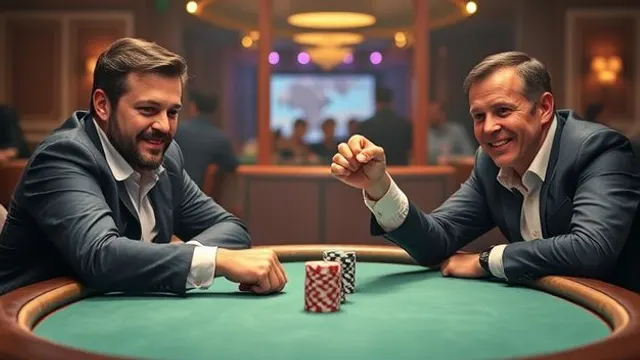
According to PokerNews, an accidental fist bump unexpectedly created a near-perfect bluff. This article uses that as a starting point to discuss the psychological game and timing of poker bluffs, analyzing why precise timing and reading opponents are more important than card strength, and warning of the risks of over-bluffing.
A Perfect Bluff Sparked by a Coincidence
According to PokerNews, during a poker hand, a player accidentally bumped fists with a bystander at a critical moment, unintentionally creating an aura of extreme confidence. This successfully induced an opponent to fold, completing a textbook bluff. This seemingly random event reveals the core elements of bluffing: non-verbal signals and situational shaping.
The Essence of Bluffing: Story and Trust
In Texas Hold'em, bluffing is not merely about betting; it's about telling a coherent story. Players must use betting rhythms, body language, and historical actions to convince opponents that they hold a strong hand. Here, the fist bump served as a "leaked" social cue of powerful confidence—the opponent interpreted it as "this player is fully assured."
Timing and Range Balance
A successful bluff requires precise timing:
- High opponent fold propensity: When opponents hold medium-strength hands and face large bets, their fold rate increases.
- Board texture aligns with range: The story told must match the community card structure. For example, on a flop of 9♦8♦7♠, a continuation bet representing a straight or flush draw carries more credibility.
- Own image: If a player has previously shown down strong hands, the bluff success rate is higher.
Example: A Typical Bluff Scenario
Assume you are on the button, raise pre-flop, and the big blind calls. The flop comes K♠Q♠7♦. You make a continuation bet, and the opponent calls. The turn is 2♣, and the opponent checks. You decide to bluff: bet 2/3 pot, representing top pair or a draw. If the opponent holds a medium pair, they may fold. Remember: this is an example; adjust according to the opponent in practice.
Risks and Balance
Overbluffing is a trap for many players. GTO (Game Theory Optimal) strategy requires a certain ratio of bluffs to value bets, typically around 1:2. Deviating too much invites frequent calls or re-raises.
The "accidental" fist bump reminds us: poker is not just mathematics, but a game of human psychology. However, true masters control every detail rather than relying on luck.
FAQ
- In certain situations, non-verbal signals may enhance the credibility of a bluff. But the core is still the player's betting logic and how opponents read hands. Occasional actions should not be used as a regular strategy.