Will AI and Bots End Online Poker? The
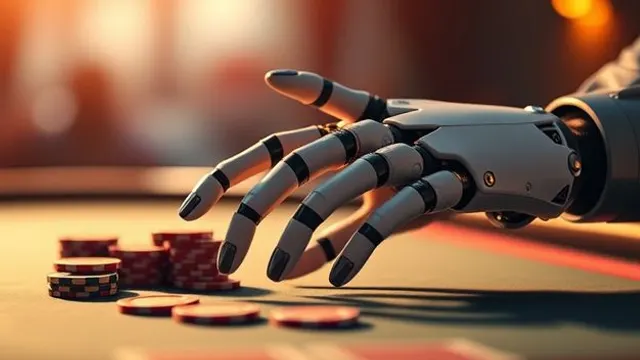
A poker player on Reddit expressed concerns about the growing power of AI and bots, believing that a perfect poker AI will emerge within a few years and could be widely used as bots, destroying online poker. The community has mixed opinions; some suggest switching to live poker, while others believe platform anti-cheat technology can handle it. This article summarizes the main viewpoints and current industry status.
The rapid advancement of AI technology is making many online poker players uneasy. Recently, Reddit user geoffsusername posted in the r/onlinepoker subreddit, admitting that after playing poker for ten years and earning some extra income from it, he is increasingly worried that AI will take it all away — "In a few years, AI will be able to play perfect poker, and most people will probably be using some kind of bot, right?"
The post sparked widespread discussion, with many players expressing sympathy regarding the threat of bots and AI. Below are representative views from the community discussion, as well as industry perspectives on the future of online poker.
The Threat from Bots and AI Is Not Baseless
The core concern of the post author is that, as AI improves, it is only a matter of time before a near-perfect poker bot is developed. Once such tools become widely available, the fairness of online poker will be shattered — ordinary players simply cannot compete against tireless, calculatingly precise bots.
In fact, poker bots are nothing new. As early as the 2010s, players used simple probability calculation software to profit in low-stakes games. In recent years, AIs such as Libratus and Pluribus have defeated top human players in heads-up and multi-table no-limit hold'em. Although these AIs require significant computing power, technological progress is constantly lowering the barrier. Some analysts believe that in the near future, near-perfect poker AI will be able to run on personal computers, which could pose an unprecedented threat to online poker.
Community Views: Online Poker Won't Die, But It Will Change
Many commenters hold a relatively optimistic view. They believe that poker sites' "war against bots" is also escalating. Major poker sites (e.g., PokerStars, GG Poker) have deployed advanced detection systems that analyze betting patterns, action speed, mouse movement trajectories, etc., to identify suspicious behavior. Once a bot is found, accounts are immediately banned and funds confiscated.
Moreover, as AI itself becomes the "spear," anti-cheating technology is also evolving. For example, platforms can use AI to detect abnormal patterns, or even require players to undergo regular facial verification or enter CAPTCHAs. Some players point out that bots are actually hard to hide long-term in high-stakes games and tournaments, because top players can probe mechanical opponents through "unconventional plays."
Another view is that online poker will eventually move toward stricter regulation and certification systems. For instance, introducing "trusted player" mechanisms where only verified players can participate in high-stakes games. At the same time, some platforms have begun banning HUD (data tracking tools) and real-time assistance software, removing the auxiliary advantages of bots at the source.
Live Poker: The Last Safe Haven?
The post author says that if online poker is truly overrun by bots, he will switch to live poker. In live poker, human expressions, body language, and psychological battles are things bots cannot replicate. However, live poker also has drawbacks such as limited resources and high time costs, making it difficult for all players to transition easily.
Some in the community remind that live poker also has cheating risks (e.g., collusion between players, marked cards), but at least it does not require facing "supernatural" opponents like AI. For players who love the convenience and multi-tabling capabilities of online poker, losing the online environment would be a significant loss.
Platforms and Industry Response Strategies
Currently, major poker platforms have adopted multiple measures:
- Introducing dynamic anti-cheat algorithms that constantly update detection models.
- Requiring players to install real-time monitoring software (e.g., built-in anti-cheat plugins for PokerTracker).
- Conducting manual reviews of suspicious accounts, and even tracing the source of funds.
- Limiting multiple accounts on the same IP address to reduce the risk of "teamwork."
Some emerging platforms are even experimenting with "decentralized" models, using blockchain technology to record hand histories, ensuring immutability and traceability. While this cannot completely eliminate bots, it at least increases the exposure risk for cheaters.
Conclusion: The Risk Is Real, But Not the End
The threat of AI to online poker is real, but the industry is also actively responding. In the short term, a completely perfect and cheap poker AI may still only exist in theory; in the long term, the form of online poker may evolve — perhaps becoming more closed, focusing more on player verification, or even returning to private game formats similar to club models.
For ordinary players, staying vigilant, choosing reputable platforms, and avoiding suspicious assistance software are basic measures to protect their accounts. At the same time, playing more live poker can help balance the two experiences. After all, as long as humans' love for poker remains, poker will not disappear — even if it takes on a different form.
FAQ
- If perfect AI bots are widely used, it would indeed seriously damage fairness. However, anti-cheat technology on platforms is also advancing, and bots are harder to conceal in high-stakes tables and tournaments, so complete destruction is less likely, but the market structure may change.