Facing an OMC's Cold 3-Bet and Calling
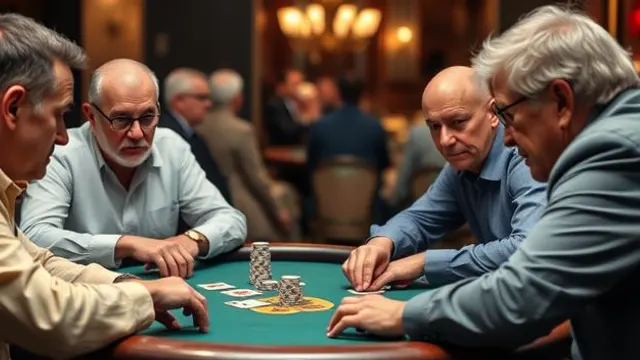
A player encounters a rare situation in a $5/$5 cash game: an old man coffee OMC who has never 3-bet before makes a cold 3-bet preflop, and calling almost certainly results in a multiway pot. The article analyzes OMC's range characteristics and discusses reasonable settings for 4-bet, call, and fold ranges, taking into account postflop position and pot control.
Live Background
Last night at Hollywood Park’s $5/$5 cash game, I encountered an extremely rare situation. Effective stack was 200 big blinds (about $1,000), but the main opponent was an Old Man Coffee (OMC) who had accumulated about 600bb ($3,000). This player was extremely passive preflop—I had never seen him 3-bet—and postflop he tended to slow-play strong made hands and bet aggressively with vulnerable value hands. I had been at the same table with him for about four hours, and this was the first time he made a 3-bet.
Hand History
- I was in the HJ (hijack) and raised to $25 with my standard opening range (77+, suited connectors, ATo+, KQo+, etc.).
- The CO (cutoff) was an unknown player with about 50bb and called.
- The SB (small blind), the OMC, raised to $80.
- The BB (big blind) had about 200bb, was very loose preflop and postflop, and cold-called this 3-bet.
This 3-bet sizing was essentially the classic “raise to induce action with AA” size. Now I needed to decide my response strategy: 4-bet range? Calling range? Folding range? If I called, it would almost certainly create a multiway pot (at least BB and CO would follow), and I would be in position postflop against the strongest preflop range (the OMC), but also giving BB and CO a chance to see the flop with wide ranges.
Opponent Range Analysis
The OMC had never 3-bet before, so his cold 3-bet range is extremely narrow: typically TT+, AK+ strong hands, but given his passivity, it might even be limited to QQ+, AK. However, he might be on a winner’s tilt (having won money) and try to build the pot with a polarized range. But a more reliable read is that he holds AA or KK and wants to build a big pot.
Author’s Approach
The author provides two range settings:
Conservative Range Against OMC:
- 4-bet: half of KK, all AA
- Call: TT-KK, AK, AQs
- Fold: 77-99, all other combos
Default Range:
- 4-bet: QQ+, AK
- Call: 99-KK, ATs+, KQs
- Fold: 77-88, all non-pair non-high-card combos
Analysis and Discussion
Since the OMC’s 3-bet is extremely rare, we should heavily tilt toward the conservative read. The 4-bet range should be extremely tight because after a 4-bet, the OMC might shove (especially when he has AA), and our calling range needs to withstand postflop pressure in a multiway pot. When calling, note that after the BB calls, the pot is inflated, and the postflop SPR (stack-to-pot ratio) is low, making it easy to get into all-in situations.
If I call, I am in position (acting after CO but facing SB’s bet). In a multiway pot, we should tend to call with medium-strength hands (like TT, JJ, AK) and 4-bet polarize with QQ+. But if the OMC’s range is really only AA/KK, then 4-betting would almost always be crushed, so the optimal strategy might be: 4-bet with AA, KK (though KK still has an edge against AA), call with QQ and below to see the flop, and be ready to fold on unfavorable boards.
The folding range should include 77-99, ATo, KQo, etc., which are susceptible to reverse implied odds, since in multiway pots these hands struggle to realize their equity.
Conclusion
Faced with this abnormal cold 3-bet, the first principle is to respect the opponent’s range credibility. Tighten the 4-bet range, widen the folding range, and focus the calling range on high playability pairs and high cards. Also, be aware that even after calling, postflop play must be cautious because the OMC is unlikely to give free cards.
FAQ
- OMC stands for Old Man Coffee, referring to a typical old-school player at the poker table who plays very tight, slow plays strong hands, and rarely bluffs.