How to Host a Texas Hold'em Home Game Night
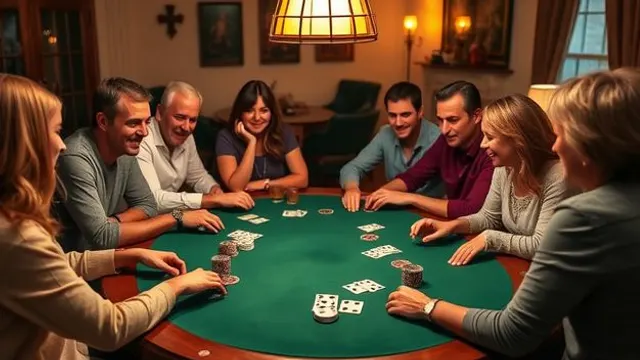
This article details how to plan and host a relaxed and enjoyable Texas Hold'em home game night, covering preparation, rule setting, atmosphere creation, common mistakes, and practical tips to ensure every participant enjoys the fun of the game.
Texas Hold'em is not only a competitive sport but also an excellent form of social entertainment. Hosting a home game night at your place requires no professional-grade equipment or strict rules; the focus is on spending quality time with friends and family. The following guide will help you organize a fun and smooth poker gathering from scratch.
Definition: What Is a Home Texas Hold'em Night?
A home Texas Hold'em night is an informal poker game held in a casual setting (such as your living room or dining room) for entertainment and social interaction. Unlike professional tournaments or cash games, home games typically use fixed buy-ins or virtual chips, with participants prioritizing interaction and a relaxed atmosphere over profit.
Fundamentals: Basic Rules and Setup
Before starting, all players should be familiar with the basic rules of Texas Hold'em:
- Hand Rankings (high to low): Royal Flush, Straight Flush, Four of a Kind, Full House, Flush, Straight, Three of a Kind, Two Pair, One Pair, High Card.
- Betting Rounds: Preflop, Flop, Turn, River. In each round, players can choose to fold, call, raise, or check (if no one has raised).
- Community Cards: A total of five cards are dealt over three rounds.
- Bankroll Management: For home games, it’s recommended to use chips representing virtual value, with each player starting with the same number of chips (e.g., 500 chips) and fixed blinds (e.g., 1/2). Avoid using real money or only symbolic stakes.
Practical Example: A Typical Home Game Session
Suppose you invite four friends, each buying in for 500 chips with blinds of 1/2.
- Dealing: The dealer button moves clockwise; each player receives two hole cards.
- Preflop: The small blind posts 1 chip, the big blind posts 2 chips. Players act in turn. For example, player A holds A♠K♠ and raises to 10; player B calls with 7♣8♣; player C folds after checking.
- Flop: Three community cards are dealt: Q♥J♦4♠. Player A bets 15; player B thinks and calls (possibly on a straight draw).
- Turn: The fourth card is 2♦. Player A bets 30 again; player B, still drawing to a straight and suspecting player A might have a queen pair, decides to fold. Player A wins the pot.
Throughout the process, jokes and casual conversation are encouraged; there is no need to be overly serious.
Common Misconceptions and Corrections
- Mistake 1: Overly complex rules. Home games should simplify contentious rules. For example, print out a hand-rank reference chart. If disagreements arise, the host makes the final call.
- Mistake 2: Blindly imitating professional games. Professional cold reads and bluffing techniques may undermine the relaxed atmosphere. Encourage friendly banter but avoid genuine emotional attacks.
- Mistake 3: Poor chip management. Using real money can cause tension or arguments. It’s better to use chips or snack vouchers and agree on a buy-in cap in advance.
- Mistake 4: Ignoring beginner players. Novices may feel frustrated by unfamiliar rules. Spend 10 minutes explaining the basics before starting, and allow them to refer to a "cheat sheet" during the first two rounds.
Summary
The core of a home Texas Hold'em night is "connecting people and having fun." Set reasonable rules, provide snacks and drinks, control the pace of the game, and ensure every participant feels comfortable. Even if skill levels vary, the real winner is the strengthened friendship. Remember: the moment someone hits a flush with 72o (the worst starting hand) and everyone bursts into laughter—that is the most successful night.
FAQ
- At minimum, you need a standard deck of playing cards two decks recommended in case of wear, a set of chips (plastic or clay chips, 100-200 per person is fine), and a table dining table or poker table. The number of players is recommended to be 4 to 8; too few lacks competition, too many leads to long waits per hand.