How to Make Recreational Players Enjoy Playing with You: A Professional Poker Player's Social Strategy Guide
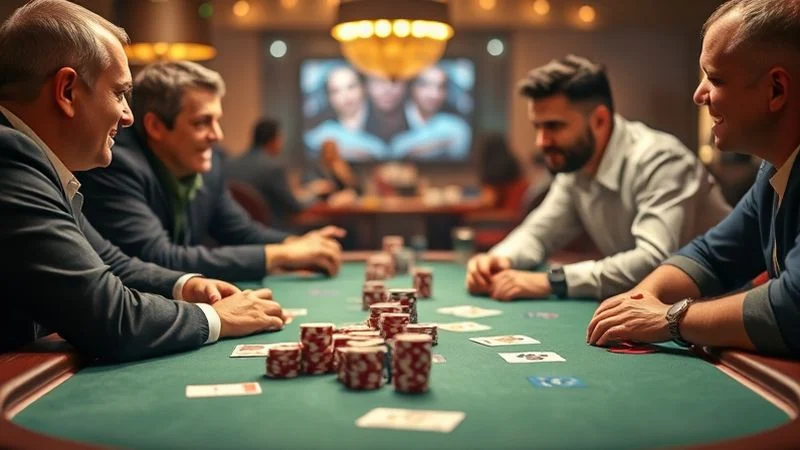
Professional poker players often ruin the game atmosphere by criticizing recreational players' mistakes. This article analyzes the multiple harms of this behavior through examples, and emphasizes that respecting recreational players' different motivations social, entertainment, learning, etc. is key to long-term profitability. Avoid 'tapping the aquarium' to promote a healthy poker community.
NEWS queue-body-only: how-to-make-recreational-players-enjoy-playing-with-you body-hub-en
The motivations of recreational players differ from those of professional players
A good friend of mine, P, is an excellent poker player, but his behavior at the table often frustrates me—he unintentionally does the very things I advise against, and those actions ruin the recreational player's experience.
First, it's important to understand that recreational players participate in poker for entirely different reasons than professionals. Some treat it as a social activity, some want a temporary escape from a nagging spouse, some are looking for an excuse to have a few drinks, and others simply enjoy friendly competition. Professionals, on the other hand, focus on profit—and there's nothing wrong with that. The key is that any legitimate reason to play poker deserves respect.
Example: A conflict during a WSOP mixed game
During the last WSOP in Las Vegas, P and I played in a $20/$40 mixed game. Two recreational players at the table clearly weren't familiar with the rules. In one hand of Drawmaha (an Omaha variant where players compete for half the pot using the best high hand from their five hole cards), P lost half the pot to recreational player R—who hit a full house on the river with a terrible hand like J9843, beating P's straight. R had voluntarily entered the pot from early position without a draw, flush draw, pair, or even overcards—a hand selection that was truly disastrous.
Three reasons not to "tap the aquarium"
When the hand was revealed, P directly criticized R: "You're trying to steal half the pot with that garbage? You shouldn't even be in the pot." While P's comment was technically correct, it had three negative effects simultaneously:
- It revealed to R that P was constantly analyzing his play;
- It implied R's hand selection strategy was "terrible";
- It made R uncomfortable, prompting him to leave.
Sure enough, minutes later R racked up his chips and left. P's behavior not only cost him a losing opponent (R would have continued donating money) but also ruined the social atmosphere of the game. R said he simply wanted to try a mixed game—his motivation was learning, not profit. P's criticism made R unlikely to play mixed games again, let alone recommend them to friends.
The different motivations of professionals and recreational players
Recreational players want an enjoyable experience; negative comments only make them uncomfortable. Imagine how a blackjack player would feel if a pit boss ran over and shouted, "Are you out of your mind?" after the player doubled down on 12. Every profit-driven player should understand that creating a negative atmosphere "kills" the game entirely.
If another poker boom like the one 20 years ago ever returns, the new influx of players will mostly have learned the game for free at home. They need encouragement, not criticism. Let's work together to foster a healthy and friendly environment for the poker community.