Kristen Foxen Pocket Kings Fold: Does GTO Support This Move?
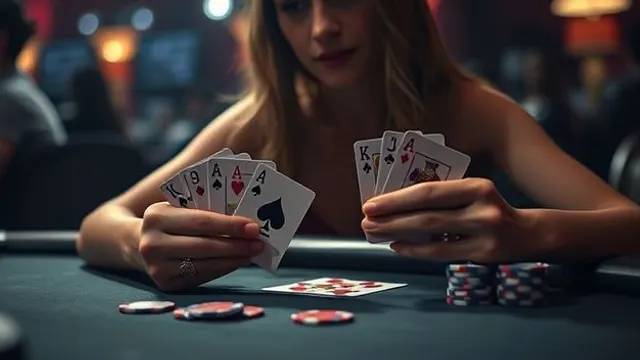
In the 2024 WSOP Main Event, Kristen Foxen folded pocket kings preflop to an opponent's all-in, sparking heated debate in the poker community. This article analyzes whether the decision was reasonable from a GTO perspective and explores the balance between live reads and theoretical optimal strategy.
In the early stages of the 2024 WSOP Main Event, Canadian female player Kristen Foxen made a fold that stunned poker enthusiasts worldwide: she held pocket kings and, facing an opponent's 3-bet all-in before the flop, ultimately chose to fold. This decision quickly became a hot topic in the poker community—was this play endorsed by GTO (Game Theory Optimal strategy)?
Event Background
At the time, Foxen had a stack of approximately 150 big blinds, and her opponent was a relatively tight-aggressive player. Foxen raised from under the gun, the opponent re-raised from the big blind to about 25 big blinds, Foxen 4-bet to roughly 60 big blinds, and after a brief pause, the opponent shoved all-in. Foxen, after about 30 seconds of thought, showed her pocket kings and folded.
The hand was recorded by on-site reporters, and the video went viral on social media. Many amateur players considered it "unacceptable," but professional players were divided into two camps.
GTO Perspective
Within the GTO framework, pocket kings typically form part of a range that includes AA, KK, QQ, and AKs. When facing an opponent's 5-bet all-in, GTO suggests continuing with roughly half of the KK combos while folding the other half to maintain balance. The exact frequency depends on stack depth, position, and the opponent's exploitative tendencies.
Foxen's stack depth of approximately 150 big blinds is considered deep. At this depth, the opponent's 5-bet all-in range is usually very narrow, potentially only AA and a few AKs. Calculations show that against an opponent whose all-in range consists solely of AA and AKs, KK's equity is less than 40%, making a fold mathematically correct.
However, the key question is: did Foxen accurately assess her opponent's range?
The Role of Live Reads
According to Foxen's post-hand interview, she noticed that her opponent immediately declared all-in after the 4-bet, with extremely confident demeanor and body language. Moreover, at such deep stack depths, most players would not 5-bet shove with QQ or AK. Therefore, she narrowed the opponent's range to almost exclusively AA.
From an exploitative perspective, folding KK is prudent when an opponent rarely bluffs. Yet GTO itself does not account for specific opponent tendencies—it assumes both players are perfectly balanced. If the opponent deviates from balance, exploitative play can yield higher expected value.
Conclusion
Foxen's fold is not a "standard GTO move"—in GTO strategy, KK should call in the vast majority of cases. However, it was precisely her accurate read and exploitative adjustment in an extreme situation that made this fold so rare and correct.
This hand reminds us once again: Texas Hold'em is not only a game of mathematics but also a battle of human behavior. Even in today's GTO-dominant era, live reads and psychological warfare remain vital weapons for top players.
FAQ
- Early in the 2024 WSOP Main Event, Foxen raised from under the gun, the big blind player 3-bet, Foxen 4-bet, opponent shoved all-in with a 5-bet, and Foxen folded pocket kings after thinking.