Poker Board Reading 101: How to Quickly Read the Community Cards
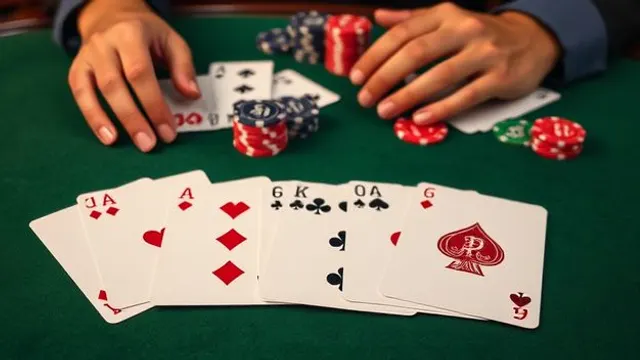
Mastering community card analysis is key to advancing in Texas Hold'em. This article systematically explains how to quickly read the board and improve decision-making, covering definitions, principles, practical examples, and common misconceptions.
Poker Board Reading 101: How to Quickly Read the Community Cards
In Texas Hold'em, the board refers to the community cards shared by all players during the flop, turn, and river. Quickly and accurately analyzing the board is fundamental to evaluating your hand strength, deducing your opponent's possible ranges, and formulating strategies. This article starts from the basics, explains core principles, and uses typical examples to help beginners get started.
1. What Is Board Reading?
Board reading is the process of analyzing the flop, turn, and river cards — combined with your hole cards — to infer what made hands (straights, flushes, full houses, etc.) are possible and what hands your opponents might hold. It involves observing the board's structure, texture, wetness/dryness, whether the board is paired, and possible flush or straight draws.
2. Core Principles: Board Classification and Evaluation
1. Board Texture
- Dry Board: A board that does not easily produce straights or flushes. For example, a flop of K♠ 8♦ 2♣ is offsuit and has large gaps between ranks. If players miss, they often only have pairs or high cards.
- Wet Board: A board that easily produces straights or flushes. For example, a flop of 9♠ 8♠ 7♠ is both connected and three of the same suit, creating many possible draws.
2. Evaluating Made Hand Likelihood
- Top Pair Top Kicker (TPTK) is very strong on a dry board but can be behind two pair, a straight, or a flush on a wet board.
- Draws: Such as flush draws or straight draws. On a wet board, there are many draws, and betting tends to be larger.
3. How the Board Affects Ranges
- The drier the board, the more the opponent's continuation bet (C-bet) range leans towards value hands (that hit the board).
- The wetter the board, the more likely opponents will bet with draws and semi-bluffs.
3. Practical Examples
Example 1: Flop K♠ 8♦ 2♣ (Dry Board)
- Your hand: A♦ K♣ (TPTK)
- Analysis: This board almost never has a straight or flush draw. Your TPTK is very strong. You are ahead of opponents holding KQ, KJ, etc., but behind anyone holding a set (e.g., 88, 22). Because the board is dry, opponents bluff less often. You can typically C-bet and not worry too much about draws.
Example 2: Flop 9♠ 8♠ 7♠ (Wet Board)
- Your hand: A♠ 2♠ (top pair + nut flush draw)
- Analysis: This board is extremely wet, with many straight draws (TJ, 56, 65, etc.) and flushes. Although you have the nut flush draw, your current hand strength is weak. If an opponent holds T♠ J♠ they already have a straight flush draw. In this situation, you should proceed cautiously, often checking or calling small bets, and avoid committing too many chips.
4. Common Mistakes
- Only looking at your own hand, ignoring board connections: Many beginners focus solely on whether they hit, without considering potential draws the board creates. For example, you hit top pair on a three-flush board, but an opponent may already have a flush.
- Over-aggression on dry boards: On a dry board, opponents fold often, but excessive C-betting loses value. Sometimes slow-playing is more profitable.
- Ignoring preflop ranges: Board analysis must incorporate opponents' preflop ranges. For example, on a flop of A♠ K♠ Q♠, a tight player may hold AK or AQ, while a loose player might hold any suited connectors.
5. Summary
Quickly reading the board requires practice. Key steps:
- Observe the board's connectedness, flush potential, and paired status.
- Evaluate the relative strength of your hand on this board.
- Consider the made hands and draws your opponents may have.
- Adjust your bet sizing and strategy based on the board texture.
With repeated play and analysis, you will gradually develop an intuitive feel for board textures, leading to better decisions.
FAQ
- A dry board refers to a board that is unlikely to form straights or flushes, such as offsuit and disconnected cards e.g., Q♠ 7♦ 2♣. A wet board is the opposite, for example, three suited cards or connected cards e.g., J♠ T♠ 9♠, offering many drawing possibilities. On a dry board, made hands tend to be stronger, while on a wet board, the value of draws increases and you need to be more cautious.