Outs Calculation in Poker: How to Quickly Estimate the Number of Outs
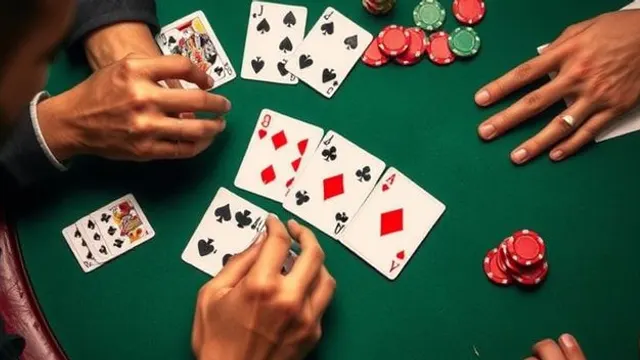
This article systematically explains the definition of Outs in poker, the calculation method 4-2 rule, practical applications, and common misconceptions, helping players quickly evaluate drawing probabilities and make better decisions.
1. What Are Outs?
In Texas Hold'em, Outs (the number of drawing cards) refer to the remaining undealt cards that can improve your current hand to one that is likely ahead or winning. For example, if you hold a flush draw (already have four cards of the same suit), the remaining nine cards of that suit (not yet seen on the board and not held by opponents) are your Outs. Outs calculation is the foundation of probability estimation and directly influences whether to call, raise, or fold.
The number of Outs depends on the type of draw you have. Common draw types and their corresponding Outs (ignoring opponent card removal) are typically:
- Open-ended straight draw (e.g., holding 8-9, flop 6-7-2): 8 Outs (four 5s and four 10s)
- Gutshot straight draw (e.g., holding 8-9, flop 6-10-2): 4 Outs (four 7s)
- Flush draw: 9 Outs
- Straight flush draw (combining straight and flush possibilities): 15 Outs (note: if you have four to a straight flush missing one card, the outs are 4 specific cards, but commonly it's a combo draw like an open-ended straight flush draw, then Outs = 9 flush + 8 straight - 2 duplicates = 15)
- High pair (e.g., holding A-K, flop with no A or K): 6 Outs (three remaining As and three Ks)
Note: Actual Outs may be reduced due to opponent hands or board texture, but typically estimate under ideal conditions first.
2. Why Is Outs Calculation Important?
Outs calculation is the foundation of poker math, helping you determine the probability of improving your draw and thus decide whether to continue. For example, on the flop you have a flush draw (9 Outs). The probability of hitting on the turn is about 19% (9/47 ≈ 19.1%), and by the river about 35% (using the 4-2 rule). If the pot odds are favorable, calling is a positive expected value (+EV) action. Conversely, if the odds are insufficient, you should fold.
Additionally, Outs calculation helps you evaluate possible draws an opponent might have when bluffing, or assess whether you are ahead.
3. Quick Estimation Method: The 4-2 Rule (or 2-4 Rule)
The most common quick estimation method is the "4-2 rule" (or 2-4 rule):
- On the flop (two cards to come), your probability of hitting by the river ≈ Outs × 4%
- On the turn (one card to come), probability ≈ Outs × 2%
For example, with 9 Outs on the flop, the probability is about 36% (actual exact probability is about 35%? Note: The 4-2 rule has some error with many Outs, but is generally usable. Actually, with 9 Outs on the flop, the probability of hitting by the river is 1 - (38/47)*(37/46) ≈ 35.0%, and the 4-2 rule gives 36%, which is quite close. For fewer Outs, the error is smaller.)
However, the rule becomes slightly less accurate when Outs exceed 8, and it does not account for opponents possibly holding your outs. A more precise calculation uses the formulas:
- Flop hitting probability = 1 - (47-Outs)/47 × (46-Outs)/46
- Turn hitting probability = Outs / 46 (exact) or Outs × 2.17% (but the 2% approximation is fine)
In actual play, the 4-2 rule is sufficient for quick decisions, especially when Outs ≤ 8.
4. Practical Examples
Example 1: Flush Draw
You hold A♥K♥, flop is Q♥7♥2♣. You have a flush draw (need one more ♥). There are 13 hearts total, you have 2, flop has 2, so 9 hearts remain (ideal Outs = 9). Probability of hitting on the turn is about 19% (9/47 ≈ 19.1%). If the pot has 100 chips and opponent bets 20, you call 20, pot becomes 140. Your win probability is 19%, expected return = 140 × 19% = 26.6, greater than your investment of 20, so calling is +EV. If opponent bets 80, you need to call 80, pot becomes 180, expected return = 180 × 19% = 34.2, less than 80, so you should fold.
Example 2: Open-Ended Straight Draw
You hold 9♠10♠, flop is 8♥7♦2♣. You have an open-ended straight draw (need a 6 or J), total 8 Outs. Using the 4-2 rule on the flop, probability ≈ 32%. Actual exact probability is about 31.5%. If the pot is 200 and opponent bets 50, you call 50, pot becomes 250. Expected return = 250 × 31.5% = 78.75, greater than 50, so calling is profitable.
Example 3: Gutshot Straight Draw
You hold J♦Q♦, flop is 9♣10♥4♠. You have a gutshot straight draw? Wait: J-Q on a 9-10 board can make two straights: 8-9-10-J-Q (need 8) or 9-10-J-Q-K (need K). So it's actually an open-ended straight draw (8 Outs). A gutshot is specifically a draw that needs only one specific card rank (e.g., holding 8-9 on a 6-10-K board, needing a 7, 4 Outs). So this example is not a gutshot. The text in the original might have an error. But for illustration, a true gutshot has 4 Outs.
5. Common Mistakes
-
Ignoring opponent overlap in outs: You may have a draw, but an opponent may also have a draw, and your outs can overlap. For example, a flush draw and a straight draw may share a card, reducing actual outs.
-
Overestimating Outs: Sometimes you have a flush draw, but the board is paired, so even if you hit your flush, you might lose to a full house. In such cases, you should discount your outs (e.g., remove cards that give your opponent a full house).
-
Ignoring reverse implied odds when using the 4-2 rule: Even if you hit your draw, your opponent might fold or you might still be behind. Outs calculation only gives probability of making your hand, but you also need to consider whether you can win more chips after hitting.
-
Not considering opponent's hand range: If an opponent holds some of your outs (e.g., they also have one of the flush cards), your actual outs are fewer. But since you cannot know exactly, you usually calculate based on all remaining cards.
-
Double-counting in combo draws: For example, a straight flush draw. You should not simply add flush outs and straight outs; subtract the cards that fulfill both. Correct: flush outs = 9, straight outs = 8, if there is overlap (the card that makes the straight flush), subtract the duplicate count.
6. Summary
Outs calculation is a fundamental skill every poker player must master. By using quick estimation (the 4-2 rule) combined with pot odds, you can make more profitable calling decisions. Remember that in actual play, outs may need adjustment based on board texture and opponent ranges. Consistent practice will build intuition and significantly improve your game. Keep in mind: Don't be dogmatic; probability is just one part of decision-making, along with position, betting patterns, opponent tendencies, etc.
FAQ
- Use the 4-2 rule: Multiply your number of Outs by 4% to approximate the probability of hitting from flop to river. For example, 9 Outs gives about 36%. However, this rule has slight deviation when Outs exceed 8. For more accuracy, use the formula: 1 - 47-Outs/47 46-Outs/46.