The Value of Postflop Position: The Choice Between Betting vs Check-Raise
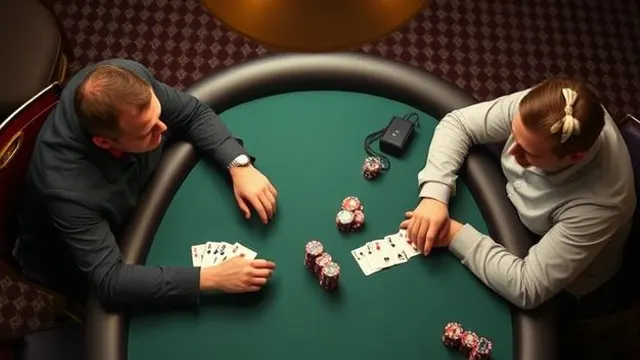
This article provides an in-depth analysis of leveraging postflop positional advantage, comparing the two strategies of active betting versus check-raising, including their applicable scenarios, principles, and common misconceptions, to help players make optimal decisions based on position, board structure, and opponent ranges.
I. Definitions and Core Concepts
In Texas Hold'em, [position advantage] refers to the priority of action a player has relative to opponents on the flop and subsequent streets. Players in late position (e.g., the button, [cutoff]) can decide their strategy after seeing opponents' actions, granting a significant informational edge. The value of postflop position is primarily manifested in two core actions: betting and [check-raise].
- Bet: A player bets directly when first to act after the flop. Common when holding strong hands or semi-bluffs, aiming to build the pot, extract value, or force opponents to fold.
- Check-Raise: A player checks first, then raises after an opponent bets. Often used to entice a bet and then enlarge the pot, or as a bluffing tool leveraging the opponent's willingness to bet.
The choice between them heavily depends on position. When in early position, check-raising is a primary weapon; in late position, betting or checking (with the intention of betting later) is more common. However, even in late position, deliberate checking ([slow-play]) is sometimes used to control the pot or induce bluffs.
II. Principle Analysis: How Position Affects Decisions
1. Information Asymmetry
Late-position players have the advantage of acting later. They can react after learning the early-position player's intentions. For example, when an early-position player checks, the late-position player can infer the opponent might be weak and choose to bet to steal the pot. Conversely, when the early-position player bets, the late-position player can evaluate whether to call, raise, or fold.
2. Pot Control
Betting can quickly build the pot, suitable for value hands; checking allows pot control, suitable for marginal hands or draws. Position determines your ability to control the pot: a late-position player can choose to bet or check after an opponent checks, while an early-position player who checks may face pressure from a late-position bet.
3. Range Balancing
Skilled players mix strategies to avoid exploitation. For instance, if you always bet when you have a made hand and check when drawing, opponents can easily read your range. Therefore, sometimes you deliberately check with strong hands (slow-play), or use semi-bluff bets.
III. Practical Example Comparisons
Scenario 1: Flop (Late Position vs. Early Position)
Assume you are on the button with A♠K♠, flop is K♥9♣2♦. The early-position player (big blind) checks.
- Bet: You can bet about 2/3 pot. This is a standard value bet because your top pair top kicker is strong, and you get value from worse Kx, pairs, or draws. You also deny a free card to the turn.
- Check: You choose to check for slow-play or pot control. However, on this dry board, strong hands should bet; checking loses value and allows the opponent a cheap turn card. Unless you plan to induce a bluff on the turn, betting is generally superior.
Scenario 2: Flop (Early Position vs. Late Position)
You are in the big blind with 8♦7♦, flop is J♠T♠2♦ (with a flush draw). You check. The [button] player bets.
- Check-Raise: You can raise to about 3x the bet. This is a semi-bluff: your combo draw (open-ended straight draw + backdoor flush draw) has about 30% equity. Raising can win the pot immediately (if opponent folds), and even if called, you have good development. Additionally, your raising range includes strong hands like two pair+, making it hard for opponents to read.
- Check-Call: Simply calling lets you see the turn cheaply, but you lose the initiative. If the turn misses, the opponent may continue betting and apply pressure. Your hand is not strong enough to call a large bet, so raising improves bluff efficiency.
Scenario 3: Turn (Late Position Slow-Play)
Button holds A♦K♦, flop is K♠9♣2♠. You bet and the big blind calls. Turn is 6♦, big blind checks.
- Bet: Continue betting about 2/3 pot. Since draws are still possible, your top pair top kicker remains strong and needs to extract value and protect your hand.
- Check: You check, intending to induce a bluff on the river. However, this loses value on the turn, and if a dangerous card comes (e.g., spade or straight), you may struggle to get paid. This slow-play is only advisable against overly aggressive opponents.
IV. Common Misconceptions
Misconception 1: Always bet in late position Not every late-position bet is correct. On very wet flops (e.g., two-suited connected cards), even an overpair in late position might check to avoid getting raised into a tough spot. Or, when holding a pure draw with no fold equity, checking allows a free card.
Misconception 2: Check-raise is only for strong hands Check-raise is often used for range balancing; weak hands (like draws) can also be semi-bluff raises. However, to some opponents, a check-raise often signals strength, so you need to occasionally check-raise with the nuts while mixing in bluffs.
Misconception 3: Passive players like to check In reality, skilled passive players also bet appropriately. The key is adjusting to opponent tendencies: if opponents fold often, bet more to steal; if they call frequently, bet for value. Position determines the order in which you gain this information.
V. Summary
The value of postflop position lies in using informational advantages to choose the most profitable action. Betting is suitable when you have a good hand to build the pot, or when you think the opponent's range is weak and you can steal. Check-raising is suitable when you have a strong hand or a strong draw to induce a bet and enlarge the pot. The key points are:
- In late position, prioritize value betting, but be aware of the value of checking for slow-play.
- In early position, check-raising is the primary countermeasure, but should be balanced with check-calling.
- Adjust strategies based on board texture and opponent ranges.
Ultimately, there is no absolute correct choice, only decisions based on logic and exploitation. Continuous practice, combined with factors like position, range, and pot odds, will maximize the value of postflop position.
FAQ
- Checking in position is typically used in the following situations: 1) Your hand is strong on a dry board, but you want to induce opponents to bet on later streets, allowing you to raise for more value slowplay; 2) Your hand is of medium strength e.g., middle pair, and you don't want to get into trouble facing an opponent's raise; 3) The board is extremely wet and your hand has little developability, so checking can control the pot. Additionally, if opponents have a low fold-to-cbet rate and tend to check-raise, checking can avoid being forced to fold after a raise.