Texas Hold'em Preflop Range Charts Interpretation: How to Use Range Tables
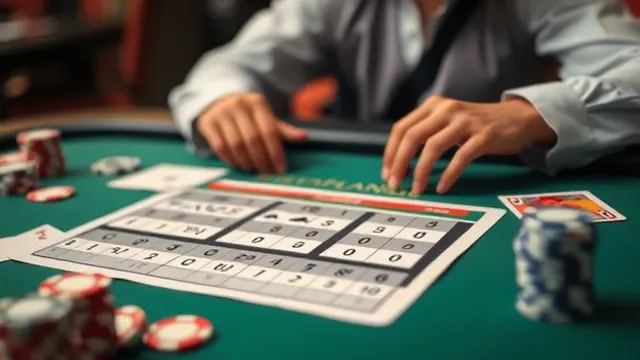
This article explains the definition, principles, practical application and common misconceptions of Preflop Range Charts, helping players systematize preflop decisions and increase profits.
Preflop Range Chart Guide
1. Definition and Purpose
Preflop Range Charts are tables used in Texas Hold'em to represent the hand combinations a player should raise, call, or fold in a specific position and situation. They are typically presented in a "position vs position" or "position vs action (e.g., facing a raise)" format, with a grid or numbers indicating the specific strategy for each hand. The core purpose is to systematize complex preflop decisions and avoid betting on instinct.
In practice, range charts help players:
- Quickly determine the correct action for a given hand in the current situation.
- Avoid deviations caused by emotion or fatigue.
- Establish a consistent range foundation for subsequent postflop actions.
2. Principles: The Three Pillars of Range Construction
2.1 Position
Position is the core factor determining range. Later positions (e.g., BTN) have information advantage postflop, allowing them to play more hands; early positions (UTG) act first with the least information, so only strong hands are playable. Typical principles:
- Early position: Only play strong hands (e.g., AA, KK, AKs, QQ, etc.).
- Middle position: Add medium pairs and suited connectors.
- Late position: Can play many speculative hands (e.g., small pairs, suited connectors).
2.2 Action & Reaction
Range depends on previous actions:
- Unopened pot: The raising range is usually more aggressive than the calling range.
- Facing a raise: The calling range needs to be more defensive while avoiding exploitation (e.g., overcalling).
- Facing a 3-bet: Typically only continue with a 4-bet or fold; the calling range shrinks.
2.3 Stack Depth
Effective stack size influences range width. With shallow stacks (<40 BB), the value of speculative hands decreases; focus on top pair and made hands. With deep stacks (>100 BB), hands with high implied odds (e.g., suited connectors, small pairs) become more playable.
3. Practical Example: Interpreting a Typical Range Chart
Assume a standard 6-max table with 100 BB effective stacks. Below is a simplified "UTG open raise" range (typical for a good player):
- UTG raising range (about 15% of hands): All pairs (22+), A8s+, AJo+, K9s+, KQo, QTs+, JTs, T9s, 98s.
- BTN calling UTG raise range (about 12% of hands): Low to medium pairs (22-77), A2s-A5s, suited connectors (54s-87s), suited gappers (J9s, T8s), etc.
Example Analysis: UTG holds A♠Q♠ (AQo), which is in the raising range, so raise to 2.5 BB. BTN holds 5♥5♣ (55), which according to the chart is in the calling range, so call. Flop: J♠7♠2♦. UTG has the nut flush draw + overcards, can c-bet as a semi-bluff; BTN has bottom pair and must decide whether to continue.
Note: Range charts provide a baseline; actual play must consider opponent tendencies and dynamic adjustments.
4. Common Mistakes and Corrections
4.1 "Strictly Follow Every Hand"
Mistake: Treating the range chart as rigid and mandatory. In reality, it is a reference that should be balanced against opponents. For example, if opponents fold too much to small 3-bets, you can widen your 3-betting range.
4.2 "The Looser, the Better"
Mistake: Believing you can play any hand from late position. Over-entering pots reduces overall hand quality and makes you exploitable by reraises. A reasonable approach is to keep VPIP between 20%-30% (6-max).
4.3 "Ignoring Game Balance"
Mistake: Playing only your own range without considering opponent reactions. Good players will exploit imbalances (e.g., you never 3-bet bluff) by folding to your bets. Regularly review your range for obvious leaks.
5. Conclusion
Preflop range charts are tools that convert complex decisions into repeatable actions. The key is understanding the interaction of position, action, and stack depth. Beginners can quickly improve by memorizing standard charts, but the ultimate goal is to develop the ability to make dynamic adjustments. Remember: ranges are not the destination, but the starting point for thought.
FAQ
- No need to memorize all combinations. Start with core principles: position determines tightness—tight up front, loose in back. Then memorize opening ranges for key positions e.g., UTG 15%, BTN 40%, and gradually get familiar using poker software e.g., PokerTracker or mobile app hints. The key is to judge whether your hand is within a reasonable range based on your opponent's actions.