Value Difference Between Suited and Unsuited Starting Hands
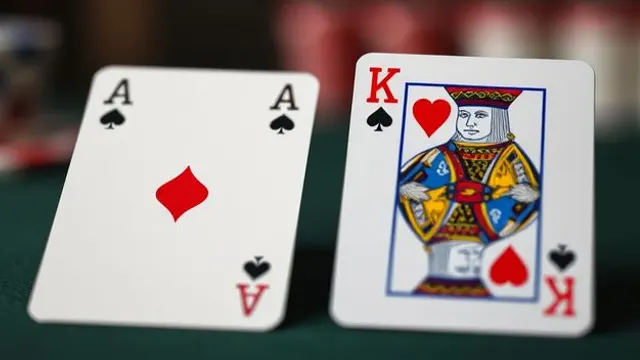
This article delves into the value difference between suited and unsuited starting hands in Texas Hold'em, covering definitions, principles, practical examples, and common misconceptions to help players understand the advantages of suited hands and how to use them correctly.
In Texas Hold'em, whether starting hands are suited (same suit) significantly impacts hand strength. Many beginners tend to overvalue or undervalue suited hands. This article will systematically analyze the value difference between suited and unsuited starting hands from five aspects: definition, principles, practical examples, common misconceptions, and summary.
1. Definition
- Suited Starting Hands: Both hole cards share the same suit, e.g., A♠K♠. Suited hands have potential flush draws, allowing a flush to be made on the board.
- Unsuited Starting Hands (Offsuit): Hole cards are of different suits, e.g., A♠K♥. Offsuit hands lack flush potential and only rely on pairs, straights, or high cards.
2. Principles: The Source of Suited Hands' Value
The main advantages of suited hands are:
- [Flush draw] potential: Post-flop, if two board cards match the suit of the hole cards, a flush draw (9 outs) is formed. This increases drawing hand strength, especially in multi-way pots where a [straight flush] draw is extremely powerful.
- Higher [implied odds]: When a flush hits, it is relatively disguised and often gets paid off. Compared to obvious paired boards, flushes are more easily underestimated, leading to greater value.
- Post-flop flexibility: Suited hands allow for more aggressive semi-bluffing, as the draw itself has equity. Even if the draw is missed, the possibility of bluffing remains.
Unsuited hands lack this dimension; their win rate mainly depends on making a pair, straight, or high card. On the flop, unsuited hands often need to hit top pair or better to continue, otherwise they are easily folded.
3. Quantitative Comparison: Win Rate Differences between Suited and Unsuited
Using typical starting hands, compare preflop all-in equities (approximate):
- [AKo] (offsuit) vs [76s] (suited): ~65% vs 35%
- [AKo] vs [AQo] (both offsuit): ~74% vs 26%
- [AKo] (suited) vs [AKo] (offsuit): ~52% vs 48% (suited version slightly better due to flush potential)
Data shows that suited hands generally have about 2%-4% additional equity over the same offsuit hand. Although small, these marginal advantages accumulate into significant profits over the long run.
4. Practical Examples: Correct Use of Suited Hands
Example 1: Preflop Raising Range
In a 6-max game, a typical in-position raising range often includes [suited connectors] (e.g., [54s], [T9s]) and [suited ace]-high hands (e.g., [A5s]), while the same offsuit hands are excluded. This is because suited hands have better playability post-flop: even without hitting a pair, a [flush draw] provides a reason to continue.
Example 2: Flop Semi-Bluff
A player holds K♠Q♠, and the flop is J♠T♠3♣. This gives an open-ended straight draw (any 9 or A makes a straight) plus a flush draw (9 outs), totaling 15 outs. This is an ideal semi-bluff opportunity: betting or raising can force folds while retaining equity. With K♠Q♥ (offsuit), only the open-ended straight draw (8 outs) exists, reducing value.
Example 3: River Value Bet
Suppose a player holds A♠5♠, and the [community cards] are K♠7♠2♦8♣Q♠. The river completes the flush. Betting here is likely to be called by opponents with top pair or two pair, as it's hard for them to believe someone has a flush. With A♠5♦ (offsuit), only A-high can win small pots, offering far less value.
5. Common Misconceptions
Misconception 1: Suited Hands Are Always Better Than Offsuit
In reality, the additional value of suited hands is limited. For example, [A2o] against [TT] (pocket tens) has about 29% equity preflop, while [A2s] only increases to about 32%. The advantage of suited hands lies in post-flop playability, not a huge preflop boost. Therefore, do not blindly play any suited hand; [72s] (suited 7-2) is still a trash hand due to difficulty hitting strong hands and high reverse implied odds.
Misconception 2: Chasing Suited Hands While Ignoring Card Rank
Some players over-chase suited hands, even raising preflop with [K3s] while folding [K3o]. But [K3s] still suffers from a kicker problem post-flop – if a King hits, the 3-kicker may be dominated by a bigger King. Card rank is core; suited is just a bonus. The correct approach: prefer the suited version when ranks are equal, but do not loosen starting hand standards significantly just because of suit.
Misconception 3: Must Chase Every Flush Draw
Although flush draws are attractive, not every one should be chased. You must consider pot odds, [implied odds], and opponent range. For example, facing an overbet with an opponent range containing many flushes or full houses, chasing a flush may be [-EV].
6. Summary
The value difference between suited and unsuited starting hands lies primarily in post-flop potential, not preflop equity. Suited hands provide an extra drawing dimension, increasing semi-bluff opportunities and implied odds. However, card rank remains the most important factor; being suited cannot compensate for a fundamentally weak hand. When constructing a starting hand range, prioritize high card rank and playable suited hands (e.g., suited connectors, [suited ace]-high) and avoid over-focusing on suit at the expense of basic hand strength. Understanding these differences helps make better decisions in various situations and improves long-term profitability.
FAQ
- Suited hands typically have about 2% to 4% more equity than unsuited hands of the same rank. For example, AKs vs AKo has a small edge of roughly 52% to 48%. Weaker suited hands have a smaller difference, e.g., 72s vs 72o is almost irrelevant. However, the difference in post-flop playability is much larger, as the implied value of a flush draw far exceeds the pre-flop equity difference.