Texas Hold'em English Terms Glossary: Quick Reference for Chinese Speakers
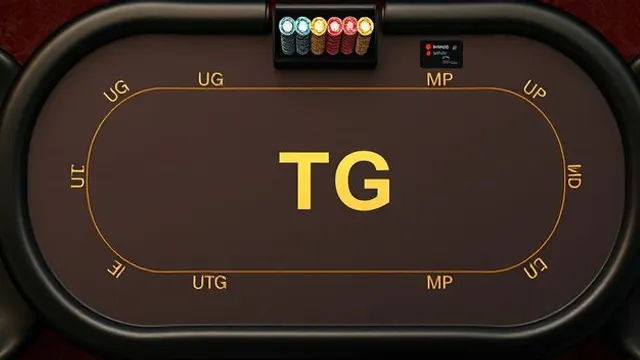
This article compiles the most commonly used English terms in Texas Hold'em and their Chinese definitions, helping beginners get up to speed quickly. It covers core categories such as positions, actions, betting, and tournaments, and includes practical examples and analysis of common misconceptions.
I. Introduction
Texas Hold'em, as the world's most popular poker variant, has a terminology system primarily in English. Whether on online platforms or in live tournaments, familiarity with common English terms is fundamental to quickly integrating into the game. This manual organizes core terms by category, with explanations of principles and practical scenarios, helping readers communicate confidently at the table.
II. Position Terms
- UTG (Under the Gun): The position immediately to the left of the big blind, acting first preflop with the most disadvantage due to having the least information.
- MP (Middle Position): Typically the third or fourth seat in a 6-handed game, after UTG, with medium action order.
- CO (Cutoff): The seat to the right of the button, second-last to act preflop, offering significant information advantage.
- BTN (Button): The dealer position, acting last in every betting round preflop, with maximum information advantage, allowing looser entry into pots.
- SB (Small Blind): Position to the left of the button, forced to post the small blind, acting second preflop.
- BB (Big Blind): Position to the left of the small blind, forced to post the big blind, acting last preflop.
III. Action Terms
- Fold: Discarding the current hand; chips already committed cannot be recovered.
- Check: Passing the action to the next player when no bet is required. Only available when the current bet is zero.
- Call: Matching the current highest bet to stay in the hand.
- Bet: Placing the first chip wager of the round.
- Raise: Increasing the bet after another player has already bet.
- Re-raise: Raising a raise, typically indicating a strong hand.
- All-in: Wagering all remaining chips.
IV. Bet Sizing and Types
- Pot: The total chips contributed by all players in the current hand.
- Blind: Mandatory chips placed before the hand begins, consisting of the small blind and big blind.
- Ante: Additional mandatory chips posted by all players each hand, common in later tournament stages.
- Min-raise: Raising to exactly double the current bet (e.g., if big blind is 100, min-raise is 200).
- Value Bet: Betting with a hand believed to be strongest, expecting to be called by worse hands.
- Bluff: Betting or raising with a weak hand to force opponents to fold.
- Semi-bluff: Betting with a drawing hand (e.g., straight draw), combining potential to win immediately or improve later.
V. Hand-Related Terms
- Hole Cards (Pocket Cards): The two cards dealt exclusively to each player.
- Community Cards (Up Cards): The five cards shared by all players (three on the flop, one on the turn, one on the river).
- Flop: The first three community cards.
- Turn: The fourth community card.
- River: The fifth community card.
- Draw: A hand that is not yet made but requires specific cards to become strong, such as an open-ended straight draw.
- Outs: The number of remaining cards that can improve your hand to a winning holding. For example, a flush draw has 9 outs.
- Nuts: The best possible hand given the current community cards.
VI. Tournament and Chip Terms
- Bubble: The stage in a tournament where the next elimination will miss the money. Common strategy is to play tight and wait for others to bust.
- ITM (In The Money): Reaching the paid places.
- Chip Leader: The player with the most chips.
- Short Stack: A player with relatively few chips, often requiring more aggressive play.
- Rebuy: Allowed in certain tournaments to purchase additional chips, usually during early levels.
- Add-on: Purchasing extra chips at a specific time, not limited to after elimination.
VII. Common Abbreviations
- EV (Expected Value): Expected value, a metric quantifying the long-term profitability of a decision. Positive EV means profitable.
- VPIP (Voluntarily Put $ In Pot): Voluntarily Put Money Into Pot percentage, measuring how often a player voluntarily bets.
- PFR (Pre-flop Raise): Pre-flop raise frequency.
- AF (Aggression Factor): Aggression factor, reflecting the ratio of bets/raises to calls.
- BB/100 (Big Blinds per 100 hands): A common profit unit in online poker.
VIII. Practical Examples
Example 1: Pre-flop Position and Starting Hand Selection Suppose you are on the cutoff (CO) and all players before you fold. You hold A♥K♠. You can raise to 3BB. Since you are in late position, even if the blinds call, you retain positional advantage after the flop. Conversely, if you were in UTG, the same hand requires more caution because multiple players behind you may hold strong hands.
Example 2: Drawing Hands and Odds Calculation The pot is 100 chips, and an opponent bets 50. You have a flush draw with 9 outs. According to simple pot odds, you need to call 50, making the pot 200. Your chance of winning is about 19% (9/47), while the call percentage is 25% — direct pot odds are unprofitable. However, considering implied odds (you can win more chips from your opponent if you hit), a call may be justified.
Example 3: Bubble Mentality In a tournament with 15 players remaining and the top 10 making the money, you have a medium stack and the big blind is short-stacked. Everyone folds to you, and you hold a small pair. You consider raising to steal the blinds. But if you are called, you may end up in a disadvantageous situation. It is generally recommended to reduce marginal plays during the bubble to avoid unnecessary risk.
IX. Common Mistakes
- Thinking Position Doesn’t Matter: Many beginners ignore the advantage of position and play too many hands from UTG. In reality, position is one of the most important factors in decision-making.
- Over-Chasing Draws: Focusing only on the number of outs without considering pot odds leads to long-term losses. Combined with implied odds, rational analysis is essential.
- Confusing Pre-flop and Post-flop Strategies: Hand strength changes significantly across phases; do not apply pre-flop standards directly to post-flop play.
X. Summary
Mastering English poker terminology is the first step to advancing. This guide covers the most common terms, but poker knowledge is vast. It is recommended to keep learning through practical play. Remember: position, odds, and opponent analysis are key areas for continuous improvement.
FAQ
- The nuts refers to the strongest possible hand any player can hold given the current community cards. For example, with a board of K♠Q♠J♠10♠9♠, the nuts is a straight flush with A♠X♠. If the board is A♥K♥Q♦J♦10♠, then any ten makes a straight like 9-10 is the nuts. Note that there may be multiple combinations of the nuts, but all have equal hand strength.