#pot control
Poker content related to “pot control” · 15 items
News
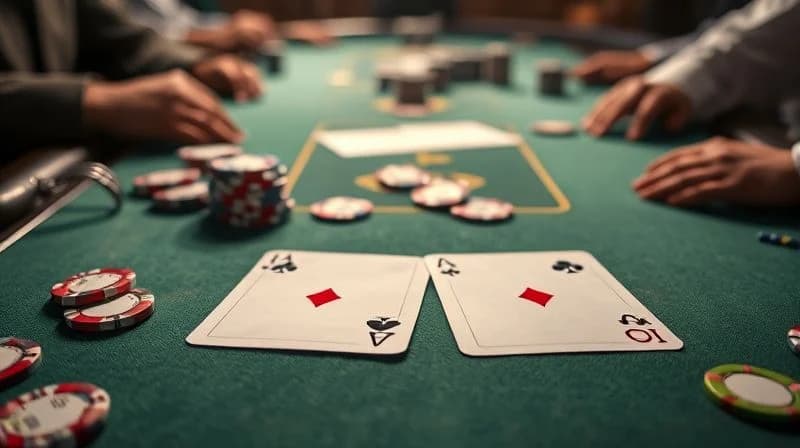
Bomb Pot Naked Top Set: Raise or Control Pot?
In a $5/8 double-board bomb pot, Hero flops the top set A♠️A♣️J♣️2♦️ on two boards A♥️6♦️3♥️ and T♦️8♦️4♠️. Pot is $40, UTG bets $40 and four callers. This article analyzes whether to raise to isolate or call to control the pot, and discusses strategy differences for different flops.

Survival Guide for Wild Poker Tables: How to Handle Aggressive Players in 1/2 Cash Games
A recreational player shares how he adjusted his strategy at a 1/2 cash game filled with straddles and aggressive raises, ultimately profiting $60. The article analyzes key adjustments for facing wild tables: tightening ranges, using deep stack all-ins, and observing table dynamics.

Postflop Optimal Pot Control: When to Choose Small Pot Play
Through practical hand examples, it analyzes the play choices for marginal made hands, drawing hands, and out-of-position situations, and points out common misconceptions, helping players maintain profitability while avoiding the risk of large pots.
Strategy
What is the win rate of AKs vs 63o?
AKs vs 63o: Win rate, common mistakes, applicable scenarios, and FAQ — This article compares AKs vs 63o at 40BB stack depth in preflop performance, covering win rate, range strength, postflop playability, and practical strategy to help players make optimal decisions.
Overpair on Dangerous Board: How to Safely Escape or Maximize Value
Overpairs are often considered strong hands on the flop, but when facing highly coordinated dangerous boards such as straight draws or flush draws, mishandling can lead to heavy losses. This article explains from preflop and postflop perspectives how to evaluate the board, control the pot, identify opponent ranges, and provides practical examples to help you maximize profitability with overpairs on dangerous boards.
Top Pair Weak Kicker: Complete Preflop and Postflop Strategy
Top pair weak kicker TPWK is one of the most common made hands postflop, but also one of the most vulnerable to reverse implied odds. This article systematically explains how to profit consistently with TPWK, covering preflop range selection, postflop betting and checking decisions, and exploitative adjustments against different opponents, while avoiding the trap of being dominated.
Pot Control: How to Avoid Big Losses in Unfavorable Situations
Pot control is a key skill in Texas Hold'em, especially when you are ahead but vulnerable to being outdrawn. By controlling the size of the pot, you can reduce losses. This article explains in detail the applicable scenarios, execution methods, and examples of pot control, helping players reduce variance in unfavorable situations and improve long-term profitability.
How to Play Top Pair with Weak Kicker: Avoiding the Trap of Overcommitting
Top pair with a weak kicker is a common but easily misplayed hand in Texas Hold'em. This article details strategies for flop, turn, and river play, including bet sizing, decisions facing raises, the importance of board texture, and adjustments in multi-way pots, helping you minimize losses and maximize value.
Postflop Betting Size Principles: From Pot Control to Value Maximization
Postflop betting sizing is key to profitability in Texas Hold'em. This article systematically explains betting principles based on pot size, hand strength, range advantage, position, and opponent tendencies, covering sizing strategies for value bets and bluffs to help optimize your decisions.
Overpair on Dangerous Flop: How to Judge and Respond to Dangerous Flop Textures
When an overpair encounters a straight or flush draw board on the flop, it can easily get into a dilemma. This article teaches you to identify dangerous flop structures, evaluate opponent ranges, and adopt the best betting, check-raise, or folding strategies to maximize value while reducing risk.
The Art of Pot Control: How to Avoid Big Losses and Protect Your Chips
Pot control is a key technique in poker to reduce losses and increase profitability. This article explains how to use position, bet sizing, and checking strategies to control the pot size, avoid huge losses from medium-strength or marginal hands, while preserving opportunities to build the pot when you have an advantage.
The Art of Pot Control: How to Avoid Big Losses
Pot control is a key strategy in Texas Hold'em to reduce losses. This article explains when and how to control pot size to avoid risk and protect chips, suitable for mid to low stakes cash games.
Top Pair Weak Kicker: How to Avoid Becoming a 'Payoff Machine'
Top pair weak kicker is one of the most error-prone hand types post-flop. This article starts from pre-flop ranges, post-flop bet sizing, and decision logic on the turn and river, teaching you to identify dangerous board textures, control the pot, protect value, and fold at the right time to avoid being exploited by opponents.
Top Pair Weak Kicker: How to Play This Tricky Hand
Top pair weak kicker is one of the most mistake-prone hands in Texas Hold'em. This article details when to bet, check, or fold from preflop to river, and teaches you to recognize danger signals, adjust your play style, and avoid losing significant chips with TPWK.
Pot Control Strategy: How to Avoid Big Losses and Improve Poker Profitability
Pot control is a key technique in poker for protecting chips and avoiding being trapped in the pot. This article explains the definition, applicable scenarios, operation methods, and common misconceptions of pot control, helping you reasonably control bet sizing after the flop, reduce losses, and increase long-term profitability.