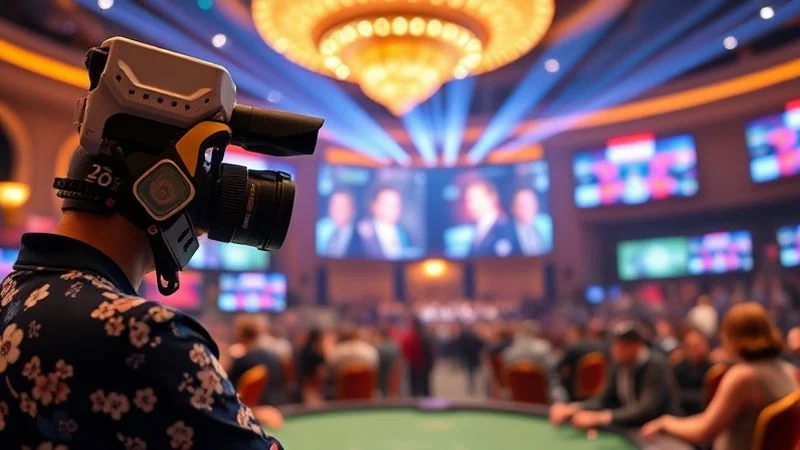
ESPN Brings AI Behavior Reading Technology to World Series of Poker Broadcasts

ESPN has introduced an AI-powered behavior analysis system during its WSOP coverage, capable of detecting player bluffs and tells without seeing hole cards. The technology uses motion capture and historical data to provide real-time insights.
AI Reads Poker Tells on Live TV
ESPN is revolutionizing poker broadcasting with a new artificial intelligence system that analyzes player behavior during the World Series of Poker (WSOP) main event. According to reports, the technology uses motion-sensing cameras and machine learning algorithms to detect subtle body language changes, facial micro-expressions, and betting patterns. The system can predict whether a player is bluffing or holding a strong hand with remarkable accuracy—without ever looking at their hole cards.
How It Works
The AI, developed in partnership with a behavior analytics firm, processes video feeds from multiple angles. It tracks player movements, such as hand tremors, eye contact, and postural shifts, comparing them against a database of thousands of hands from professional players. The system then assigns a “bluff probability” score, which appears as an on-screen graphic during ESPN’s broadcast.
“This is not about reading minds—it’s about pattern recognition,” a company spokesperson explained. “By analyzing betting behaviors and physical tells, we can infer the strength of a hand based on how players act in similar situations.”
Implications for Viewers and Players
The technology adds a new layer of entertainment for home viewers, offering insight into the psychological battle at the table. However, some players have expressed concern that detailed behavioral analysis could influence their opponents’ decisions. In response, ESPN notes that the system only displays aggregated statistics and does not provide real-time alerts to players.
Accuracy and Limitations
In demos, the AI correctly identified bluffs about 70% of the time, but experts caution that poker is ultimately a game of incomplete information. The system struggles with highly experienced players who deliberately mask their tells. “It’s a tool for analysis, not a crystal ball,” said a WSOP commentator.
The Future of Poker Coverage
This marks the first time AI behavior reading has been used in a live poker broadcast. If successful, similar systems could become standard in major tournaments, providing deeper strategic breakdowns and enhancing the spectator experience.
Note: This article is based on available reports about ESPN’s use of AI technology during the WSOP. Specific performance metrics and technical details may vary.
常见问题
- The AI analyzes players' physical tells (facial expressions, body language) and betting patterns, comparing them to a database of known behaviors in similar situations. It calculates a probability of bluffing based on historical data and real-time inputs.