Deeb Reveals Profits From POY
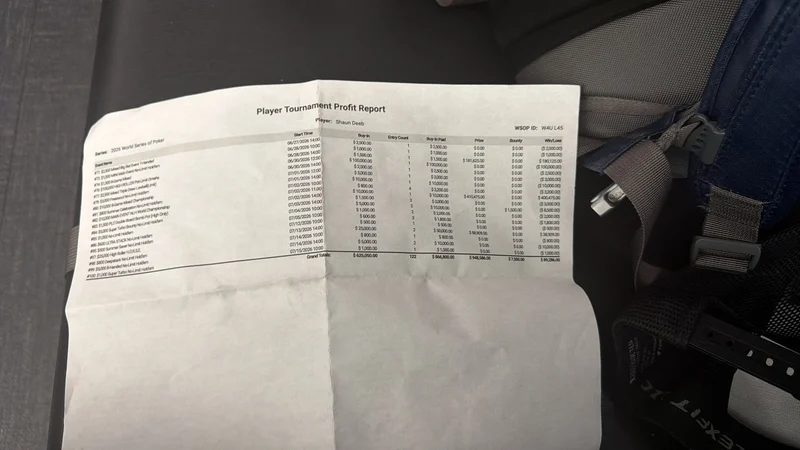
Poker pro Shaun Deeb has disclosed how much profit his Player of the Year leaderboard campaign generated, offering a rare look at the economics of chasing POY honors.
Deeb Opens Up About POY Economics
Shaun Deeb has revealed the profits he generated during his run at the top of a Player of the Year leaderboard. The disclosure offers a rare, player-side look at what a sustained POY campaign actually returns financially, rather than simply how many points or cashes it produces.
POY races are a familiar fixture of the tournament calendar. Series organizers and media outlets track points across a season, and players who commit to a full schedule can find themselves in a public race that runs for months. What is discussed far less often is the bottom line: whether the volume of events required to contend actually leaves a player ahead after buy-ins, travel, and expenses.
Why the Numbers Matter
A POY leaderboard rewards consistency and volume. Contenders typically play a heavy schedule across multiple series and buy-in levels, which means the gross figure attached to a campaign can look very different from the net result. Deeb's disclosure speaks directly to that gap.
For players considering a serious POY push, the relevant question is not how many cashes a run produces, but whether the profit justifies the opportunity cost. Time spent grinding mid-stakes events for points is time not spent in higher-value spots, and the travel and entry costs of a full schedule add up quickly.
The Broader Picture
Leaderboard races also carry value beyond direct winnings. A strong POY position raises a player's profile, which can translate into sponsorship interest, staking arrangements, and media opportunities. Those indirect benefits are difficult to quantify and are usually not included when a player talks about profit from a run.
Deeb's willingness to put a number on his own campaign is unusual in a game where financial results are often kept private. It gives observers a concrete reference point for how a high-volume tournament schedule can perform, while also underlining that leaderboard success and profitability are not automatically the same thing.
What to Take From It
For tournament players, the takeaway is straightforward: treat a POY campaign as a business decision. Track buy-ins, travel, and expenses against results, and be honest about whether the volume required is sustainable. A leaderboard position is a measure of performance across a season, not a guarantee of profit.
Deeb's disclosure adds a useful data point to that discussion, and it serves as a reminder that the most visible part of a poker season is rarely the most financially significant one.
FAQ
- Deeb disclosed the profits he generated from his Player of the Year leaderboard run, giving a rare player-side view of the financial side of chasing POY points.