3 Months of Micro-Stakes Online Grinding, First Live Poker Session Wins $350 - Player Shares a Week of Practical Experience
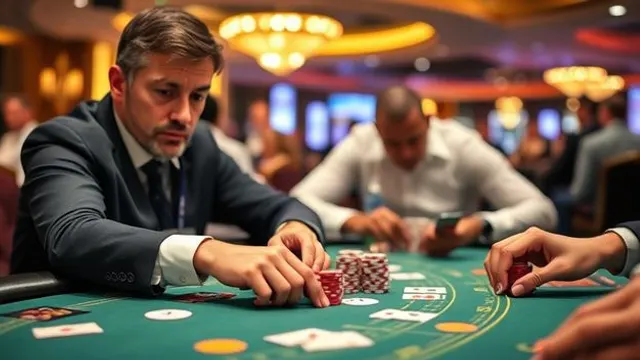
A player who has only studied poker for 3-4 months, after accumulating theoretical knowledge in micro-stakes online, tried live poker for the first time. First session: lost $16 in 5 hours. Second session: won $350 in 3 hours. He shared his transition experience from online to live, including tight-aggressive strategy, bet sizing adaptation, and interesting observations about different opponent types in live games.
This article recounts the first-hand experience of a poker enthusiast transitioning from online micro stakes to live games. The player has been studying poker for about 3-4 months, primarily playing micro stakes online while reading books, taking online courses, and having a good rapport with a coach. Recently, he entered a live poker room for the first time and experienced a completely different environment.
First Live Session: Losses and Lessons
The first live session lasted 5 hours, resulting in a $16 loss. Although the amount was small, the experience gave him a deep appreciation for the differences between live and online play. He observed a wide variety of player types at the live table, from tight-passive to loose-aggressive, each with their own patterns. Initially, the bet sizes felt intimidating—live blinds are typically higher than online micro stakes, and players tend to use larger bets to apply pressure. He adopted a conservative strategy: only playing strong hands and folding decisively when necessary.
Second Session: Strategy Adjustment Yields Profit
In a second 3-hour session, he profited $350. The key change was his bet sizing with made hands. He realized that in online micro stakes, he often used small bets to entice callers, but live players are more willing to pay for draws, so betting heavily with strong hands extracted greater value. He also maintained a tight style, reducing involvement in marginal pots.
Transition Insights: Online to Live
The player believes that the fundamentals learned online (such as position, ranges, and pot odds) apply equally to live games, but one must adapt to live-specific elements like physical tells, betting rhythms, and social dynamics. He noted that observing how live players handle chips and reading their body language is an experience that cannot be replicated online. "Although I lost the first session, I learned a lot. The profit from the second session proved I'm on the right track. Poker is really fun—seeing my hard work pay off in real play feels amazing."
Advice for Beginners
For players looking to move from online to live, he suggests:
- Get used to bet sizes in advance: Live blinds are usually higher, so practice thinking in larger chip denominations.
- Stick to a tight-aggressive (TAG) strategy: Avoid complex bluffs early on; wait for strong hands before committing.
- Control your emotions: Live play has a slower pace; patience is key while waiting for good hands.
- Keep a journal: Review each session afterward to identify decision-making errors.
This experience echoes what most coaches say: micro stakes online is a low-cost learning platform, but the real-time feedback and interpersonal aspects of live poker are irreplaceable. For recreational players, balancing study and practice while gradually improving is the key to long-term profitability.
FAQ
- First, live blinds are usually higher, so bet sizing needs to adapt. Second, the live environment focuses more on physical reads and identifying opponent types. It is recommended to maintain a tight-aggressive strategy, avoid excessive bluffing, and record experiences from each session.