How to Convince Friends to Use a Dedicated Dealer in Home Poker Games?
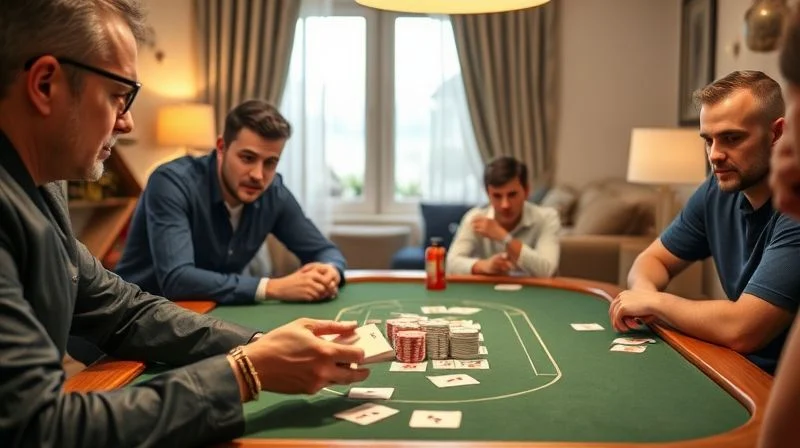
Addressing the inefficiency of rotating dealers in home poker games, this article offers practical advice to help persuade friends to bring in a dedicated dealer, improving game flow and experience.
Common Pain Points of Home Poker Games
Many poker enthusiasts who organize home games often adopt the rule of "players taking turns dealing." This model seems fair, but in practice, it frequently leads to problems: inexperienced players are unfamiliar with shuffling and dealing, resulting in messy card order, slow dealing, and even disputes due to improper handling. A Reddit user shared a similar frustration: "We host a small home poker tournament every month, but some friends have no idea how to shuffle. Every deal is a disaster and takes way too long."
Advantages of a Dedicated Dealer
Introducing a dedicated dealer in a home game (such as an eliminated player or someone assigned specifically) offers many benefits:
- Increased Efficiency: A dedicated dealer, even with minimal training or personal experience, can maintain a steady dealing pace, avoiding waiting time caused by inexperienced players.
- Fewer Disputes: Standardized dealing actions and rules reduce the chance of messy card order or dealing errors, allowing players to focus more on strategy.
- Enhanced Experience: Especially for beginners, a smooth game flow sparks interest and avoids distraction from technical details.
How to Convince Friends?
Here are some practical persuasion strategies:
- Emphasize Fairness: Explain that a dedicated dealer prevents "players who are poor at dealing from unintentionally affecting the game," ensuring even randomness for everyone.
- Quantify Time Savings: Estimate the seconds saved per deal, multiply by the number of hands over a night, and show how many more hands can be played or how much earlier the game can end.
- Clear Division of Roles: Suggest that the first eliminated player take on the dealer role, so no one is idle while the game stays continuous.
- Demonstrate: If friends are still hesitant, try one round with a skilled player as the dedicated dealer so everyone can experience the difference firsthand.
Basic Requirements for the Dealer
A home game doesn't need professional casino dealing skills, but a few points should be noted:
- Proper Shuffling: Perform at least two or three standard riffle shuffles and a cut to ensure randomness.
- Smooth Dealing: Deal cards face down with steady motions, avoiding exposing card corners.
- Follow the Rules: Deal clockwise from the button position, and when necessary, clearly expose the burn card and other procedures.
Conclusion
The core of a home poker game is fun and friendship, but an inefficient dealing process can dampen enthusiasm. Introducing a dedicated dealer is not about professionalizing the game but about optimizing the experience. Try this adjustment at your next gathering, and you'll likely enjoy a smoother game.
Example: If you're still worried about friends objecting, you can offer a compromise: "Let's take turns dealing, but anyone who wants can volunteer to handle it for others," gradually building the habit.