Josh Arieh on Fame, Chaos and a
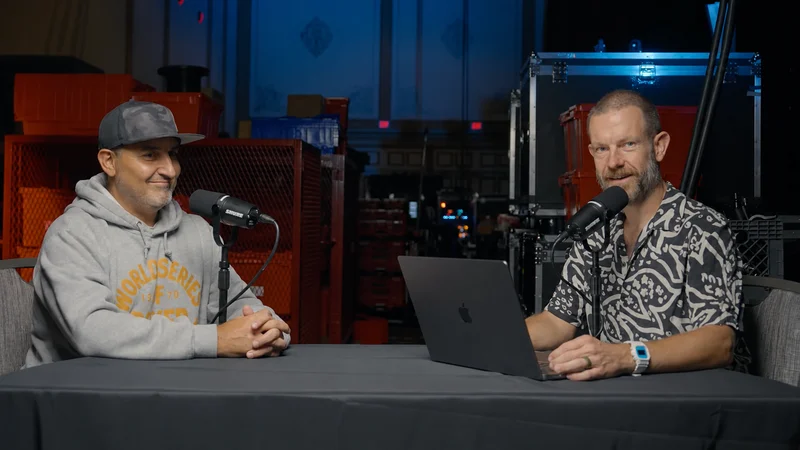
In a Face the Ace interview, Josh Arieh discusses poker fame, personal struggles, the $50K Poker Players Championship, and why he now plays with peace.
Josh Arieh has been a fixture in American poker for decades. Known as a competitive, loud and at times provocative presence at the table, he has also undergone a significant personal and strategic transformation. In a conversation with Remko Rinkema on the Face the Ace podcast, Arieh went beyond bracelets and results to discuss fame, gambling, a period of self-destruction, and the changes that sparked a late-career resurgence.
The Main Event as a Different Animal
The interview took place during the late stages of the WSOP Main Event, and Arieh explained why the tournament stands apart. He calls it a different animal, a event where the atmosphere, media, player stories and the weight of each passing day converge. It is where professionals, amateurs, dreams and pressure meet, and where a deep run can be life-changing.
Arieh says he now appreciates deep runs differently. When he was younger, he took them almost for granted. Today he speaks of gratitude, reminding himself during games how rare it is to reach far in a tournament that is a lifelong dream for many.
Unprepared for Poker Fame
Arieh entered the broader poker consciousness when the game exploded on ESPN, when fame could happen almost overnight. He admits it was initially difficult to deal with public perception. After strong results, he found himself reading online forums intensely, facing discussions about his demeanor and table behavior. For someone who says he always wanted to be liked, it was a harsh reality check.
Forum comments affected him. People called him a punk or a poor sportsman, and he felt the poker community despised him. Before his first trip to Borgata after that period, he feared facing the same hatred in person. He then realized the internet was much harsher than reality. Today, he understands that others' opinions are filtered through their own perspectives and that it is not his duty to control them.
Asked whether his past table behavior was a defense mechanism, Arieh answers candidly: "It wasn't. It was just me." He grew up around pool tables, gambling, tough conversations and people who would push you around if you did not show you would not be pushed. He says he was never the best baseball player, pool player or the most naturally talented at any game, so he built another weapon: competitiveness and pressure. He wanted opponents to feel they were playing against someone who did not just want to beat them, but make them suffer. Even today, he admits that fire still burns. The difference is that, at 51, he can control it much better.
A Fall That Did Not Look Like One
On the surface, Arieh's career after his initial success might have seemed stable. Results kept coming, WSOP cashes accumulated, and his name remained relevant. But he describes a different reality. He talks about being in a marriage he hated, staying only because of the children and fear of what might happen if he left. Today, he calls it a poor decision that was destructive for himself, his ex-wife and the family.
Alongside this came medication, stimulants and sleeping pills. Arieh recounts taking Adderall daily alongside Ambien for sleep and considered it normal because it was doctor-prescribed. In hindsight, he realizes he was in a bad place. Owning a bar in Atlanta meant he did not need to spend much and could earn enough to pretend everything worked. Internally, it did not.
During this period, he played high-stakes casino limits, spent nights in penthouses at the Aria or Bellagio, and enjoyed the allure of being a prized casino player. On the surface, it appeared to be a poker boom dream. In reality, it was a setting where he could win or lose hundreds of thousands annually, and he used video poker as a way to switch off after days filled with social interaction. Sitting at a machine, smoking, drinking diet cola and talking to no one became his escape.
Rachel, a Clear Head and the Return of Competitiveness
The turning point arrived after his breakup and subsequent relationship with Rachel, whom he describes as the most positive person he knows. He attributes the change to a new life space, a new relationship and a desire to be a better person for someone else. It is not a simple romantic cliché of love solving everything. Arieh speaks about clearing his mental space, wanting success again and avoiding escapism through destructive habits. Suddenly, he noticed spots he had previously overlooked.
At the same time, he began to lean more on the best players around him. He mentions Daniel Negreanu, Shaun Deeb, Matt Glantz, Dan Weinman and others with whom he regularly discusses poker. Arieh describes himself as trying to remain "the dumbest person in the room" to absorb as much as possible. This combination of a clearer head, better surroundings and rediscovered competitive drive paved the way for his late-career resurgence.
Ironically, in 2020, Arieh was considering phasing out of poker. He took a job at PokerStake and envisioned gradually reducing his play, as modern poker demanded more study than he found natural. Then the 2021 WSOP arrived, bringing a completely new mental state. Arieh recounts experiencing a clarity he had not felt for years. He was content wherever he sat. Results followed: bracelets, Player of the Year and a return to being a force in every WSOP event. The following year proved it was not a flash in the pan. In 2022, he made back-to-back final tables in $25K events and won over a million dollars at the start of the WSOP.
Arieh claims his motivation is not purely financial. He does not need a bigger house, a fancier car or a more luxurious status. His happy place is the WSOP final table because he knows it brings joy to his wife, family, friends and people who have watched him for decades.
$50K PPC and the Joy of Fighting in the Mud
A major topic is the $50K Poker Players Championship, an event with a special place in Arieh's heart. He has multiple deep runs and two runner-up finishes, but insists he does not dwell on what-ifs. What matters more is the journey. In these tournaments, he feels he brings everything he has to the table, which allows him to accept any outcome.
He describes the PPC as a different kind of fun: not easygoing, social and relaxed, but hard, gritty and akin to the joy of battling against the world's best players. His metaphor is a boxer after ten rounds of a tough fight who, despite the pain, declares, "This is my party." It is not a cheap tournament full of chatter and laughter, but an arena where you face off against players like Benny Glaser, Yuri, Shaun Deeb and Daniel Negreanu, who force you to dig deep. Arieh wants to feel the pain and inflict it. He wants to be in the heat of battle. Even without the title, the way he speaks about these events shows that for him, respect for the struggle often outweighs the mere tally on a resume.
Why He Never Fully Dived into Bobby's Room
Asked why, despite his mixed game talent and PPC results, Arieh never became a regular in the biggest cash games in Bobby's Room, his answer is refreshingly honest. He says that in that room, he would not feel like the best player. With names like Jason Mercier, Brian Rast or David Oppenheim, he would feel like a fish, and he does not like that feeling. Arieh wants to be in an arena where he believes he is the best or at least has a real edge.
The second part is even more open: he simply does not enjoy cash games much. He claims cash games bore him unless he is playing higher than he comfortably can. And if he is playing higher than he can afford, while exciting, it is clearly not healthy. Thus, he sticks to tournaments, where the mix of competition, pressure, story and final goal makes more sense to him.
Boom Years: When Money Rained from the Sky
Remko also revisits an era many younger poker fans did not experience. Arieh describes times when poker websites paid hundreds of thousands just for a patch on the Main Event final table. Not for a year-long ambassador contract, not for extensive media obligations, just a logo on a shirt at the right moment. These were years when agents roamed the halls, companies battled for players and money seemed almost infinite. Arieh was part of this era through Bodog and experienced moments that would seem unimaginable to today's players.
Yet he does not romanticize the entire picture. He talks about clubs, trips and things he is not proud of today. He remembers wild golf bets, gambling around Eric Lindgren or Doyle Brunson, and a time when $50,000 per hole sounded absurd even to him, despite living in an environment where large sums were everyday reality. The young Arieh, by his own admission, took many things for granted. Today, he views them with a completely different perspective, not with moralizing, but with the knowledge that quick success and quick money are not always the best combination for someone still figuring out who they are.
If there is one main takeaway from the conversation, it is Arieh's willingness to change. Once, he was a player who believed he was automatically among the best. Today, he says it is okay to be fallible, to lose and to ask questions. It is these losses that drive him to adjust his theory, gameplay and approach. It is not a simple story of old school defeating young solver players. It is more about a veteran who realized that to survive in the modern game, he must learn from those around him, ask questions and sometimes admit that someone else sees the spot better.
FAQ
- He described it as a different animal, a tournament where the atmosphere, media, player stories and pressure converge, and where a deep run can be life-changing. He now appreciates deep runs with gratitude rather than taking them for granted.