Live Poker Rake Rising Fastest at Low
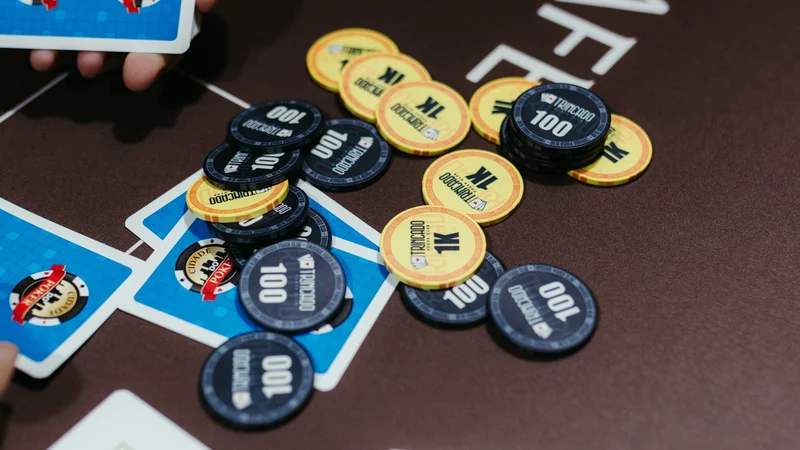
A decade-long review of live tournament rake finds the steepest increases at $500 and $1,000 buy-in events, while some marquee tournaments have lowered their cut.
Rake Pressure Shifts to the Lower Buy-in Events
Live tournament poker has a cost problem, and it is concentrated at the bottom of the buy-in ladder. A review of rake structures across major live tournament series over the past decade points to the steepest increases landing on $500 and $1,000 buy-in events, while several marquee tournaments have actually reduced the portion they withhold from the prize pool.
The finding matters because those lower buy-in fields are where the largest share of recreational and semi-professional players compete. When the house's cut rises at that level, it changes the math for the players least equipped to absorb it.
What Rake Actually Is
Rake is the fee a casino or tour operator deducts from a tournament's prize pool, or charges on top of the buy-in, to cover hosting costs and generate revenue. In live poker it typically appears in one of two forms:
- A percentage withheld from the total prize pool before payouts are calculated
- A fixed fee added to the buy-in, sometimes described as a registration or entry fee
In cash games, rake is usually taken from each pot. In tournaments, it is generally built into the structure and disclosed in the event's published blind and payout schedule.
Because tournament rake is expressed in different ways across different operators, comparing events is not always straightforward. A tournament advertising a low percentage may still carry additional fees, and a tournament with a higher headline number may include dealer and staff costs that other events bill separately.
Why the Lower Buy-ins Feel It Most
Several structural factors push rake increases toward smaller buy-in events.
Fixed costs do not scale down
Running a tournament involves costs that are largely fixed regardless of the buy-in level: dealers, floor staff, tournament directors, chips, cards, tables, and the physical space itself. A $500 event and a $10,000 event may require similar staffing per table. That makes it harder for operators to keep the percentage low at the smaller end, and easier to trim it at the top end where the prize pool is large enough to absorb the same absolute cost.
Volume and field size
Lower buy-in events typically draw larger fields, which means more tables, more dealers, and longer days. More players also means more administrative work per event, from registration to payout processing.
Competitive pressure at the top
High-roller and marquee events exist partly as marketing. Operators have an incentive to keep the rake low, or to reduce it, in order to attract elite players whose presence lends the series prestige and draws media and sponsorship attention. The same incentive does not apply as strongly to a $500 event that will fill regardless.
What This Means for Players
For a tournament player, rake is a direct drag on expected value. It is not a variable you can outplay; it is a cost applied before a single hand is dealt.
A useful way to think about it is in terms of the break-even threshold. If a tournament withholds a meaningful percentage of the prize pool, a player must outperform the field by a wider margin simply to break even. At higher rake levels, the pool of players who can realistically profit over the long run shrinks.
This is a typical consideration in tournament selection, not a universal rule. A player choosing between two events on the same day might weigh:
- The published rake or entry fee relative to the buy-in
- The structure, including starting stack and blind levels
- The expected field size and skill composition
- Travel and accommodation costs, which are effectively additional rake paid to someone else
For recreational players, the practical effect is usually felt less in long-run profitability and more in the payout structure: higher rake at a fixed buy-in generally means a smaller prize pool, which can mean flatter payouts or fewer paid places relative to the field.
The Broader Picture
The divergence between rising rake at low buy-ins and stable or falling rake at the top is a structural feature of the live tournament market rather than a temporary trend. Operators face real costs, and those costs have to be recovered somewhere. The question is where they land.
For players, the takeaway is straightforward: the buy-in number on the screen is not the full cost of playing. Reading the published structure, including how the prize pool is calculated and what fees apply, is part of evaluating whether an event is worth entering. At the $500 and $1,000 level in particular, that calculation has become less favorable over the past decade.
FAQ
- Rake is the fee a casino or tour operator deducts from a tournament prize pool, or charges on top of the buy-in, to cover hosting costs and generate revenue. It is typically disclosed in the event's published structure.