Norway Weighs Regulated Online Poker
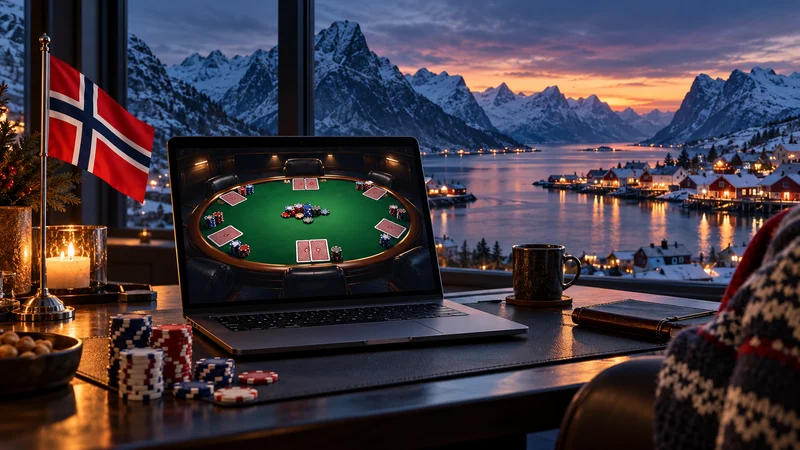
Norway proposes letting state-owned Norsk Tipping run regulated online poker, but low limits, mandatory breaks and a nightly shutdown may keep high-stakes players offshore.
Norway is edging toward a notable shift in its traditionally strict gambling policy. The Ministry of Culture and Equality has proposed allowing the state-owned operator Norsk Tipping to run regulated online poker for the first time. The stated goal is to move tens of thousands of Norwegians away from foreign gaming sites and into a domestic environment with tighter control and stronger player protection.
This is not a liberalization of the Norwegian market. Under the current proposal, international operators such as PokerStars, GGPoker or partypoker would not receive licenses. Online poker would simply become another product of the state monopoly, joining the lottery and sports betting offerings already run by Norsk Tipping.
A Market That Already Plays
Norway currently has no legal domestic online poker site, but that has not stopped players. A 2022 study from the University of Bergen estimated around 90,000 Norwegians were playing with foreign operators. Norsk Tipping believes that number could now sit between 100,000 and 150,000 annually.
"We know that many Norwegians play online poker. It's better to offer a responsible and safer alternative in Norway than to leave them with unregulated foreign companies," said Minister of Culture and Equality Lubna Jaffery.
Since 2010, Norway has restricted payments to unlicensed operators, and in 2025 it also moved to block their websites. Despite those efforts, eliminating foreign play entirely has proven elusive. Payment blocking and site blocking raise friction, but determined players have generally found ways around both.
The Proposed Limits
The platform would offer tournaments and cash games, but it would be far more restricted than international sites. The proposal includes the following caps:
- Daily loss limit: 5,000 NOK
- Monthly loss limit: 10,000 NOK
- Monthly limit for players under 20 years: 2,000 NOK
- Maximum tournament buy-in: 2,500 NOK
- Maximum cash-game buy-in: 1,000 NOK
- Highest allowed big blind: 10 NOK
- Maximum simultaneous tables: 4
- Night break from 1:00 to 7:00
Players would also be subject to mandatory breaks and other responsible gaming rules. The design is clearly aimed at the recreational segment. A 10 NOK big blind is roughly one dollar, and the most expensive tournament buy-in would be approximately $260.
What the Limits Mean in Practice
For a casual player, these numbers are workable. A 10 NOK big blind supports low-stakes cash games, and a 2,500 NOK tournament buy-in covers most small and mid-stakes events. Mandatory breaks and a nightly shutdown fit the goal of limiting session length and reducing harm.
For anyone playing seriously, the picture changes. A 10 NOK maximum big blind effectively caps the stakes available. Players who want to grind mid-stakes cash games, chase higher buy-in tournaments or multi-table at volume would find the ceiling too low. The four-table limit also constrains mass multi-tabling, a common approach for regulars.
Will the State Platform Solve the Real Issue?
The low limits may weaken the project's central objective. Norway wants to persuade players to leave unregulated foreign platforms, but those seeking higher-stakes cash games or large international tournaments would not find comparable offerings at Norsk Tipping. The domestic platform might mostly attract casual players, while professionals and regular grinders would remain on foreign sites.
That creates an awkward outcome: Norway would gain legal online poker, but it might not achieve the migration of players it is aiming for. The country has a deep poker tradition, having produced WSOP world champion Espen Jorstad, WSOP Europe Main Event winner Annette Obrestad, and elite professionals such as Kayhan Mokri, Jon Kyte and Johnny Lodden. A state-run room with a one-dollar big blind is unlikely to serve that level of play.
The Liquidity Question
Poker is a game of player pools. A closed, state-only platform starts with a smaller pool than international networks, and low limits narrow it further by pushing out higher-stakes regulars. Smaller pools typically mean fewer games running, longer waits and softer tournament fields. That can be fine for recreational players, but it rarely satisfies players used to round-the-clock action across many tables.
Public Consultation Will Decide
The Ministry released the proposal on September 29, 2026. The public consultation runs until November 29, with the government shortening the standard period to allow new rules to take effect as soon as possible. If adopted, Norsk Tipping would prepare to launch the country's first regulated domestic online poker platform. No potential start date has been announced.
Norway is not ready to open up to competition. But for the first time after years of bans, it acknowledges that blocking foreign sites alone did not eliminate demand for online poker. The open question is whether a state alternative with low limits can genuinely convince players to move, or whether it will simply add a legal recreational option alongside the offshore market it was meant to replace.
FAQ
- No. Under the current proposal, online poker would be offered only through the state-owned operator Norsk Tipping. International operators such as PokerStars, GGPoker and partypoker would not receive licenses.