Phil Hellmuth's 1989 WSOP Main Event
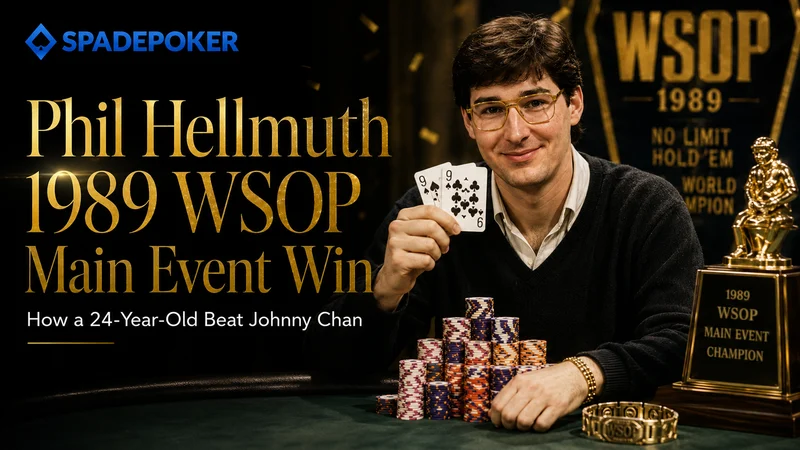
Relive Phil Hellmuth's 1989 WSOP Main Event victory over Johnny Chan, the final hand, the $755,000 prize, and how it launched the Poker Brat legend.
Phil Hellmuth's 1989 WSOP Main Event win is the result that started everything. Before the 17 bracelets, before the Poker Brat nickname, before the dramatic entrances, television rants, business ventures and decades of bracelet-chase storylines, there was one defining moment at Binion's Horseshoe in Las Vegas. A 24-year-old Phil Hellmuth defeated Johnny Chan heads-up to win the 1989 World Series of Poker Main Event.
Chan was not just another opponent. He was the two-time defending Main Event champion, having won poker's biggest title in 1987 and 1988. In 1989, he was trying to complete one of the most famous three-year runs in poker history. Hellmuth stopped him.
The victory gave Hellmuth his first WSOP bracelet, $755,000 in prize money and the status of youngest WSOP Main Event champion at the time. It also created the foundation for one of the longest and most recognizable careers poker has ever seen. The official WSOP profile still highlights his 1989 heads-up victory over Chan as the win that sparked his legendary career.
What Happened in the 1989 WSOP Main Event?
The 1989 WSOP Main Event was the final tournament of that year's World Series of Poker. The buy-in was $10,000, and the event attracted 178 players. At the end of the tournament, Phil Hellmuth defeated Johnny Chan heads-up to win the title and $755,000. That result became one of the most important turning points in WSOP history.
Chan had already won the Main Event in 1987 and 1988. If he had won again in 1989, he would have completed a modern three-peat in poker's most prestigious tournament. Instead, Hellmuth became the player who ended the run.
At the time, Hellmuth was young, ambitious and still building his name. Chan was already a proven champion. That contrast gave the heads-up match a simple and powerful narrative: the reigning king against the rising challenger. The rising challenger won.
Phil Hellmuth Was 24 When He Won the WSOP Main Event
Phil Hellmuth was 24 years old when he won the 1989 WSOP Main Event. At the time, that made him the youngest WSOP Main Event champion in history. The record had previously belonged to Stu Ungar, who won the 1980 Main Event at age 26. Hellmuth's age became a major part of the story because the Main Event had long been associated with older, experienced professionals. Winning it at 24 gave Hellmuth instant historical significance.
At age 24, Hellmuth became the youngest WSOP Main Event champion in history at the time. That record stood for nearly two decades before Peter Eastgate broke it in 2008. Joe Cada then broke Eastgate's record in 2009. Even though Hellmuth is no longer the youngest Main Event champion ever, his 1989 achievement remains one of the defining youth breakthrough stories in poker history.
Johnny Chan Was Chasing a Historic Three-Peat
Johnny Chan entered the 1989 WSOP Main Event with history in front of him. He had won the Main Event in 1987 and 1988, becoming the last player to win back-to-back WSOP Main Event titles. A third consecutive win would have placed him in an even more legendary category.
Chan came extremely close. He reached heads-up play against Hellmuth and was one match away from completing the three-peat. That is one reason the 1989 final remains so famous. It was not only Hellmuth's breakthrough. It was also the year Chan almost did something that has never been repeated in the modern Main Event era.
The result changed both stories. The 1989 heads-up battle became one of the most symbolic generational showdowns in WSOP history. Chan remained a poker legend and one of the greatest Main Event players ever. Hellmuth became the young champion who denied him history.
The Final Hand: Phil Hellmuth's Pocket Nines Against Johnny Chan
The final hand of the 1989 WSOP Main Event became part of poker history. Hellmuth held pocket nines. Chan held ace-seven suited. According to WSOP historical records, the final hand ended with Hellmuth's 9♠ 9♣ against Chan's A♠ 7♠. Hellmuth's pair held, giving him the Main Event title, the bracelet and the $755,000 first prize.
The hand is remembered not only because it decided the title, but because of what it represented. Chan was trying to become a three-time consecutive Main Event champion. Hellmuth was trying to prove that a young player from Wisconsin could beat one of the best tournament players in the world on poker's biggest stage. When the board ran out and Hellmuth's nines survived, the poker world had a new champion.
Why the 1989 WSOP Main Event Changed Phil Hellmuth's Career
The 1989 Main Event did not simply give Hellmuth a major tournament win. It gave him a poker identity. He became the young player who beat Johnny Chan. He became the youngest Main Event champion at the time. He became a WSOP bracelet winner. He became part of poker history before most players have even reached their prime.
That kind of win changes how every future result is perceived. Without the 1989 Main Event, Hellmuth might still have become a successful tournament player. But the story would not have been the same. The Main Event gave his career a legendary opening chapter. Every bracelet he won after that added to a record that began with Chan. Every Poker Brat moment happened under the shadow of a real championship résumé. Every chase for bracelet number 18 traces back to bracelet number one. The 1989 Main Event is the origin point.
How Much Did Phil Hellmuth Win in the 1989 WSOP Main Event?
Phil Hellmuth won $755,000 for taking down the 1989 WSOP Main Event. That was a huge prize for the era and became one of the most important payouts of his early career. In modern poker, Main Event prizes are much larger because fields have grown dramatically. But the historical value of Hellmuth's 1989 win is not measured only by the amount of money. The title mattered more than the payout. Winning the Main Event gave Hellmuth something that prize money alone could not create: world champion status.
Was Phil Hellmuth a Surprise Winner?
Phil Hellmuth was not yet the global poker name he later became, so his victory had the feel of a major breakthrough. But calling him a random winner would be wrong. Hellmuth had already shown signs that he could compete. He had cashed in the 1988 WSOP Main Event and was building experience before his 1989 breakthrough.
What made the win surprising was the opponent and the moment. Beating Johnny Chan heads-up while Chan was chasing a third straight Main Event title created a much bigger story than simply winning a tournament. Hellmuth did not just win. He stopped history from happening.
Young Phil Hellmuth: The Start of a Poker Persona
The young Phil Hellmuth who won the 1989 Main Event was not yet the fully formed Poker Brat known to modern fans. But the ingredients were already there. He was confident, emotional, ambitious and deeply convinced of his own ability. Winning the Main Event at 24 only strengthened that self-belief.
Over time, those traits evolved into one of poker's most famous public personas. Hellmuth became the player who expected to win, reacted strongly when he did not and turned his confidence into both a strength and a source of controversy. The Poker Brat nickname came later, but the 1989 Main Event helped create the platform for it. Without the title, the ego would have been easier to dismiss. With the title, and later with the all-time bracelet record, Hellmuth's confidence became part of a larger poker legend.
Why the 1989 Win Still Matters Today
Phil Hellmuth's 1989 Main Event victory still matters because it connects several major poker stories. It was Johnny Chan's near three-peat. It was Hellmuth's first bracelet. It was a youth record. It was the beginning of the all-time WSOP bracelet leader's career as a champion.
It also remains one of the cleanest examples of how one tournament can define a player's entire narrative. Hellmuth has won many more bracelets since 1989. He has recorded bigger cashes. He has appeared on more broadcasts, created more viral moments and spent decades adding to his résumé. But his career still begins in that heads-up match with Chan. That is why the 1989 Main Event deserves its own place in the Hellmuth story.
Phil Hellmuth vs Johnny Chan: What the Match Represented
Phil Hellmuth versus Johnny Chan was more than a heads-up match. It was a generational handoff. Chan represented established greatness. He was the back-to-back Main Event champion, the player trying to extend a run that already looked historic. Hellmuth represented the future. He was younger, less decorated and still unknown compared with the legend sitting across from him.
When Hellmuth won, poker gained a new central character. Chan remained one of the game's icons. But the spotlight shifted. The 1989 Main Event became the first chapter in the long public career of Phil Hellmuth.
Final Verdict: The Win That Built the Phil Hellmuth Legend
Phil Hellmuth's 1989 WSOP Main Event win is the most important result of his career. It was not his biggest cash. It was not his final bracelet. It was not the moment when the Poker Brat nickname became famous. But it was the beginning.
At 24 years old, Hellmuth defeated Johnny Chan heads-up, won $755,000, claimed his first WSOP bracelet and became the youngest Main Event champion at the time. That one victory gave him the platform for everything that followed. Seventeen bracelets, television fame, endless debate, Poker Brat blowups, business opportunities and the chase for bracelet number 18 all trace back to the same starting point. The 1989 WSOP Main Event did not just make Phil Hellmuth a champion. It made him Phil Hellmuth.
FAQ
- Phil Hellmuth won the WSOP Main Event in 1989.