Exploring Poker Club Regulation
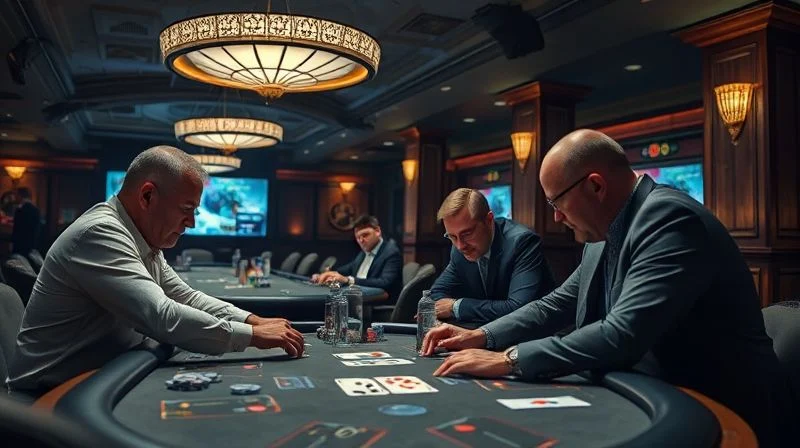
This article discusses how clubs that are not affiliated with any poker association manage and supervise their professional activities. Such clubs usually lack unified industry standards, and regulation may depend on local gambling laws or government agencies. Using Vietnam as a backdrop, the article points out that establishing a clear regulatory framework is crucial for the healthy development of the industry.
Recently, the Vietnamese media outlet hanoimoi.vn published a series of articles discussing the regulation of poker clubs. The second article focuses on clubs that do not belong to any association system, exploring who should manage and supervise their professional activities.
In many countries, poker clubs typically join national or regional poker associations to follow uniform rules, ethical standards, and training systems. However, some clubs choose to operate independently without being affiliated with any association. In such cases, the club's professional activities (such as tournament rules, player protection, anti-cheating measures) may lack external oversight, leading to increased risks.
Industry consensus holds that even if a club does not belong to an association, it should still comply with local gambling regulations. For example, many jurisdictions require poker clubs to obtain gambling licenses and undergo regular audits. Regulatory bodies are usually responsible for examining the club's financial status, game fairness, and player fund security. Additionally, industry self-regulatory organizations (such as the International Poker Federation) may provide guidance, but compliance is voluntary.
The article points out that for Vietnam, the poker industry is still developing and lacks a unified association system. Therefore, the regulation of independent clubs is particularly important. The government may consider establishing a specialized agency or entrusting existing gambling regulatory bodies to oversee these clubs, ensuring market transparency and player rights.
In summary, poker clubs not affiliated with an association are not unmanaged, but they require a clearer regulatory framework. Clubs themselves should also proactively establish internal standards to earn player trust.
FAQ
- Not completely unregulated. Clubs still need to comply with local gambling laws and regulations and are subject to oversight by government bodies such as gambling commissions. However, the lack of industry standards from an association may lead to inconsistent rules and weaker player protection measures.