Set Trips in Texas Hold'em and Set Mining Strategy
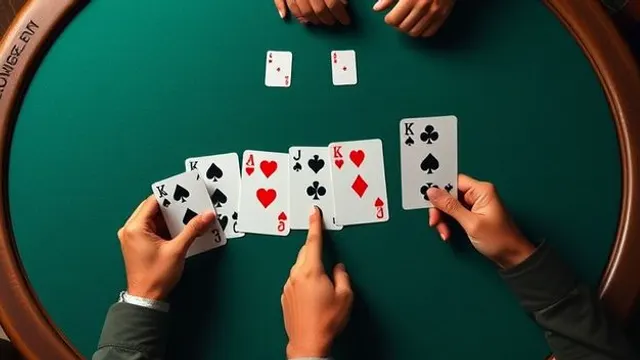
In-depth analysis of the concept, probability, implied odds, and set mining strategy of sets trips to help players make better decisions when entering pots with small pairs and avoid common mistakes.
Definition and Principle
A set refers to a hand where a player holds a pocket pair (e.g., 66) and hits a card of the same rank on the flop, forming three of a kind. This is distinct from trips, which occur when there is already a pair on the board and the player matches it with their hole card. Sets are highly concealed and can inflict significant losses on opponents.
The probability of flopping a set is about 11.8%, meaning it happens roughly once every 8.5 times. However, its value goes far beyond this: once hit, the player usually has tremendous hand strength, and opponents find it difficult to accurately assess. Since the player's hole cards are a pair, they can easily fold when they miss, but when they hit, they gain enormous implied odds.
Implied odds are the core of set-mining strategy. Suppose you call an opponent's raise with 22 and flop a 2. At this point, the opponent may hold a big pair or top pair, and they will continue betting, possibly even committing their entire stack. You only need to invest a small amount (calling the raise) for a chance to win the opponent's entire stack. This potential return far exceeds the current pot odds.
Set-Mining Strategy
Pre-Flop
Generally, with standard deep stacks (100BB or more), it is reasonable to call a raise with small pocket pairs (22-66) in position or in multi-way pots. The goal is to flop a set. However, note the following points:
- The call cost should not exceed 5%-8% of the effective stack to ensure sufficient implied odds.
- Avoid calling with pocket pairs when short-stacked (below 50BB), as implied odds are insufficient.
- From late position or the blinds, you can consider defending with more pocket pairs; from early position, be more cautious.
Post-Flop
- Dry board: For example, flop K♠7♣2♦, and you hold 77, flopping a set. With no straight or flush draws on the board, you should bet or raise to build the pot, but not too large to scare off opponents. Typically, bet 1/2 to 2/3 of the pot.
- Wet board: For example, flop J♥10♠9♠, and you hold 99, flopping a set. Although you have a made hand, there are many draws (straight, flush) present. You need to protect your hand more aggressively by betting larger (close to the pot), forcing draws to pay a high price.
- When you miss: If the flop does not improve your hand and the board is uncoordinated (e.g., A♠K♦Q♣), you should usually fold directly. However, if the board has draw potential and your small pair has backdoor flush or straight possibilities, you might consider calling once to see the turn, but this requires great caution.
Turn and River
- If the board improves further (e.g., you make a full house), you can continue value betting.
- If the board becomes extremely dangerous (e.g., four to a flush or straight), you need to consider that opponents may have completed their draws. In such cases, while a set is still strong, you should not overcommit. Control the pot appropriately, and even consider folding, especially if the opponent shows significant strength.
Practical Examples
Example 1: Value Bet You are in the big blind with 55. A player raises to 3BB, and you call. Flop: A♠5♣8♦. You flop a set on a dry board. You check, the opponent bets 4BB, you call. Turn: 2♥, you bet 9BB, opponent calls. River: Q♠, you bet 20BB, opponent calls with AK. You win a large pot.
Example 2: Fold When Missing You hold 22. The CO opens to 3BB, you call. Flop: K♠Q♣J♥. The board is all high cards and misses you. You fold directly, avoiding unnecessary loss.
Example 3: Dangerous Board You hold 88. Flop: 8♠7♠6♠. You flop top set, but the board has three spades. You bet 2/3 pot. Turn: 10♠, now the board has a possible flush. The opponent shoves all-in. Considering the opponent could have a flush or straight, you choose to fold. Though you may have been bluffed, this is the correct decision in the long run.
Common Mistakes
- Ignoring implied odds calculations: Many players blindly call just because "pocket pairs can flop sets," neglecting the ratio of call cost to effective stack. If the call amount exceeds 8% of the effective stack, the long-term expected value is negative.
- Bluffing aggressively when the flop misses: Small pairs have only about 2% equity when they miss, so bluffing in multi-way pots is unwise.
- Not distinguishing board textures: On wet boards, sets can be overtaken by draws and need active protection. On dry boards, slow-playing may be better, but overly slow-playing can allow opponents to escape.
- Ignoring opponent ranges: If the opponent is tight-passive, you may not get much action after hitting a set; conversely, against loose-aggressive opponents, you can be more aggressive.
Summary
Sets are one of the most profitable hand types in Texas Hold'em, but only when the set-mining strategy is applied correctly. Players should follow the principle of "seeing the flop cheaply, then extracting value once you hit." Keep in mind the limitations of implied odds, and adjust your play based on board structure and opponent type. Avoid over-pursuing sets at the expense of bankroll management. Master these concepts, and you can turn small pairs into a significant edge.
FAQ
- A set is usually stronger than trips. Because a set is made with a pocket pair, opponents can hardly read your hand strength from the board, it is highly concealed, and easy to induce opponents to put in more chips. In contrast, with trips, the board already has a pair, and opponents can easily realize someone may have hit trips. Moreover, trips are more vulnerable to being outdrawn by a full house or straight flush.