Poker Strategy Concepts That Apply to
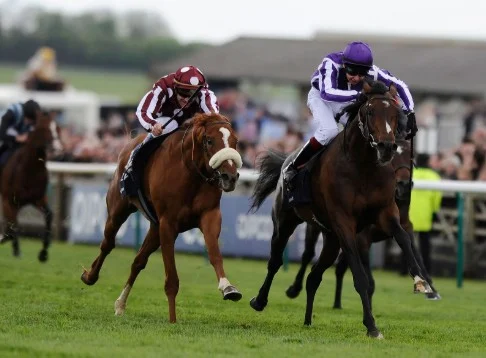
Expected value, range thinking, combinatorics and bankroll discipline shape both poker decisions and horse racing handicapping.
Poker and horse racing handicapping are usually treated as separate disciplines. One is a card game played at a table, the other a pari-mutuel betting market built around animals and race conditions. Look past the surface, though, and the decision frameworks overlap in ways that are useful to anyone who bets on either.
Both activities are exercises in probability under uncertainty. Neither rewards a single correct guess as much as it rewards a repeatable process applied across many decisions. That shared foundation produces several direct parallels.
Expected Value Is the Common Currency
In poker, expected value (EV) describes the average result of a decision if it were repeated many times. A play is +EV when the money won in the winning branches outweighs the money lost in the losing ones, weighted by how often each branch occurs. A player who calls a draw knowing the pot odds justify it is not guaranteed to win the hand. The point is that the call makes money over a large sample.
Horse racing handicapping works on the same logic through the concept of the overlay. A handicapper forms an opinion about a runner's true chance of winning, then compares that estimate with the implied probability the betting public has assigned through the odds. If a horse is judged to have roughly a 30 percent chance but the public prices it as though it had a 50 percent chance, the bet is poor value. If the public lets the same runner drift to a price implying less than 30 percent, the bet becomes an overlay.
Chasing overlays is a long-term strategy, not a race-by-race promise. A losing bet can still be a good bet if the price was right, just as a losing call can still be correct in poker.
Range Thinking Versus Single-Hand Thinking
Strong poker players rarely put an opponent on one exact hand. They construct a range: the full distribution of hands that opponent could hold given the action so far. That range then informs which lines, bet sizes and bluffs perform best against the whole distribution rather than against one guessed holding.
Handicappers apply a comparable habit when they build pace maps. Instead of assuming one outcome, they ask how the race is likely to unfold: which runner sets the tempo, whether the pace will be fast or slow, and which running styles benefit from each scenario. Mapping several plausible race shapes is the racing equivalent of ranging an opponent.
There is a longer-horizon version of this as well. Antepost markets, where selections are made before final fields are declared, often offer better prices than the same runner will show on race day. Bettors who identify targets early are effectively planning across a season rather than reacting to a single event.
Combinatorics and Exotic Tickets
Poker players use combinatorics to count how many ways an opponent can hold a strong hand versus a weak one. That count shapes how often a bluff has to work to be profitable. It is arithmetic applied to uncertainty, not intuition.
Exotic wagers in racing, such as Pick 4, Pick 5 and Pick 6 bets, are a combinatorial exercise in the same spirit. A bettor spreads selections across multiple legs, anchoring on solid favorites in some races while adding higher-priced secondary and tertiary choices in others. The goal is to stay covered against a surprise result without letting the ticket cost grow out of control. Structuring those combinations well is what separates a thoughtful exotic player from someone simply buying more combinations.
Bankroll Management Underlies Everything
No strategy survives without discipline about stakes. Sensible bankroll management means setting aside a fixed amount for play and not exceeding it. In poker, that translates into limits on how much goes into any single hand or session. In racing, it means deciding in advance how much to wager on a given race.
Exceeding a budget tends to produce worse decisions, because the pressure to recover losses encourages chasing. A player who has decided when to stop for the day is protected from that spiral in a way that a player improvising stakes is not.
Why the Parallels Matter
The vocabulary differs, but the underlying questions are the same. What is the true probability? What price am I being offered? How does this decision fit into a larger plan? How much should I risk? Poker players who think in ranges, EV and combinatorics already possess most of the mental toolkit that successful handicapping requires. Bettors who master overlays, pace maps and exotic structuring are doing applied probability work of the same kind.
Treating both as long-run probability problems, rather than as hunts for a single winning pick, is the common thread. Variance will decide any individual result. Process decides the results that accumulate.
FAQ
- An overlay is a bet where the odds offered imply a lower probability of winning than the bettor's own estimate. If a handicapper thinks a runner has a 30 percent chance but the public prices it as a 20 percent chance, that is an overlay and represents positive expected value.