Police Raid Floating Casino in St.
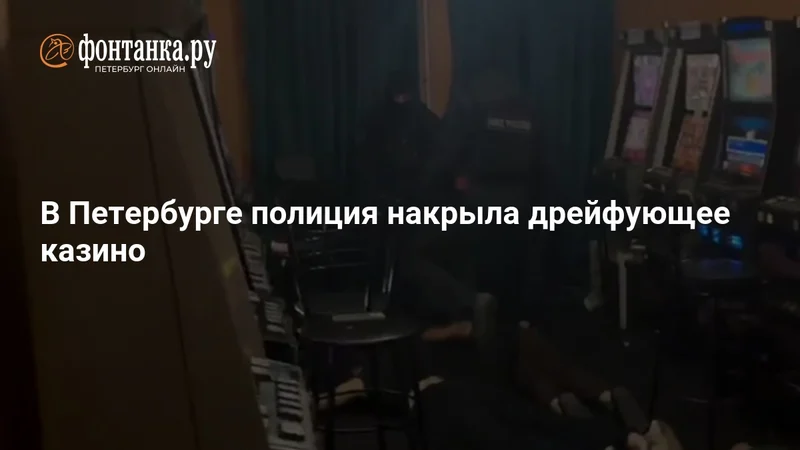
Police in St. Petersburg broke up an illegal floating casino operation, continuing Russia's crackdown on unlicensed gambling venues.
Police Shut Down Floating Casino in St. Petersburg
Law enforcement in St. Petersburg moved against an illegal gambling operation running aboard a vessel, according to reporting by the local news outlet Fontanka. The venue has been described as a floating casino, a format in which gambling equipment is installed on a boat or ship rather than in a fixed building.
The raid reflects a broader pattern in Russia, where casino gambling has been restricted to designated gaming zones since a federal law took effect in 2009. Outside those zones, most forms of casino-style gambling are prohibited, which has pushed some operators toward mobile or concealed setups that are harder for regulators to locate and shut down.
Why Floating Casinos Appear
A floating casino is essentially a gambling floor placed on a vessel. Operators have historically used boats for several reasons:
- Mobility: a ship can relocate, making surveillance and enforcement more difficult.
- Jurisdiction questions: vessels on water can raise complex legal questions about which authority applies.
- Discretion: a boat offshore or moored in a low-traffic area can be less visible than a fixed commercial venue.
These factors do not make such operations legal. In Russia, unlicensed gambling can lead to criminal liability for organizers, and equipment is typically seized during enforcement actions.
The Regulatory Context
Russia's gaming framework channels legal casino activity into specific zones, including areas near the Baltic coast, in the Far East, and in the south of the country. Operators outside those zones generally cannot obtain a casino license. That structure has created persistent demand for underground alternatives, ranging from back-room card rooms to more elaborate schemes.
Poker occupies an unusual position in this landscape. It is sometimes treated differently from pure games of chance because it involves skill and player-versus-player competition, but Russian rules have still restricted cash poker and casino-style poker outside authorized zones. As a result, private and semi-private games have continued in major cities, and enforcement actions surface periodically.
What the Raid Signals
For players and operators, the practical takeaway is that unlicensed venues carry real legal and financial risk. Participants in illegal games may face questioning, and any money or equipment on site can be confiscated. For the poker community, such raids reinforce the importance of playing only in regulated environments where disputes, payouts, and security are governed by clear rules.
Details about the specific vessel, the number of people involved, or any charges have not been widely confirmed, and no verified figures on seized assets are available. What is clear is that St. Petersburg authorities continue to treat floating and other concealed gambling operations as enforcement targets.
A Recurring Enforcement Theme
Floating casinos have appeared in news reports in various countries over the years, often tied to efforts to evade local gambling bans. The appeal is straightforward: water adds a layer of logistical complexity for regulators. The counterweight is equally straightforward: authorities can track vessels, board them, and dismantle operations, as this St. Petersburg case illustrates.
For the poker industry, the episode is a reminder that legal status varies sharply by jurisdiction. Players traveling or relocating should verify local rules before joining any game, and organizers should understand that moving a casino onto water does not change the underlying legal exposure.
FAQ
- A floating casino is a gambling operation set up on a boat or ship rather than in a fixed building. Operators sometimes use vessels to make enforcement and surveillance more difficult.