Rebuy and Add-On Tournament Strategy
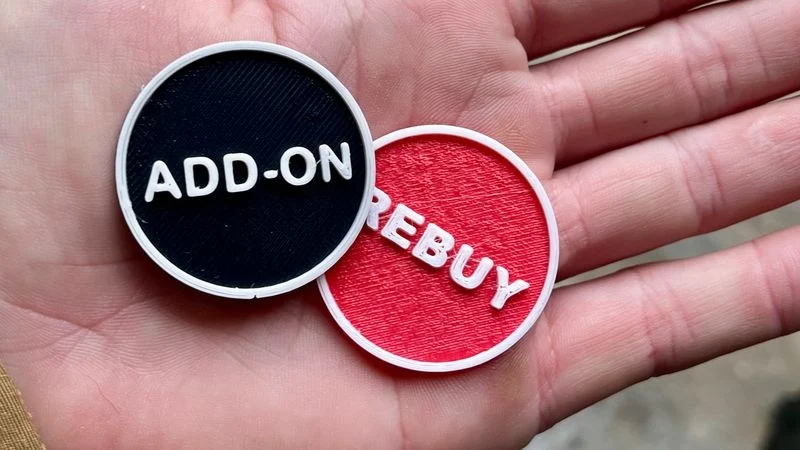
Rebuy and add-on tournaments change stack depth and risk. Learn how the rebuy period, add-on, and satellite structures affect bankroll and strategy.
Rebuy and add-on tournaments are a distinct format in live and online poker. Unlike a standard freezeout, where each player buys in once and receives a single starting stack, a rebuy event lets players purchase additional chips under defined conditions. Understanding how those conditions shape the game is essential before sitting down.
What a Rebuy Tournament Is
In a rebuy tournament, players begin with a starting stack. During a designated rebuy period, usually the first few levels, a player who loses all their chips may buy back in for the same amount and receive a fresh starting stack. Many structures also allow an optional rebuy while a player still has chips, provided their stack is at or below the original starting amount.
Once the rebuy period ends, the add-on typically becomes available. An add-on is a one-time purchase of extra chips, offered to every remaining player regardless of stack size. It is usually available only during a short window, often a single break.
Why the Format Matters
The rebuy period changes the effective value of chips. Because players can replace a lost stack cheaply, the cost of busting early is lower than in a freezeout. This tends to encourage looser, more aggressive play during the rebuy levels, since a player who loses a confrontation can simply re-enter.
That dynamic cuts both ways. Aggressive play can build a large stack before the rebuy period closes, which is valuable because the add-on and the end of rebuys freeze the field. A big stack accumulated early carries into the later, more conventional stages of the tournament.
The Add-On Decision
The add-on is often described as one of the best value purchases in tournament poker, because the chips are usually priced favorably relative to their value in the later stages. In most structures, taking the add-on is standard, particularly for players who intend to compete seriously. Declining it leaves a player at a chip disadvantage against opponents who take it.
A typical situation: a player finishes the rebuy period with a below-average stack. The add-on adds chips at a fixed price, improving their position before the freezeout phase begins. In many cases the add-on is close to automatic.
Satellites and Rebuy Structures
Satellites are tournaments where the prize is entry into a larger event rather than cash. When a satellite uses a rebuy and add-on structure, the same principles apply, but the goal shifts. In a satellite, surviving to win a seat matters more than accumulating chips beyond what is needed. Players who already hold a large stack may tighten up, since the objective is qualification, not maximum chip count.
Rebuy satellites can offer a relatively inexpensive path toward a bigger buy-in event, but the total cost depends on how many rebuys and add-ons a player takes. Budgeting for the full potential cost, not just the initial buy-in, is a practical step.
Practical Takeaways
- Treat the initial buy-in as a minimum, not the total cost.
- Expect looser play during the rebuy period and adjust accordingly.
- Plan for the add-on in advance and factor it into your budget.
- In satellites, prioritize qualification over chip accumulation once a seat is within reach.
- Track total spend across rebuys to keep bankroll decisions disciplined.
Rebuy and add-on events reward players who understand the structure, not just the cards. Knowing when aggression pays and when survival matters is the core skill the format demands.
FAQ
- A rebuy lets a player purchase a fresh starting stack during the rebuy period, usually after losing their chips. An add-on is a one-time extra chip purchase offered to all remaining players, typically after the rebuy period ends.