Satellite Heads-Up Strategy
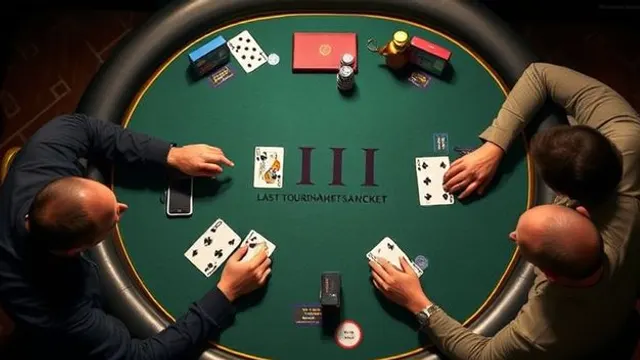
The heads-up phase of satellite tournaments is completely different from regular heads-up. ICM pressure is immense, and the core strategy is to avoid elimination rather than maximize chips. This article explains the principles, real-world examples, and common mistakes to help you improve your satellite heads-up win rate.
Definition
A satellite (Satellite) Tournament is a special competition where the prize is not cash, but an entry ticket to a higher-level event. For example, a $100 satellite might award a direct seat to a $10,000 main event. In satellites, usually only the top finishers (or just first place) receive tickets. When the tournament reaches its final stages, especially with only two players left (Heads-Up), it becomes "satellite heads-up" — the most critical and often misunderstood phase of the entire satellite.
Principle: ICM and Ticket Value
In regular heads-up, the chip leader can apply aggressive pressure because every pot won directly converts to cash value; but satellite heads-up is completely different.
1. The Ticket is Fixed
Assume the satellite prizes: first place gets a $10,000 ticket, second place gets nothing. So for either player, being the last one standing wins the entire prize. The amount of chips does not change the prize: even if you have 90% of the chips, you still only win one ticket; if your opponent has 10% and doubles up, they still only have a chance at one ticket, not more. Therefore, the value of chips is discrete: survival is the top priority, accumulating chips only serves to increase survival probability.
2. Independent Chip Model (ICM) and Satellite Adjustments
ICM converts chips into equity. In satellite heads-up, since the prize is "winner takes all," the ICM equity function is nonlinear: near the bubble (when two players remain), each unit of chips for the short stack is worth far more than for the deep stack. For example, with a chip ratio of 10:1, the equity gain per chip for the short stack when winning a pot is much greater than for the deep stack. Does this mean the short stack should have a tighter calling range? Actually, the opposite: because the short stack is eliminated and gets nothing if they lose, the deep stack must take on additional risk to eliminate them. When the deep stack applies pressure and the short stack shoves all-in, the deep stack's calling range must be very tight to avoid losing significant equity after a reversal.
3. Game Theory Optimal (GTO) and Exploitative Strategies
Theoretically, there is a GTO solution for satellite heads-up, but human players are usually not perfect. Common exploitative strategies are:
- Deep stack (chip leader): Should raise open more frequently, but be very tight when facing an all-in, especially when the chip lead is significant. Because every time you lose a big pot, it could directly turn you from ahead to behind or even get you eliminated.
- Short stack (chip follower): Should shove all-in more loosely (especially on the button), because as long as the stack is small enough, the survival probability after doubling up increases dramatically, while folding only lets the blinds eat away your chips. In fact, the short stack should almost never fold when the blinds become too small (e.g., under 5 BB), because any two-card shove is better than waiting for the dead money to drain.
Practical Examples
Assume the satellite heads-up: blinds 500/1000, you hold 60,000 chips (60 BB), opponent holds 20,000 chips (20 BB). You are on the button.
Scenario 1: You open to 2.5 BB (2500), opponent shoves from BB for 20 BB.
While you have 60 BB and hold ATo, which looks ahead of his range, calling here carries huge risk: if you call and lose, you drop to 40 BB, opponent goes to 40 BB, losing your advantage; if you win, you gain 20 BB to 80 BB, increasing your lead — but opponent still has 20 BB and isn't eliminated. More importantly, if you fold, you still have 60 BB vs 19 BB (opponent after posting blind remains 19 BB), advantage maintained. According to satellite ICM, the deep stack needs very high winning equity to call a short stack's shove. Typically only call with QQ+ or AKo and similar super-strong hands. ATo does not meet that requirement; the correct choice is to fold.
Scenario 2: Opponent opens on the button, you are in the BB holding 65o. Opponent opens to 2.5 BB, you have 18 BB behind.
As the short stack, you have two options: shove or fold. Calling (flatting) is usually not good because you're out of position post-flop with shallow effective stacks. Here 18 BB is about 36 big blinds, still some playability. But considering satellite characteristics, should your folding range be wider than in regular heads-up? Not necessarily. In fact, the short stack should avoid passively losing chips, but also value each chip. For a very weak hand like 65o, shoving almost has no fold equity (opponent will call most of the time) and low win rate, so folding is better. However, with middle-strength hands like A2o or K5s, shoving makes sense because the opponent's calling range will be very tight (deep stacks call tightly in satellites), allowing you to steal the blinds successfully.
Common Misconceptions
Misconception 1: "Satellite heads-up is extreme heads-up; the more aggressive player wins."
Fact: The prize structure in satellite heads-up dictates that "survival is everything." The deep stack should not be overly aggressive, especially not calling shoves without sufficient win equity. The short stack should also not blindly shove; they need to select appropriate hands.
Misconception 2: "Having more chips means you can bully freely."
Fact: When the deep stack applies pressure, they can open-raise widely, but must be extremely cautious when facing a short stack's shove. One "bluff catch" gone wrong can lead to a reversal, letting the ticket slip away.
Misconception 3: "The short stack should shove with any two cards."
Fact: While the short stack needs to double up quickly, shoving still requires frequency and range control. With a moderate stack (e.g., 15-20 BB), shoving too wide leads to insufficient equity when called, accelerating elimination. A better strategy is mixing in some standard raises and shoves to stay balanced.
Summary
Satellite heads-up is a special game under ICM pressure. Core principles:
- Deep stack: Raise aggressively, call extremely tightly (only QQ+, AK, etc.).
- Short stack: Shove proactively with a reasonable range (medium strength and above); avoid passive folding into the blinds.
- Adjust constantly based on chip ratio, opponent tendencies, and remaining blind structure.
- Remember: Your goal is to be the last player standing, not to maximize chips.
Mastering these strategies will greatly improve your chances of winning a ticket in satellite heads-up play.
FAQ
- It depends on the effective stack size. Usually, when effective stacks are less than 10BB, you can shove any two cards because folding loses more; at 10-20BB, it is recommended to use about 30-40% of hands, including all pairs, Ax, suited connectors, etc., avoiding too weak hands like 72o. The main purpose of shoving is to steal blinds by exploiting the deep stack's tight calling range, while maintaining some equity when called.