First play risk-free poker tables before playing for real money
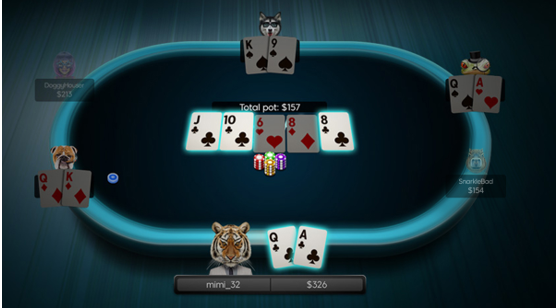
Many beginners, encouraged by friends, jump straight into playing poker for real money and quickly lose it all. This article suggests starting with free poker tables to practice, master basic rules and strategies, then gradually transition to low-stakes games to reduce risk and improve skills.
This is a common scenario: after a long day's work, your friends convince you to play a few hands of poker... and you end up losing all your chips in the first 20 minutes because, honestly, you have no idea what you're doing. "I'll teach you next time, bro, don't worry..." they keep saying, but you know deep down that next time might end the same way.
If you don't want to be the "ATM" at the poker table, the best approach is to practice using risk-free poker tables before playing for real money. Risk-free poker tables (also called "play money" or "practice tables") let you learn the rules, hand rankings, and basic strategies without any financial risk.
Why Start with Risk-Free Tables?
- Zero-Risk Learning: You can make mistakes without losing money. For example, you might call with weak hands before the flop or incorrectly bluff on the river—errors that would be costly in real-money games but are just learning experiences at risk-free tables.
- Get Used to the Pace: Online poker moves much faster than live games. Risk-free tables help you adapt to quick decisions, timers, and the feel of multi-tabling.
- Test Strategies: You can experiment with different playstyles, such as aggressive or conservative, to see which suits you best.
How to Transition to Real-Money Games?
Once you feel confident at risk-free tables, start playing real-money games at the lowest stakes (e.g., $0.01/$0.02 No-Limit Hold'em). At this point, focus on the following:
- Bankroll Management: Only risk what you can afford to lose. A common rule is to buy in for no more than 5% of your total bankroll.
- Position Awareness: Play more hands from the button or cutoff seats, and tighten your range from early positions.
- Observe Opponents: Notice which players fold often and which like to call, then adjust accordingly.
Common Misconceptions
- Thinking Risk-Free Tables Are Useless: In reality, they are the best way to build a foundation. Many professional players honed their skills in free games early on.
- Rushing to Move Up: Do not jump to higher levels until you are consistently profitable at low-stakes games.
In summary, spending time practicing at risk-free poker tables will boost your confidence in real-money games and reduce unnecessary losses. Remember, poker is a long-term game where patience and discipline matter more than luck.
FAQ
- Free tables use virtual chips with no financial risk; real money games involve real funds, player behavior is more serious, and strategies are more aggressive. Free tables are suitable for learning rules and basic strategies, but cannot fully simulate the psychological pressure of real money games.