Texas Hold'em Straddle
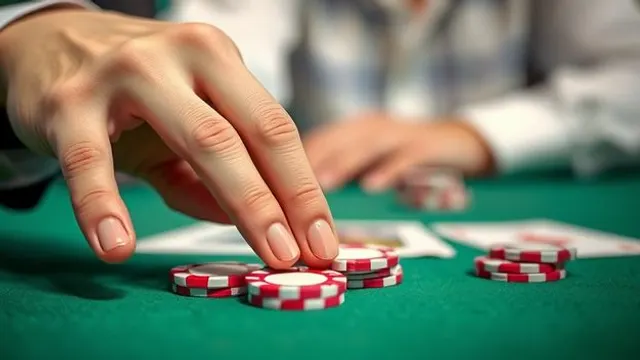
A straddle is a voluntary pre-flop raise that changes pot size and position dynamics. This article explains the definition, principles, practical strategies, and common misconceptions to help you correctly use a straddle or counter opponents.
What is a Straddle?
A straddle (colloquially known as "grab" or "blind double") is a non-mandatory preflop raise in Texas Hold'em. Typically, a player puts in twice the big blind (i.e., "dead money") and gains the last action preflop. Unlike the blinds, a straddle is not required every hand; players choose whether to do it.
There are two common forms:
- UTG Straddle: The player under the gun (UTG) puts in 2BB before cards are dealt. The action proceeds normally, but the straddler acts last preflop. Postflop, the straddler has the worst position (acts first).
- Mississippi Straddle (Button Straddle): The player on the button puts in 2BB and gets last action preflop. Postflop, the straddler still has excellent position (acts last), but the small blind and big blind must act first.
Some card rooms allow a "double straddle," which doubles the previous straddle again. All forms are subject to local house rules.
Theory and Impact
A straddle is essentially a voluntary pot sweetener that changes position dynamics. Its core effects include:
-
Pot Inflation: The initial pot becomes (0.5+1+2) = 3.5BB (if big blind is 1BB). A larger pot means you need stronger starting hands to enter, but it also encourages more multi-way action.
-
Position Shift: An UTG straddle makes the preflop last actor become the first postflop actor, creating a "position reversal" effect. A button straddle strengthens the button's advantage.
-
Wider Ranges: Because of improved pot odds, other players tend to call or raise with wider ranges. The straddler themselves may also hold a very wide range (e.g., any two cards) to exploit opponents.
-
Complex Preflop Decisions: With a "live straddle" (the straddle acts last preflop), the expected value of raises and calls changes.
Practical Strategies
1. When Facing an UTG Straddle
An UTG straddle acts first postflop – a major disadvantage. Therefore, you should enter with a tighter range preflop, especially in deep stacks. If you have a strong hand preflop (like AK, QQ+), raise larger to isolate and extract value, since the straddler will often call with weak hands.
Example: Blinds 1/2, UTG straddles to 4. You (in MP) have A♠K♠. The pot already contains 1+2+4=7BB. Suggest raising to 12-15BB, forcing later players and the straddler to call with strong ranges. If only the straddler calls, you have position postflop (they act first).
2. When Facing a Button Straddle
A button straddle is extremely advantageous for the button player: last action preflop and last action postflop. Therefore, players in the small blind, big blind, and early positions should tighten their ranges significantly to avoid being out of position against a wide-range button opponent.
Example: Blinds 1/2, button straddles to 4. You (big blind) have 8♥7♥. Pot odds are (1+2+4)=7 BB, you need to call 2 BB (you've already put in 1 BB), giving 3.5:1 odds, which looks attractive. But postflop you'll act first, and the button acts last. Their wide range could easily hit top pair or a draw. Here it's better to fold unless you have strong post-flop skills.
3. Against Players Who Love to Straddle
- Tighten your range: When an opponent frequently straddles, their preflop range is usually wide, but their postflop skill varies. Enter with stronger hands to exploit their loose range for value.
- Squeeze with appropriate 3-bets: If multiple players limp behind the straddle, you can 3-bet with a wider range because there's a lot of dead money in the pot and the straddler's range is weak.
- Mind stack sizes: Deep-stacked, the straddle's disadvantage lessens because you can apply pressure over multiple streets. Short-stacked, a straddle is essentially a gamble for all-in; avoid it when possible.
Common Misconceptions
-
Myth 1: A straddle is like a blind, so you can enter with any cards. Fact: A straddle is dead money, but postflop position is usually worse (UTG straddle) or your range is locked (button straddle). Playing indiscriminately leads to long-term losses.
-
Myth 2: Straddling is always profitable. Fact: Only when you deeply understand position and range does a straddle have positive expectation. For average players, frequent straddling only increases variance and losses.
-
Myth 3: You must play a tighter range against a straddle. Fact: Improved pot odds make widening your range reasonable. The key is to match your opponent's range and consider postflop position.
-
Myth 4: Straddles only apply to cash games. Fact: Some tournaments allow straddles (e.g., deep-stack events), but usually with restrictions. In tournaments, straddles accelerate blind consumption and should be used cautiously.
Summary
A straddle is a high-variance tool that offers opportunities to change game dynamics. As the straddler, use position advantage (button) or range concealment (UTG) to profit. As the opponent, adjust your range and exploit weaknesses. Core principle: never mechanically call or raise; make decisions based on pot odds, position, and opponent tendencies. In low-stakes games, most players overuse straddles; you can profit easily with a tight-aggressive strategy. Master the psychology of straddles and turn this "amateur move" into an edge for your win rate.
FAQ
- Ante is a fixed small amount forced by all players per hand to increase the pot, usually used in late tournament stages. Straddle is a voluntarily paid double big blind by a single player, who gets the last preflop action. Ante does not change position, while Straddle changes position dynamics.