On the River, Would You Choose a Value Bet? — KJ Hand Analysis at 1/3 Level
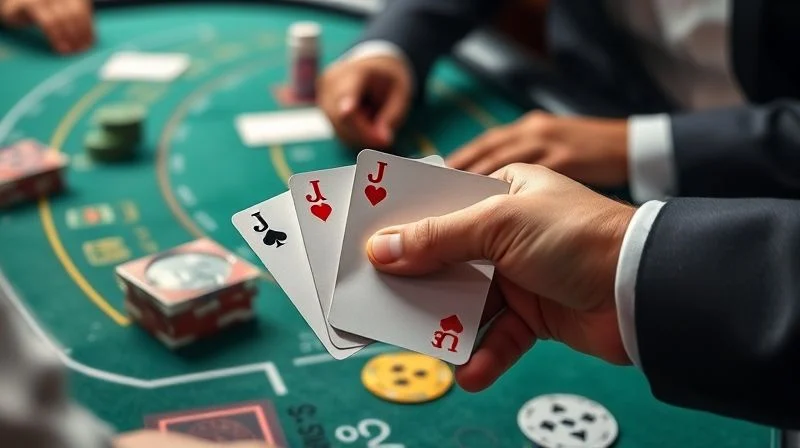
In a 1/3 no-limit Texas Hold'em game, Hero calls an open-raise on the button with K♥J♥. The flop comes Q-J-9 with two diamonds, the turn is a J, and the river is the 8♦, completing a possible flush. The opponent checks. Should Hero bet? This article analyzes the value bet decision for this hand.
In a 1/3 NLHE cash game, Hero has an effective stack of 250 with Villain. Villain opens to 15 from MP, Hero calls on the button with K♥J♥, heads-up.
Flop: Q♣J♦9♦. Hero calls Villain's bet of 20, pot 70.
Turn: J♠. Hero calls Villain's bet of 30, pot 130.
River: 8♦, completing the front-door flush. Villain checks.
Hero now holds trips Jacks, but the board has a possible flush. Should Hero bet?
Analysis
- Hero's hand is trips Jacks, a strong hand, but the river completed the flush. Villain bet the flop and turn, range includes many Qx, 9x, Jx, and some draws.
- Villain's check could mean he gave up or already has a made hand (e.g., a flush) and is trying to check-raise. Since Hero is out of position and has limited remaining chips, betting requires caution.
- Value bet reasoning: Villain may hold worse Jacks like QJ, KJ, AJ, J9, as well as Qx, 9x top pair, all of which might call. If Villain has a flush, he would likely bet or raise.
- Check reasoning: If Villain has a flush, betting only loses more. Additionally, the board is wet, and Villain might check-raise with some made hands, forcing Hero to fold.
- Overall, Hero should bet a small amount (about 1/3 pot) to extract value from worse hands. If Villain raises, Hero can decide to call or fold based on pot odds and Villain's tendencies.
Typical scenario: Hero bets 45-50. If Villain holds QJ or similar, he might call. If he holds a flush, he might raise. Hero needs to make a final decision based on Villain's tendencies.