Why Do Strange Poker Hands Go Viral?
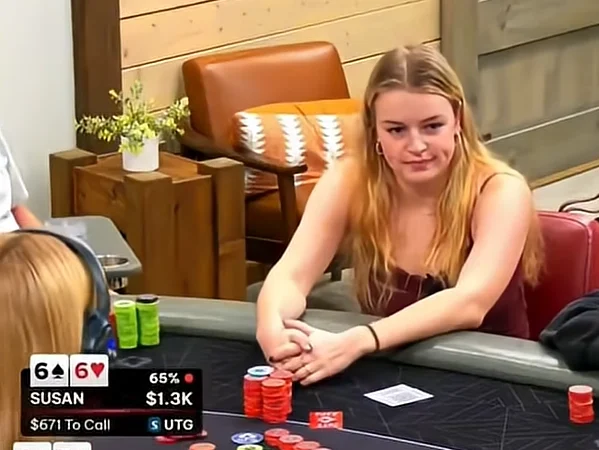
A bizarre hand involving poker vlogger Abby Merk spread quickly across the poker world, raising a simple question: what makes unusual hands travel so fast online?
A Hand That Traveled Fast
Over a single weekend, a bizarre hand from the poker world spread widely across social media and poker communities. The hand featured poker vlogger Abby Merk, and it became the kind of clip that players share, react to, and debate long after the cards are dealt.
The details of the hand are less important than the reaction to it. What matters is the pattern: an unusual spot appears, a clip circulates, and within days it is part of the wider poker conversation. That pattern repeats often enough that it is worth asking why strange hands go viral at all.
Novelty Beats Routine
Most poker hands are ordinary. A player raises, another calls, a flop is dealt, and the hand resolves in a way that experienced players have seen thousands of times. Those hands are useful for study, but they are not interesting to watch.
A strange hand breaks that routine. It might involve an unusual line, a surprising holding, or a decision that most players would never consider. The novelty is the point. Viewers do not need to know the players or the stakes to feel that something out of the ordinary has happened.
Emotion Is the Engine
Poker is a game of incomplete information, and strange hands often expose the gap between what players know and what viewers can see. When a hand takes an unexpected turn, the emotional response is immediate: surprise, confusion, amusement, or disbelief.
That emotional reaction is what drives sharing. A hand that produces a strong feeling is more likely to be clipped, posted, and discussed than a hand that is merely technically correct. In this sense, viral poker hands follow the same logic as viral moments in any other game or sport.
Short Clips, Fast Context
Modern poker content is built for short-form video. A single hand can be trimmed to a minute or less, which makes it easy to consume without prior knowledge of the session, the players, or the stakes.
That format rewards hands that are self-contained. A strange hand often needs no introduction. The viewer can watch it cold and still understand that something unusual has occurred. The clip does the work that a full tournament broadcast cannot.
The Debate Keeps It Alive
A viral hand rarely ends when the clip stops. Players argue about the correct line, the logic behind each decision, and what the outcome says about strategy. Some viewers treat the hand as a puzzle; others treat it as entertainment.
This debate extends the life of the hand. Each new comment, reaction video, or forum thread brings the hand back into view. The original moment may last seconds, but the discussion can continue for days.
What This Means for Players
For players, viral hands are a reminder that poker is watched as much as it is played. A decision that seems obvious at the table can look very different to an audience that sees the hole cards.
That does not mean players should play for the clip. It does mean that unusual spots attract attention, and attention shapes how the game is discussed publicly. Strange hands go viral because they combine novelty, emotion, and a format that makes them easy to share. The hand itself may be rare, but the reason it spreads is not mysterious at all.
FAQ
- Unusual hands tend to spread because they are novel, emotionally engaging, and easy to clip into short-form video. A hand that surprises viewers or sparks debate is more likely to be shared widely.