WSOP 2026 Main Event
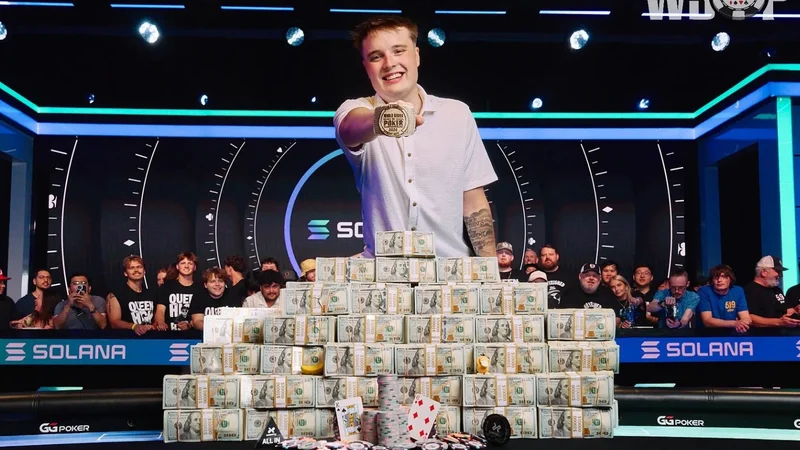
The WSOP 2026 Main Event is being remembered for a call widely described as the worst in history and a champion who came close to being the youngest world champion ever.
A Main Event Defined by Two Storylines
The WSOP 2026 Main Event has produced two talking points that have dominated post-tournament discussion: a call that observers are describing as one of the worst in poker history, and a champion who came remarkably close to becoming the youngest world champion the game has seen.
Both themes are notable because they touch on the two things poker audiences care about most — decision quality under maximum pressure, and the emergence of a new generation at the top of the game.
The Call That Will Not Be Forgotten
In tournament poker, a single decision can define how an entire event is remembered. The 2026 Main Event delivered exactly that kind of moment.
The call in question has been characterized as one of the worst in the history of the Main Event. That framing matters, because the Main Event is the highest-profile tournament in the game and its final table is played under intense scrutiny, with every decision reviewed by players, coaches, and analysts afterward.
Why Late-Tournament Calls Get So Much Attention
At a final table, the cost of a mistake is not just chips. It is tournament equity — the difference between finishing in a certain position and finishing higher. A call that looks questionable in hindsight is usually the product of several compounding factors:
- Limited information: opponents' ranges are wide and reads are imperfect
- ICM pressure: pay jumps change the value of chips, sometimes dramatically
- Time pressure: decisions at the table are made in seconds, not minutes
- Emotional fatigue: deep runs in a large-field event are physically and mentally draining
A call that appears indefensible when reviewed with full information can look very different in real time. That gap between the table and the replay is a recurring theme in poker discussion, and it is why single decisions in major events generate debate for years.
A Champion Just Short of a Record
The second storyline is the champion's age. The winner of the 2026 Main Event came close to becoming the youngest world champion in the event's history, though the record itself was not broken.
Age records in the Main Event are closely tracked because the tournament has historically rewarded experience. Deep runs require sustained concentration across many days of play, and the field is enormous. When a very young player goes deep, it signals both technical skill and composure under pressure.
What Near-Records Tell Us About the Modern Game
Young players reaching the final stages of the Main Event is no longer a surprise in the way it once was. Several factors explain the shift:
- Study culture: solvers and training tools have compressed the learning curve considerably
- Online volume: players accumulate thousands of tournament situations before they ever sit down in a live main event
- Coaching ecosystems: staking groups and coaching programs give young players structured development paths
- Travel and scheduling: the international tournament circuit makes it easier to gain live experience early
A near-record is still meaningful. It suggests the ceiling for young players in the biggest events continues to rise, even if the specific record stands for now.
What the 2026 Main Event Leaves Behind
Major Main Events tend to be remembered for one or two moments rather than the full two weeks of play. In 2026, those moments are a decision that will be dissected in study groups and streams for a long time, and a champion whose age puts him in rare company.
For players watching, the takeaways are familiar but worth repeating. Decisions made under ICM pressure deserve deliberate thought, and reviewing hands after the fact — with full information — is one of the most effective ways to improve. The gap between how a hand feels at the table and how it looks in review is where most learning happens.
The 2026 Main Event will be discussed for both reasons: a call that stands out for the wrong reasons, and a champion who stands out for how early in his career he reached the final stage of the game's biggest tournament.
FAQ
- Two storylines dominated discussion: a call widely described as one of the worst in Main Event history, and a champion who came close to becoming the youngest world champion.