The WSOP Floor Plan You Didn't Know You Needed
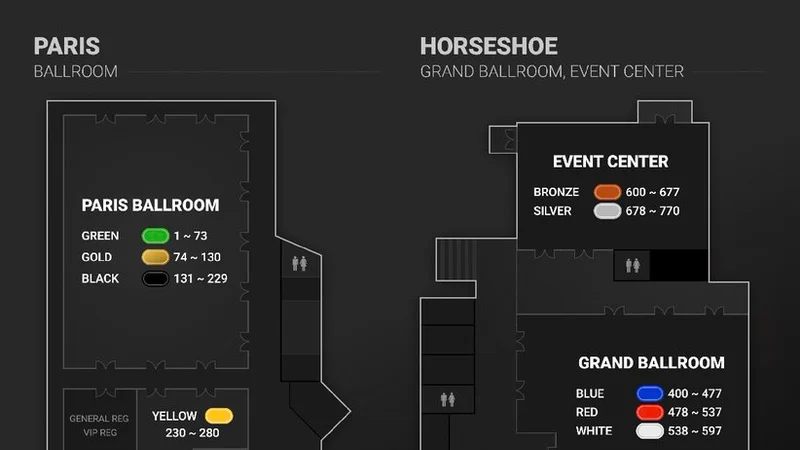
A practical look at why the WSOP floor plan matters for players navigating the world's largest poker series, and how to use it wisely.
The WSOP Floor Plan You Didn't Know You Needed
The World Series of Poker is not just a tournament series. It is a temporary city built inside a convention center, and like any city, it has geography. Halls, aisles, satellite areas, registration lines, payout windows, and food options all sit in specific places. Players who ignore that geography spend their series walking, waiting, and arriving late to their own tables.
A floor plan is the simplest tool for avoiding that. It is not glamorous, and it will not improve your 3-bet frequency. But it can save you time, energy, and a surprising amount of stress across a long series.
Why the Layout Matters More Than You Think
The WSOP schedule typically runs dozens of events across several weeks, with multiple tournaments starting on the same day. That means thousands of players moving through the same space at the same time. Registration, seating, and breaks all create bottlenecks.
Knowing the layout in advance helps you answer basic but important questions:
- Where do I register, and is there a separate line for already-registered players?
- Which entrance is closest to my starting table?
- Where are the nearest restrooms, water stations, and food options?
- Where do payouts happen, and when is the line shortest?
- If I bust late at night, what is the fastest way out?
None of these are strategic decisions in the poker sense. Together, they shape how much energy you have when the blinds get big.
Reading the Room Before You Play
Most large poker rooms publish or display a floor plan, and the WSOP is no exception. The plan usually shows the main tournament floor, secondary halls, and the areas used for satellites and cash games. It also tends to mark registration and payout locations.
A useful habit is to walk the floor before your first event. Find your likely table area, note the nearest exits, and locate one reliable place to eat. This takes maybe twenty minutes and pays off every day of the series.
Typical Player Mistakes
A few patterns show up again and again among players new to a series this size:
- Arriving at the main entrance when a side entrance is closer to their seat.
- Waiting in the general registration line when they only need a seating card.
- Leaving for a break without knowing how far the nearest food is.
- Missing the start of a level because they underestimated walking time.
These are not skill issues. They are logistics issues, and they are easy to fix.
A Simple Plan
Treat the floor plan like a session plan. Before each day:
- Check your start time and table assignment.
- Identify the closest entrance and the shortest route.
- Note one backup food option and one backup restroom.
- Give yourself a buffer before the first hand.
This is a typical approach used by experienced series regulars, and it costs nothing.
The Bottom Line
The WSOP floor plan is not a secret weapon. It is basic preparation. But in a series where fields are huge, days are long, and margins are thin, basic preparation is often what separates a comfortable run from a chaotic one. Learn the map once, and you stop losing time to the building.
For players focused on ICM, GTO, and table dynamics, the floor plan may feel irrelevant. In practice, it protects the mental energy you need for those decisions. That is reason enough to spend a few minutes with it.
FAQ
- It is a map or layout guide showing the tournament halls, registration areas, payout windows, and other facilities at the WSOP venue. It helps players navigate the space efficiently.