WSOP Main Event Champion Lucas Jumalon
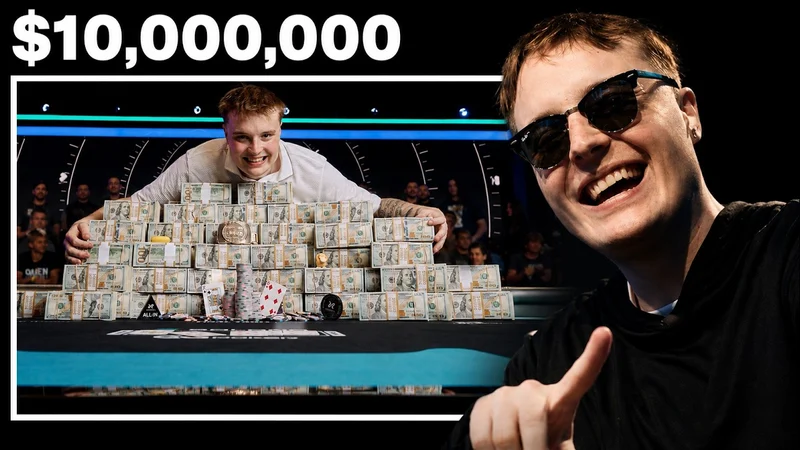
Lucas Jumalon discusses his 2026 WSOP Main Event win, including key hands, mental preparation with Patrick Leonard, and the psychological battle at the final table.
Lucas Jumalon confidently claimed the title at the 2026 WSOP Main Event, earning a $10 million prize. In this interview, he discusses the biggest hands of the final day, mental preparation, life-changing money, and how to stay composed when playing for poker's most prestigious title.
Winning the 2026 WSOP Main Event catapulted Jumalon into a league where a single tournament can change your life forever. Yet, in this interview, he doesn't come across as someone overwhelmed by fame, fortune, or public attention. When dissecting the pivotal moments on his road to $10 million, he emphasizes focus, discipline, and staying in the present. His calm is a key theme throughout the video — not as an abstract mindset but as a concrete weapon in spots where tens of millions of chips were at stake.
Moments Every Main Event Champion Experiences
Jumalon admits right off the bat that winning the Main Event isn't just about playing well. You need those moments when the tournament hangs in the balance. One such moment came at the end of Day Five when he faced a relentless opponent on his right. Feeling unable to win a pot against him, he dropped to about 45 big blinds before moving all-in with AJs. The call came quickly, and his opponent flipped over aces, setting a grim scene. Then a jack appeared on the turn, and Jumalon insists it happened because he believed it would. Such moments may sound cinematic in hindsight, but in the Main Event, they often determine whether a player becomes another bad beat story or makes history. Jumalon openly states that winning the Main Event requires a few of these crucial instances.
Boot Camp with Pads: Ten Days that Changed Everything
One of the most compelling sections of the video details preparation with Patrick "Pads" Leonard. After some major days, Jumalon took a brief break to rest and evaluate his situation. Then he met with Pads, who told him: "All right, kid. Let's get in the lab." An intense boot camp followed, with sessions lasting about two and a half to three hours daily over ten days. Pads invested a considerable amount of time and energy, asking for nothing in return. Jumalon says he improved significantly during this preparation, finding spots he would have previously missed, especially open jams on the final table and methods to apply pressure with his stack without risking too many chips. When asked what can be learned in two weeks, Jumalon's response is clear: with someone as skilled as Pads, you can learn a lot. This section highlights what a modern Main Event run looks like today. It's not just about playing well in isolation; it's about embracing help at the right time, absorbing information, and immediately applying it in the toughest career decisions.
Final Table: Not Playing for Third Place
On the final table, according to Jumalon, it was crucial to show he wasn't just there to survive pay jumps. He viewed the first final day not as one with ideal card distribution but as a chance to win pots others might not. He recalls hands where he defended the big blind, found dynamic leads, and applied pressure in situations where opponents expected caution. A crucial hand involved 43o, which changed table dynamics. It wasn't about a beautiful starting hand, but about signaling that Jumalon wasn't afraid and wasn't just playing for a better spot on the results list.
This mindset carried over into his duel with Lowry. Jumalon sensed his opponent was fatigued by his preflop jams and pressure. He noticed that Lowry didn't want to be bluffed, fold, or get pushed out of spots. These emotions formed the foundation of their heads-up dynamic. Jumalon openly says that aside from the hands and ranges, you also play mind games, planting small signals in your opponent's head that you later need to know you've placed.
Heads-Up: A Battle for Every Inch
As the tournament reached heads-up, Jumalon was ready to go to war. Described in everyday life as loving and pleasant, at the table he knew his opponent would react to his energy. Therefore, he didn't want to give an inch. Some looks, reactions, or verbal hints were not random, he says. They were part of a psychological game aimed at getting into his opponent's head and exploiting the dynamics he had been building up.
One intriguing situation arose with stacks around 33 big blinds. Lowry changed the button sizing, and Jumalon noted it didn't look entirely polarized. He debated the suitability of three-betting or calling but had certain jams ready from prior work with Pads. The money went in, and Jumalon had only about 23% equity. Yet even then, he didn't seem to expect an imminent end. He knew heads-up would be a battle, and regardless of the hand's outcome, he had to be ready to continue.
A Massive Bluff and a Potential Game-Changing Detail
Perhaps the best strategic part of this interview involves a massive spot where Jumalon pressures Lowry after a significant emotional swing. He explains that the flop was a straightforward value bet, but the turn was much more interesting. Aware that his opponent was on tilt, felt the momentum, and likely didn't want to make a big fold, he contemplated what sizing would force Lowry to fold specific hand types. Ultimately, he chose a 2x pot bet to exert maximum pressure while preparing for a river decision.
The most intriguing detail comes in how he managed the physical presentation of the bet. Jumalon says he moved the chips carefully and almost timidly, knowing his opponent might notice. Simultaneously, he attempted to appear vastly different than in the previous large hand against Malcolm, where the chips were placed more cleanly and confidently. Such aspects often get lost in standard analysis. The viewer sees sizing and cards, but at the table, there's also a game of body language, rhythm, and emotion. Jumalon admits he wouldn't have fired on a blank river, even if theory might have suggested otherwise.
From $22,945 to $10 Million
The Main Event finale delivered a moment you can't plan in poker. Jumalon reminds us that his previous largest cash was $22,945 — and he adds with a smile not to forget those 45 dollars. Then the $10 million win came. The jump between these numbers is so immense it can't fully be processed in real-time. When it was announced that the young man from Spokane, Washington, had just won the Main Event, Jumalon says he nearly fainted.
The interview also covers other scenarios — working with the rail, boot camp with Pads, live physical tells, sizing, pressure on pay jumps, and the willingness to deviate from theory depending on the opponent.
FAQ
- His previous largest cash was $22,945, as he mentioned in the interview.