#HUD
Poker content related to “HUD” · 15 items
News
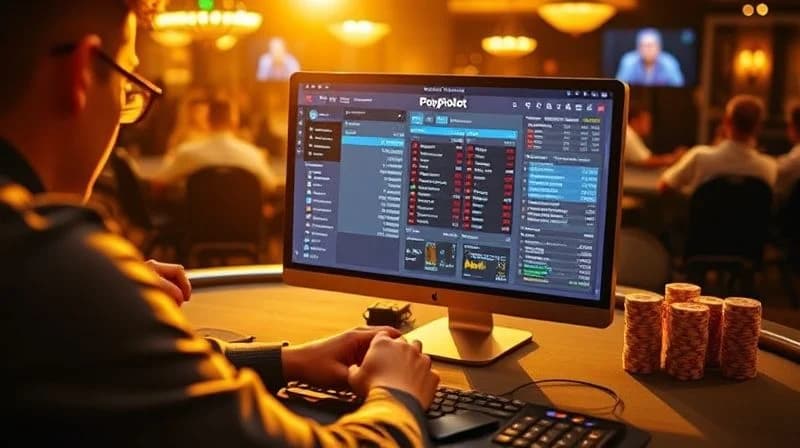
Poker Copilot 8: Five Reasons Why It's a Poker Software Worth Choosing
Poker Copilot 8 is a tracker and HUD software compatible with major poker rooms, easy to install and powerful. This article introduces five core advantages: intuitive and easy to use, rich statistics, cross-platform support, quick installation, and reliable compatibility.
Reddit user seeks HUD Poker recommendations
Reddit user posted asking for HUD Heads-Up Display recommendations in online poker. The post includes an image but no text. HUD is typically used to track opponent data, common software includes Hold'em Manager and PokerTracker.

PLO 6-Max HUD Stats Guide: Which Statistics Are Most Useful?
Omaha PLO players on Reddit discuss the best HUD statistics for 6-max tables, including key data like VPIP, PFR, 3bet, as well as sample size recommendations. This article summarizes the poker community's experience and common strategies to help players optimize data usage.
Strategy
Best Poker Tools for Studying Tournaments
This article introduces four practical poker tournament learning tools: Power Equilab, ICMIZER, Holdem Resource Calculator, and Hand2Note, covering equity calculation, ICM analysis, HUD tracking, and other features, suitable for players of different levels to improve their strategy.
Best Poker HUD Software Recommendations: Enhance Your Online Game Data Insights
This article selects several mainstream poker HUD software, including Hold'em Manager 3, PokerTracker 4, DriveHUD 2, etc., analyzes their core highlights, and helps players choose the most suitable tool based on budget and needs.
HUD Identification Checklist: Key Data Differences Between Regs and Fish
Master HUD data to quickly distinguish regulars Regs from recreational players Fish. This article lists typical ranges for core metrics such as VPIP, PFR, AF, 3-bet, fold to cbet, along with comparison tables and practical advice to help you make more precise exploitative decisions at the table.
HUD Exploitation for Online Regs: A Practical Guide from Data to Profit
This article explains in detail how to use HUD data to systematically exploit online regular players regs. It covers key stat interpretation, adjustment strategies for different player types, sample size requirements, and practical examples to help you increase profits in cash games and tournaments.
Decoding Poker HUD Data: Practical Application of VPIP, PFR, and 3Bet Metrics
VPIP, PFR, and 3Bet are the three most basic statistics in a poker HUD, quickly revealing opponents' styles and leaks. This article explains each metric's definition, typical ranges, and interpretation methods, teaching you how to use these data to make more precise preflop decisions and adjust strategies against different player types.
Hold'em Manager 3 Guide: Data Analysis and Leak Detection
Master the basics of Hold'em Manager 3, use data analysis to find leaks in your poker strategy, and improve long-term profitability. A step-by-step tutorial for beginners.
Poker HUD Metrics Guide: VPIP, PFR, 3-Bet Indicators Explained
VPIP, PFR, and 3-Bet are core poker HUD metrics. This article explains each metric's definition, normal ranges, and interpretation methods to help you quickly identify opponent styles and optimize preflop strategies. With practical examples, it provides a data-driven decision framework tailored for online multi-table players to improve their skills.
Holdem Manager 3 vs PokerTracker 4: Deep Comparison and Selection Guide for Poker Tracking Software
Deep comparison of two mainstream poker tracking software, Holdem Manager 3 and PokerTracker 4, analyzing from dimensions such as features, interface, data statistics, HUD customization, database performance, price, and applicable scenarios, to help players make the best choice based on their needs.
HUD Statistics Sample Size: How to Judge Data Reliability
In online poker, the value of HUD statistics depends on sample size. Too few hands lead to misleading conclusions, while too many delay decision-making. This article explains the reasonable sample size ranges required for key statistics such as VPIP, PFR, 3bet, and how to adjust trust thresholds based on opponent behavior, helping players avoid common pitfalls.
Fold Equity Exploit: Identifying and Exploiting Opponents' Excessive Folding
Learn how to identify opponents' tendency to fold too often to flop continuation bets, and maximize exploitation by adjusting bet sizing and range. This article covers principles, leak identification, strategy adjustments, and practical examples.
Sample Size Statistical Reliability: How to Avoid Poker Data Traps
Poker stats such as VPIP, PFR help analyze opponents, but small sample sizes can be misleading. This article explains the core principles of statistical reliability, how to determine if sample sizes are sufficient, and how to correctly interpret data in practice to avoid common mistakes.
Build Your Exploitation Chart: Maximize Value from Common Player Tendencies
This article teaches you how to identify common player tendencies in online poker and build your own exploitation chart. By adjusting preflop ranges and postflop strategies, you can exploit typical errors such as calling too frequently or folding too much, consistently profiting from these mistakes.