AI Ataraxos Dominates Top Stratego
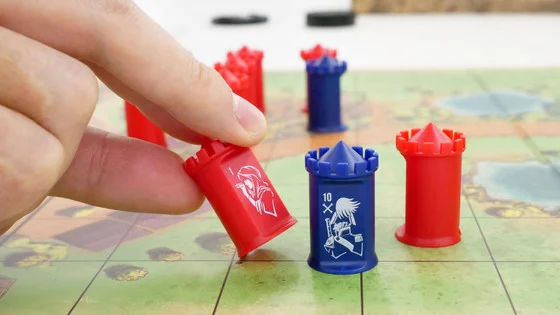
An AI system named Ataraxos reportedly beat one of the world's top Stratego players, winning 15 games, losing 1 and drawing 4 in a head-to-head match.
An artificial intelligence system named Ataraxos has recorded a decisive result against one of the strongest human players of Stratego, the military-themed board game of hidden information and bluff. The reported match outcome was 15 wins, 1 loss and 4 draws for the AI across the series.
What the Result Means
Stratego is not a perfect-information game like chess or Go. Each player deploys an army of pieces whose identities are hidden from the opponent until they collide. That structure makes the game a blend of planning, deduction and psychological pressure, and it is precisely this mix that has historically kept strong board-game AI away from the title.
A scoreline of 15-1 with 4 draws is therefore notable less as a curiosity and more as a signal. In hidden-information games, an AI cannot simply calculate a winning line from a fully visible position. It has to reason about what the opponent might hold, weigh risk against reward, and decide when to commit a valuable piece to a confrontation that may or may not go its way.
Why Hidden Information Is Hard for Machines
In games such as poker, AI progress has come from a combination of game-theoretic equilibrium computation and self-play at enormous scale. Stratego shares some of those properties: players act under uncertainty, information is revealed only through interaction, and deception has real value. The difference is that Stratego also has a large spatial board and a fixed set of piece types with specific movement and combat rules, so the search space is structured differently from a card game.
A system that performs well in this setting typically needs at least three capabilities:
- A model of the opponent's possible deployments and intentions
- A way to value information, not just material, when choosing moves
- The ability to mix strategies so that its own plans are not predictable
None of these are trivial, and combining them in a single agent is a meaningful engineering and research challenge.
Reading the Numbers Carefully
A 15-1-4 record is a strong result, but it should be read with the usual caution applied to any single match. The number of games is limited, the conditions of play are not fully described in the available report, and a single series does not by itself establish that the AI is stronger than all human players. What it does suggest is that Ataraxos is competitive at a very high level in a game where machines have not traditionally been dominant.
It is also worth separating the headline from the underlying claim. The reported outcome concerns one top player, not the entire field of elite Stratego competitors. Broader conclusions would require repeated matches, varied opponents and transparent playing conditions.
What Usually Follows
When an AI posts a result like this, the typical next steps in the research community are predictable. Developers often release more detail on the methods used, run additional matches against different opponents, and examine where the system still makes mistakes. For players, the interesting question is not only whether the AI wins, but how it wins: which decisions reflect genuine strategic understanding and which reflect the peculiar strengths of machine calculation.
Stratego has a long history as a game of nerve and inference. If Ataraxos can sustain this level of performance, it would add another data point to the growing evidence that AI can handle uncertainty and deception, not just perfect-information puzzles. For now, the reported 15-1-4 result stands as a striking single-series outcome and a reason to watch how the system develops.
FAQ
- Stratego is a military-themed board game in which each player's pieces are hidden from the opponent until they meet in combat. It combines planning, deduction and bluffing, making it a game of imperfect information rather than a pure calculation exercise.