Can AI Facial Recognition Really Spot Poker Tells, or Are We Being Bluffed?
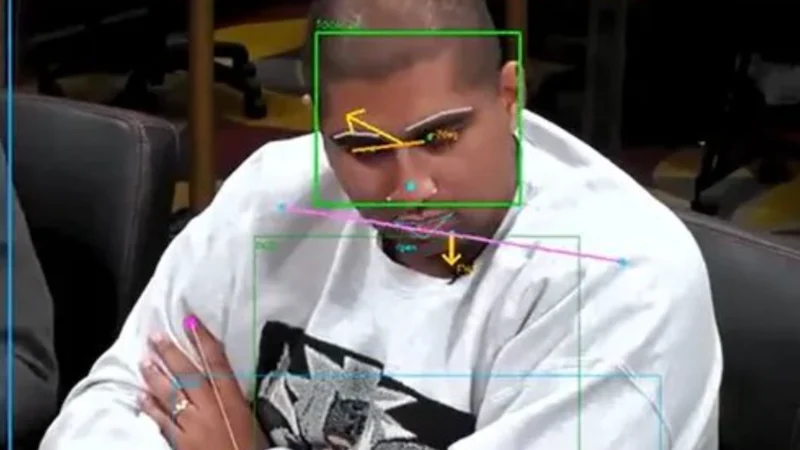
Explore whether AI facial recognition can truly identify poker tells or if it's just hype. Understand the technology, its limitations, and the future of AI in poker.
The Promise of AI in Poker
Artificial intelligence has already made significant inroads into poker, with programs like Libratus and Pluribus defeating top human players in heads-up and six-player no-limit hold'em. These successes rely on mathematical game theory and pattern recognition, not on reading human emotions. But a new frontier is emerging: using AI facial recognition to detect physical tells—the subtle, involuntary expressions that might betray a bluff or a strong hand.
The idea is tantalizing. If a camera can analyze a player's micro-expressions, eye movements, or pulse rate, could it give an online or live player an edge? Some startups and researchers are exploring this, but the question remains: does it actually work, or is it just another bluff?
The Science of Facial Tells
Facial tells are based on the premise that emotions leak through nonverbal cues. For example, a player might briefly smile when holding a strong hand, or show tension when bluffing. However, the scientific consensus is that these cues are unreliable. Research on deception detection has shown that even trained professionals—like police officers or psychologists—perform only slightly better than chance when trying to spot lies from behavior alone.
Moreover, poker players are often trained to control their expressions, using sunglasses, hoodies, or a "poker face." Even if AI can detect micro-expressions, these may not correlate consistently with hand strength. A player might smile because they are nervous, not because they have a good hand. The context is crucial, and AI systems struggle to interpret context without additional data.
How AI Facial Recognition Works
AI facial recognition typically uses computer vision to map facial landmarks and detect movements. Machine learning models can be trained on datasets of labeled expressions, such as happiness, anger, or surprise. In a poker setting, the AI would need to associate these expressions with actual hand outcomes—a challenging task because the same expression can occur in different situations.
A typical approach might involve:
- Detecting the face and tracking key points (eyes, mouth, eyebrows).
- Measuring changes in these points over time.
- Classifying expressions using pre-trained models.
- Correlating expressions with betting patterns or hand results.
But even if the AI can accurately label an expression as "nervous," it doesn't know why the player is nervous. They might be bluffing, or they might be worried about a bad beat on the river. Without additional context, the AI's output is ambiguous.
The Reality Check
Currently, there is no publicly available, peer-reviewed evidence that AI facial recognition can reliably identify poker tells in real-time. Most claims come from marketing materials or speculative articles. In practice, online poker platforms do not use such technology, and live poker rooms generally prohibit electronic devices at the table.
Furthermore, the use of AI to read opponents would raise ethical and legal questions. In live games, it could be considered cheating, as it provides an unfair advantage. In online poker, players are already anonymous, so facial recognition is irrelevant.
The Future of AI in Poker
While AI facial recognition for tells may be more hype than substance, AI continues to shape poker in other ways. Solvers and training tools use AI to help players improve their strategies, focusing on game theory optimal (GTO) play rather than psychological reads. These tools are widely accepted and have changed how professionals study the game.
In the future, AI might integrate physiological data, such as heart rate or skin conductance, which could be more reliable indicators of stress. But even then, the interpretation would be complex. For now, the idea of AI reading facial tells remains an intriguing concept, but one that is far from proven.
Conclusion
So, can AI facial recognition really identify facial tells? The short answer is: not yet, and perhaps never. The technology is impressive, but the science of deception detection is shaky. Poker is a game of incomplete information, and while AI can process vast amounts of data, it cannot yet read minds. Until then, players should focus on solid strategy and bankroll management, rather than relying on a camera to spot a bluff.
As with many AI applications, the hype often outpaces the reality. In poker, as in life, if something seems too good to be true, it probably is—and that's a bet you might want to fold.
FAQ
- Currently, there is no scientific evidence that AI facial recognition can reliably detect poker tells. The technology is still experimental, and human expressions are not consistent indicators of hand strength.