Fruit Fly Brain Research and Poker
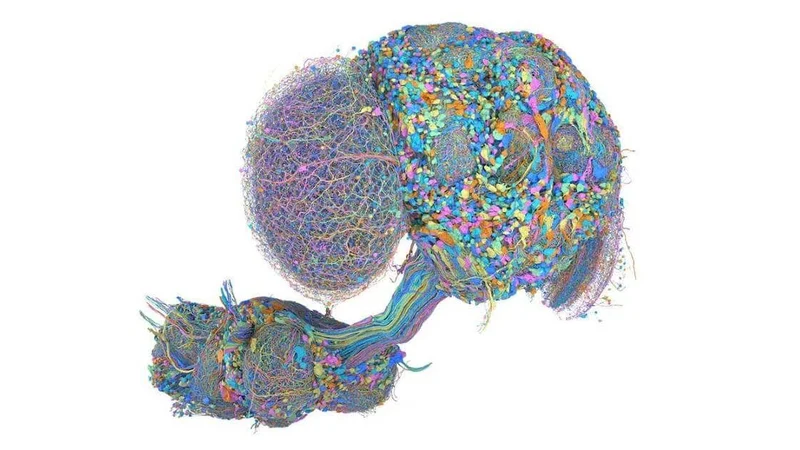
Scientists have used the fruit fly brain to study complex behaviors, including decision-making relevant to poker. Research highlights how simple neural circuits can produce sophisticated choices.
Fruit Fly Brain and Complex Behavior
The fruit fly, or Drosophila melanogaster, has long been a workhorse of neuroscience. Its brain contains roughly 100,000 neurons, a tiny number compared to the human brain's billions. Yet this small circuit is capable of surprisingly complex behaviors. Researchers have studied how fruit flies navigate, learn, remember, and even make decisions under uncertainty. The headline question—whether there is anything the fruit fly brain cannot do—is a playful way of pointing to how much this simple system can teach us.
From Dancing to Decision-Making
Fruit flies are known for elaborate courtship rituals that include wing vibrations often described as dancing. Beyond mating behavior, they can also perform tasks that resemble gambling and risk assessment. In laboratory experiments, flies are presented with choices that involve varying probabilities of reward or punishment. Their responses reveal that even a small neural network can weigh odds, learn from outcomes, and adjust behavior. This is the same fundamental process that underpins poker: evaluating uncertain outcomes and updating strategy based on results.
What Poker and Fruit Flies Share
Poker is a game of incomplete information. Players must make decisions without knowing opponents' cards, relying on probabilities, patterns, and past observations. Fruit fly experiments model similar situations. For example, a fly might choose between two odors, one associated with a sugar reward and another with a mild electric shock. Over time, the fly learns which odor is more likely to lead to a good outcome. This kind of associative learning is a basic form of the decision-making that poker players use when they read opponents or calculate pot odds.
Researchers are careful not to claim that fruit flies play poker in any literal sense. Instead, the insect brain serves as a model for understanding how neural circuits compute value, risk, and reward. Findings from such studies can inform broader theories in neuroscience and artificial intelligence, including how algorithms might make decisions in uncertain environments.
Why This Matters for Poker Players
For poker players, the connection is conceptual rather than practical. The fruit fly brain shows that sophisticated decision-making does not require a large brain. It emerges from specific circuits and learning rules. This reinforces a key poker principle: strong decisions come from simple, repeatable processes—such as estimating equity, managing bankroll, and avoiding emotional biases—rather than from raw brainpower alone.
Typical Example
Consider a simplified scenario used in research: a fly faces two options, each with a different chance of reward. Initially, the fly explores both. After a few trials, it favors the option with the higher reward rate. This is analogous to a poker player who notices an opponent folding too often to 3-bets and adjusts by bluffing more frequently. In both cases, the decision-maker is not calculating exact probabilities but is learning from experience.
Limitations and Responsible Interpretation
It is important not to overstate the comparison. Fruit fly brains and human poker strategy operate on vastly different scales. The research does not suggest that flies understand poker rules, bluff, or manage a bankroll. Instead, it offers a window into the neural basis of choice under uncertainty. Any practical poker lesson should be drawn cautiously, as a metaphor for learning and adaptation rather than a direct blueprint.
Conclusion
The fruit fly brain continues to surprise scientists with its behavioral repertoire. From courtship dances to risk-based decisions, it demonstrates that complex outcomes can arise from simple systems. For poker players, the takeaway is not that flies are poker pros, but that effective decision-making often relies on fundamental learning mechanisms that are shared across species. Understanding those mechanisms can deepen appreciation for both neuroscience and the strategic thinking that poker demands.
FAQ
- No. Fruit flies do not play poker. Research uses them to study decision-making under uncertainty, which is conceptually similar to some aspects of poker.