Nishant Sharma Wins First WSOP Bracelet
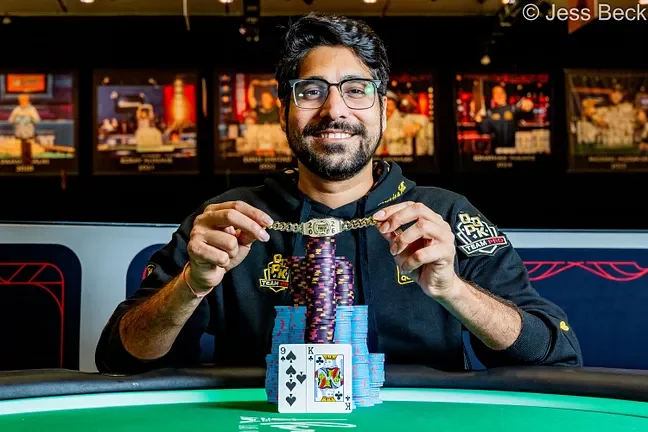
Nishant Sharma has captured his first World Series of Poker bracelet, earning a payout reported at close to US$200,000.
Sharma Breaks Through at the World Series of Poker
Nishant Sharma has won his first World Series of Poker bracelet, breaking through at poker's most recognized series of tournaments. The victory came with a payout reported at close to US$200,000, a result that marks a significant milestone in his tournament career.
A WSOP bracelet is widely regarded as the most coveted trophy in tournament poker. Unlike titles earned on regional tours or online series, bracelets are awarded only at the World Series of Poker, and the field at each event typically includes a mix of established professionals, international specialists and recreational players who satellite in. Winning one is generally treated as the definitive proof that a player can close out a large, deep, high-pressure field.
Why the First Bracelet Matters
For players who compete regularly on the international circuit, the first bracelet often functions as a career turning point. It tends to bring increased visibility, more sponsorship interest and invitations to high-stakes invitational events. It also changes how a player is perceived at the table: opponents who might previously have treated them as an unknown quantity now adjust their reads accordingly.
Sharma's result also reflects a broader trend in modern tournament poker. Fields at the WSOP have become increasingly international, with players from Asia, Europe, Latin America and Australia making up a substantial share of the entries in many events. Players who develop their game in smaller regional markets increasingly arrive at the series already comfortable with the structure, the pace and the level of aggression required to survive deep runs.
The Money and What It Represents
A payout near US$200,000 is a meaningful score at the WSOP, though it sits below the seven-figure sums reserved for the largest buy-in events and the Main Event. In practical terms, a result of this size usually covers a full season of tournament buy-ins, travel and expenses for a professional player, which is part of why mid-tier bracelet events are so fiercely contested.
It is worth noting that reported prize figures for poker tournaments can vary depending on how deals are structured at the final table. When players agree to adjust the payout distribution, the official first-place number may not reflect what the winner actually takes home. For that reason, published figures are best treated as the headline result rather than a precise accounting of net profit.
What Comes Next
For Sharma, the immediate effect is a permanent entry in the WSOP record books. Bracelet winners are listed alongside every other champion in the series' history, and the achievement is not something that can be taken away by a later downswing.
The more interesting question is what follows. Some first-time bracelet winners use the result as a platform to play a heavier schedule of high-roller events. Others treat it as validation and continue with their existing approach, mixing series play with cash games or online volume. Either path is common, and neither is inherently better.
What the result does confirm is that Sharma can navigate a large WSOP field to the end. In a format where the majority of entrants are eliminated before the money bubble, and where the final few tables are played against opponents with significant bracelet-event experience, that is not a small thing.
The Bigger Picture
Results like this one are part of why the WSOP remains the reference point for tournament poker. The series offers a route to a major title that does not depend on being a full-time professional or on having a long list of prior cashes. Players arrive from regional circuits, satellite their way in, and occasionally leave with a bracelet and a six-figure score.
Sharma now belongs to that group. The bracelet is his first, and the payout reported at close to US$200,000 makes it a result that will shape his schedule and his standing on the tournament circuit going forward.
FAQ
- He won his first World Series of Poker bracelet, with a payout reported at close to US$200,000.