Phil Ivey and the Edge Sorting Scandal
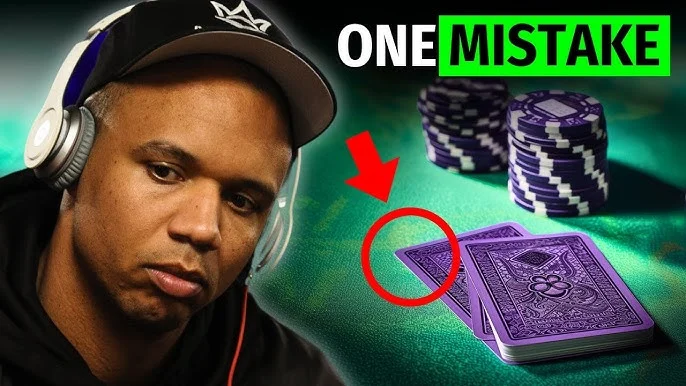
A look at the edge sorting controversy surrounding Phil Ivey: what the technique is, why casinos called it cheating, and why the debate still divides poker.
What the Edge Sorting Case Was About
Phil Ivey is one of the most decorated and widely respected players in professional poker. His name is associated with high-stakes cash games, major tournament final tables, and a reputation for reading opponents at a level few can match. Alongside that reputation sits a long-running legal and ethical controversy: the edge sorting dispute.
The case centered on Ivey and a companion playing high-stakes baccarat at major casinos. The claim was that they exploited manufacturing imperfections in the cards to gain an advantage. The casinos argued this amounted to cheating. Ivey's position, broadly reported, was that he was simply using his observational skill within the rules as he understood them, and that the casinos should have protected their own game.
What Edge Sorting Actually Is
Edge sorting is a technique that depends on physical flaws in a deck rather than on mathematics or card counting.
- Cards are printed and cut in large sheets. If the cutting is slightly off, the pattern on the back of a card can be asymmetrical.
- A player who notices this can identify certain cards by looking only at the edge or a corner of the back, without seeing the face.
- In games where cards are dealt face down and the backs are visible, that information can be used to make better decisions.
In baccarat, the relevant detail is often whether a card is a "good" or "bad" card for a particular side of the bet. If a player can tell certain cards apart from the back, they can adjust their betting in ways that are not available to a player who cannot.
The technique is sometimes described as a form of advantage play. The counterargument is that it relies on a defect the casino did not intend to offer, and that requesting specific cards or having them oriented in a particular way crosses a line.
Why the Dispute Still Matters
The edge sorting affair raised questions that go beyond one player or one game.
Skill, Rules, and Intent
Poker has a long tradition of rewarding observation. Reading tells, tracking betting patterns, and exploiting opponents' mistakes are all considered legitimate. Edge sorting sits awkwardly in that tradition because the "tell" is in the equipment, not the opponent.
Casino Responsibility
Casinos are generally expected to provide fair equipment and to manage their own games. When a game is offered with flawed cards, the question of who bears responsibility becomes murky. This is one reason the case generated so much argument: both sides could point to the other's failure.
Legal Outcomes and Their Limits
Courts in different jurisdictions reached different conclusions, and the outcomes did not settle the underlying poker debate. Legal rulings address specific claims under specific laws. They do not necessarily answer whether a technique is ethically acceptable within the culture of the game.
How Players and Commentators Frame It
Opinions tend to fall into a few broad camps.
- Some see edge sorting as a clever, non-violent exploitation of a casino's own error, comparable in spirit to other forms of advantage play.
- Others see it as deception aimed at the house, and therefore cheating, regardless of how it was executed.
- A third view focuses less on Ivey and more on the industry: the episode is a reminder that game security, card quality, and dealer procedures matter enormously at high stakes.
What the Case Teaches
For players, the practical lesson is that the line between advantage play and cheating is often defined by the venue, the jurisdiction, and the specific rules in force, not by a universal standard. Techniques that are celebrated in one context can be treated as fraud in another.
For the industry, the lesson is about control. High-stakes games attract sophisticated participants, and any weakness in equipment or procedure can be found and used. Casinos that want to avoid disputes generally need to treat card integrity and dealing protocols as part of the game itself.
Whether the edge sorting episode should be remembered as a stroke of genius or as a hoax is still contested. What is not contested is that it became one of the most discussed integrity stories in modern gambling, and that it forced both players and operators to think harder about where skill ends and cheating begins.
FAQ
- Edge sorting is a technique where a player identifies cards by small manufacturing imperfections, such as an uneven pattern on the card back, without seeing the face. It relies on physical flaws in the deck rather than on counting or mathematics.