Players Praise Action Clocks at Record
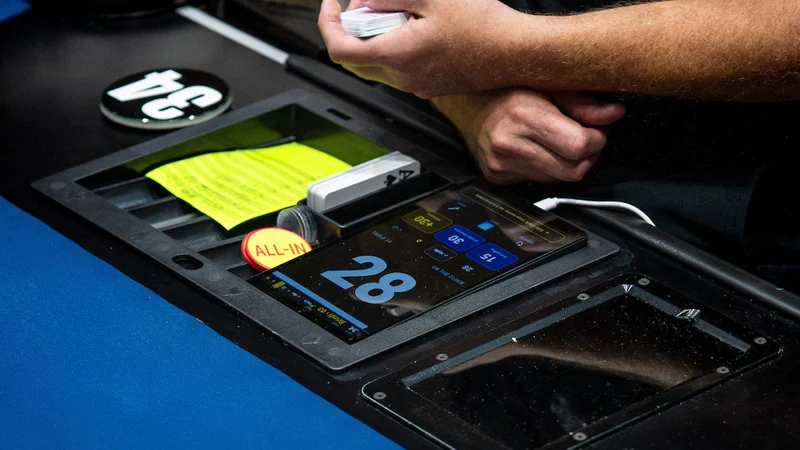
Players reacted positively to the use of action clocks at a record-setting WSOP Circuit Main Event, with one calling the change 'wonderful.'
Action Clocks Draw Praise at Record WSOPC Main Event
Action clocks earned positive reviews from players at a record-setting WSOP Circuit Main Event, with at least one player describing the change as "wonderful." The feedback points to a growing acceptance of timed play in live tournament poker, where slow decisions and tanking have long been a source of frustration for both players and tournament staff.
What an Action Clock Does
An action clock is a timing device that gives each player a fixed amount of time to act on their hand. In most implementations, a player receives a set number of seconds — commonly 30 — to make a decision. If they need more time, they can typically extend by using a limited number of time-bank chips, each of which adds a predetermined number of extra seconds.
When a player's time expires without action, their hand is usually folded automatically. This removes the ambiguity of a dealer or floorperson having to judge whether a player is stalling, and it standardizes the pace of play across the entire field.
Why Players Like It
The appeal is straightforward. Timed play reduces the incentive to tank for extended periods, which can be used tactically to pressure opponents or simply to run down the clock. In large-field events, where hundreds of players share a limited number of tables and dealers, slow play compounds: a few minutes lost per decision can add hours to a tournament day.
Supporters also note that action clocks make the game fairer. Players who act quickly are no longer penalized by opponents who take an unusually long time on routine spots. For recreational players in particular, a predictable rhythm can make a long tournament day more manageable.
The Counterarguments
Not everyone is enthusiastic. Some players argue that complex decisions — especially those involving ICM considerations near pay jumps, or multi-way pots with deep stacks — genuinely require more thought than a short clock allows. Time-bank chips mitigate this, but players must manage them carefully, and running out at a critical moment can force a rushed or incorrect decision.
Others point out that clocks add logistical overhead. Dealers must manage the devices, and tournament staff must handle disputes when a clock malfunctions or a player believes they were unfairly timed out.
A Broader Trend
The positive reception at a record WSOPC Main Event fits a wider pattern in live poker. Major tours and series have increasingly adopted action clocks or similar timing rules in their flagship events, and the format has become more common in high-roller and televised tournaments where pace matters for production as well as fairness.
For tournament operators, the calculus is simple: faster play means more hands per level, which generally improves the experience for the field and helps events stay on schedule. For players, the trade-off is between structure and freedom — a fixed clock in exchange for a more predictable game.
What to Watch
If action clocks continue to spread, the key questions will be how much time is standard, how many time-bank chips players receive, and whether the rules are applied consistently from the first level to the final table. The early feedback from this WSOPC Main Event suggests that, at least for many players, the trade-off is worth it.
FAQ
- An action clock is a timing device that gives each player a fixed amount of time to act, commonly around 30 seconds. Players can usually extend using a limited number of time-bank chips that add extra seconds. If time expires, the hand is typically folded.