Reading Poker Tables Like CS2 Maps
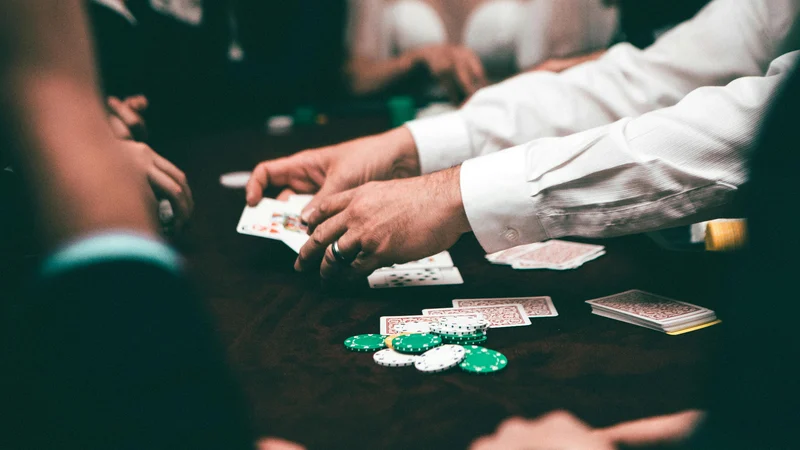
CS2 map adaptation and poker table reading share the same core skill: rebuild your plan when conditions change instead of running yesterday's script.
Why a Fixed Plan Fails at the Table
A player sits down at a $2/$5 game and within four hands realizes the table is wrong for the strategy they brought. Too many limpers. One maniac three-betting blind versus blind. A rock on their direct left who has not played a hand in twenty minutes. Nothing from the previous night applies. The plan has to be rebuilt on the fly.
That feeling, where last week's approach is suddenly useless, is familiar to anyone who plays Counter-Strike 2 competitively. Valve rotates maps in and out of the Active Duty pool, tweaks callouts, and rebalances bomb sites. A team that mastered a map six months ago may find it playing completely differently after an update. A strategy that wins on one map can get you punished on another.
Good CS2 players do not carry one game plan from map to map. They rebuild positioning, utility lineups, and pacing every time the map changes. Poker players face the same requirement: reread the table within the first twenty minutes or get run over.
Map Pools and Table Stakes Work the Same Way
CS2's Active Duty pool is not static. Valve rotates maps, adjusts callouts, and rebalances sites. Poker does this too, just slower and with people instead of patches.
A $1/$2 table at 11pm on a Tuesday plays nothing like the same stakes at a Saturday night tournament satellite. The players are different. The bet sizing norms are different. Even the dealer's pace changes how many hands you see per hour, which changes your variance.
Serious CS2 players scout. They watch demos, study how a specific team defends a specific site on a specific map, and adjust utility usage accordingly. Good poker players do a version of the same thing. They call it a read.
- Who is opening wide from the cutoff
- Who folds to a third barrel
- Who is tilted after losing a flip twenty minutes ago and is about to do something reckless
You cannot show up with a fixed strategy and expect it to survive contact.
Table Image Is Your Map Control
In CS2, map control early in a round dictates everything that follows. If your team does not hold mid on a given map, your entire late-round options collapse.
Table image works almost identically in poker. The image you build in the first orbit or two, whether tight and passive, loose and aggressive, or unreadable, determines what bluffs will land and what value bets get paid off for the rest of the session.
A typical example: a player 3-bets light for four straight orbits purely to build an image, then shows up with aces the fifth time and gets paid off by opponents who had decided he was spewing. That is not luck. It is the same long-game thinking a CS2 in-game leader uses when letting a team win map control cheap early to set up a mid-round execute.
Neither works without patience, and neither works if you cannot read when the pattern needs to break. Both games punish players who run the same script regardless of conditions. The scoreboard, or the stack sizes, do not care how good your plan was yesterday.
Range Adjustment vs. Anti-Stratting
Poker players talk about range adjustment. CS2 teams talk about anti-stratting. Functionally they are the same muscle. You take what you know about an opponent's tendencies and narrow or widen your own assumptions to counter it.
A GTO-adjacent player defaults to a balanced, theoretically sound range against an unknown opponent. That is the baseline, the same way a CS2 team might default to a standard setup on a map they have not scouted their opponent on yet.
But the moment you get information, three hands of a player folding to every continuation bet, or a demo showing a team always rotating fast from one site to another, the smart move is to exploit it. Pure GTO play against a readable opponent leaves value on the table. Theoretically balanced play is a floor, not a ceiling, and the real edge comes from deviating once you have reliable information.
This is where many newer players get stuck. They learn one solid default and apply it everywhere, on every map, against every opponent, at every stake. It is safe. It is also why they plateau. The players who climb further are the ones willing to unlearn their default when the table, or the map, tells them to.
What AI Beat in Both Games
In 2019, a program called Pluribus beat a lineup of professional poker players in six-player no-limit Hold'em. The result was covered as a genuine milestone because multiplayer poker involves imperfect information in a way two-player games do not. Earlier work with Libratus made a similar point: the hard part is not calculating odds, it is reasoning under uncertainty when you cannot see what your opponents are holding.
CS2 has its own version of this problem. You never know for certain where the other team is standing. You play probabilities based on sound cues, utility usage, round history, and tendencies, exactly like reading a flop and guessing at a range rather than a specific hand.
Games that reward probabilistic reasoning under incomplete information tend to produce players with transferable instincts. That is not a coincidence. It is the actual skill being trained.
Stakes Are Maps, Maps Are Stakes
Think about how a CS2 roster treats a map ban. They are not guessing. They veto based on known weaknesses, theirs and the opponent's. Poker players should treat table selection with the same discipline, and most do not.
Moving up in stakes is not just the same game with bigger numbers. A $5/$10 game plays with different population tendencies than a $1/$2 game. Players are tighter, more aggressive preflop, more willing to barrel three streets. If you walk in with your $1/$2 reads intact, you will get crushed.
It is the same mistake as running a strategy built for open sightlines on a cramped map where sound and verticality change everything about positioning. Expert poker players do not just know more hands. They recognize patterns faster and adjust their decision trees in real time based on context. That is map literacy, applied to a card table.
The Adjustment Never Stops
Neither game rewards a fixed playbook. CS2 players who stop updating their map knowledge get outmaneuvered by teams running fresher reads. Poker players who stop updating their table reads get outplayed by opponents who adjusted an orbit ago.
The skill is not memorizing a perfect default. It is noticing when the conditions changed and being willing to throw out what worked yesterday.
Gambling involves risk. Please play responsibly and only wager what you can afford to lose. If you feel gambling is becoming a problem, visit BeGambleAware.org or call 1-800-GAMBLER.
FAQ
- It is more concrete than most comparisons. Both reward probabilistic reasoning under incomplete information, fast pattern recognition, and the discipline to abandon a plan that no longer fits the conditions. Pro players in both fields describe the same mental process in different language.