Sergio Aido Wins Third High Roller WSOP
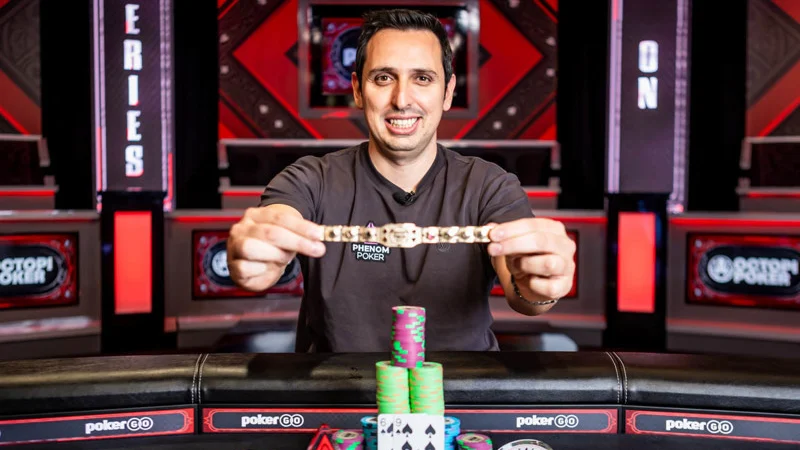
Spanish pro Sergio Aido has won his third WSOP High Roller bracelet, his third seven-figure bracelet score in two years.
A Third High Roller Bracelet for Sergio Aido
Spanish poker professional Sergio Aido has won a World Series of Poker High Roller bracelet, the third of his career. The result continues a remarkable run in the highest buy-in events on the WSOP schedule, where Aido has now converted three titles into seven-figure paydays within roughly a two-year span.
High Roller events at the WSOP are defined by their large buy-ins and correspondingly small, elite fields. Because the player pool is limited to those willing and able to post the entry fee, the prize pools are top-heavy: a single deep run can be worth seven figures, while a min-cash or early exit carries a much steeper opportunity cost than in a standard open event. Winning one of these tournaments requires both a strong baseline of technical play and the ability to adjust to opponents who are, on average, far more experienced than a typical WSOP field.
Why the High Roller Format Is Different
High Roller tournaments are usually played with deeper starting stacks and slower blind structures than standard events, which places a premium on post-flop play and on reading opponents rather than simply surviving all-in confrontations. In practice, this means:
- Field sizes are small, so the gap between a final table and a win is often just a handful of decisive pots.
- The average skill level is high, so edge comes from small adjustments rather than from exploiting obvious mistakes.
- ICM pressure is significant near the bubble and at the final table, because pay jumps are large relative to the buy-in.
For players studying these events, the typical lesson is that survival alone is not a strategy. In a small, tough field, waiting for premium hands often means blinding down while stronger opponents accumulate chips. Aggression in the right spots, particularly against opponents who are also ICM-aware, tends to matter more than in large-field events.
What Three Titles in Two Years Means
Sustaining results at this level over multiple years is unusual. Variance in tournament poker is high, and even elite players can go long stretches without a major score. Aido's run of three seven-figure bracelet results in roughly two years therefore reflects more than a single hot streak; it suggests a game well suited to the specific demands of short-handed, high-stakes tournament play.
It also reflects the broader shift in the modern WSOP schedule, where High Roller events have become a fixture and where a small group of specialists regularly appears deep in these fields. Winning repeatedly against that same group is generally considered one of the harder achievements in tournament poker.
The Takeaway for Observers
For fans and students of the game, the headline is straightforward: Aido has added another High Roller title to an already strong résumé, and he has done so in the format where the margin for error is smallest. The specific buy-in, prize amount, and field size for this event are not detailed here; what is clear is the pattern — three bracelets, three seven-figure scores, and a consistent presence at the top of the High Roller game.
FAQ
- Sergio Aido has won three WSOP bracelets, all in High Roller events, according to the reported result.