Shot Clock Debate Returns to the WSOP
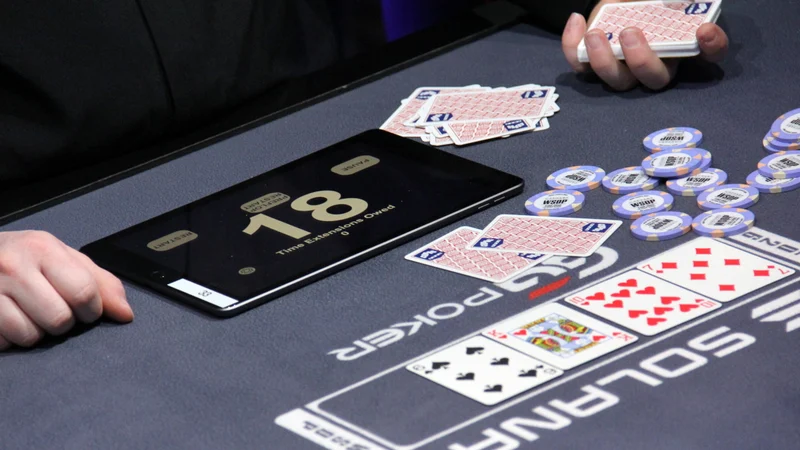
The shot clock debate is back on the WSOP agenda, reviving questions about pace of play, tanking, and how tournament poker balances tradition with structure.
The Shot Clock Debate Returns to the WSOP
The shot clock conversation has resurfaced at the World Series of Poker, putting one of tournament poker's most persistent arguments back in the spotlight. The core question is unchanged: should players be limited in how long they can take on a decision, and if so, how should that limit be enforced?
A shot clock gives each player a fixed amount of time to act on a decision, usually measured in seconds. When the clock runs out, the player either folds, or in many formats, uses an allotted extension or time bank chip to buy additional time. The mechanism is designed to prevent excessive tanking, the practice of taking an unusually long time before acting.
Why the Debate Keeps Coming Back
Tanking is not simply a matter of slow play. In high-stakes tournament poker, a long decision can be strategically legitimate, particularly on river spots where the size of the pot and the remaining stack sizes make the decision genuinely difficult. Players also use time to process ICM implications, the way payout structures change the value of chips relative to real money.
At the same time, excessive tanking affects everyone at the table. It slows the pace of play, reduces the number of hands dealt per level, and can create an uneven experience for players who are not involved in the hand. In televised or streamed events, long pauses also affect the viewing product.
Arguments in Favor of a Clock
Supporters of the shot clock generally point to several benefits:
- A more consistent pace of play across the field
- Fewer extreme tanking incidents that stall a table
- Clear, enforceable rules rather than subjective floor decisions
- A better experience for recreational players and viewers
A clock also removes some of the ambiguity around slow play penalties, which can otherwise depend on a tournament director's judgment in the moment.
Arguments Against a Clock
Critics raise their own set of concerns:
- Poker is a game of incomplete information, and some decisions genuinely require more time
- A strict clock can pressure players into mistakes in large pots
- Time banks and extensions add procedural complexity
- Enforcing a clock across a massive field requires staff and logistics
The debate often comes down to a trade-off between fairness to the individual player in a tough spot and fairness to the table as a whole.
How Shot Clocks Typically Work
Formats vary, but a typical structure includes a base time per decision, often in the range of 15 to 30 seconds, plus a limited number of time bank extensions. Players may receive a set number of extension chips at the start of a tournament or per level. Using an extension usually adds a fixed amount of time, commonly 30 seconds, though exact rules depend on the event.
In some events, the clock is administered by a dealer or a dedicated staff member. In others, players are responsible for calling the clock on an opponent, similar to the traditional practice of requesting a clock when a player takes too long.
What This Means for Players
For tournament players, the practical takeaway is straightforward: know the clock rules before you sit down. Structures differ between events, and assumptions carried over from one series may not apply at another. Players who rely on deep tanking as part of their decision process may need to adjust, while players who prefer a faster pace may find clocked events more comfortable.
For operators, the debate reflects a broader tension in modern tournament poker. Events want to protect the integrity of decisions while keeping the game moving, and the shot clock is one of the few tools that addresses both goals at once, even if it does not satisfy everyone.
The Bottom Line
The return of the shot clock debate at the WSOP is less about whether slow play is a problem and more about how the game should manage it. As tournament fields grow and broadcast coverage expands, the pressure to standardize pace of play is likely to continue. Whether that leads to wider adoption of shot clocks, modified time bank rules, or a hybrid approach remains an open question, and one that the poker community will keep revisiting.
FAQ
- A shot clock is a timer that gives a player a fixed amount of time to act on a decision. If the time expires, the player must fold or use an allotted extension, often called a time bank chip, to gain additional time.