UTG Opening Range Construction: Correct Choices for the Tightest Position
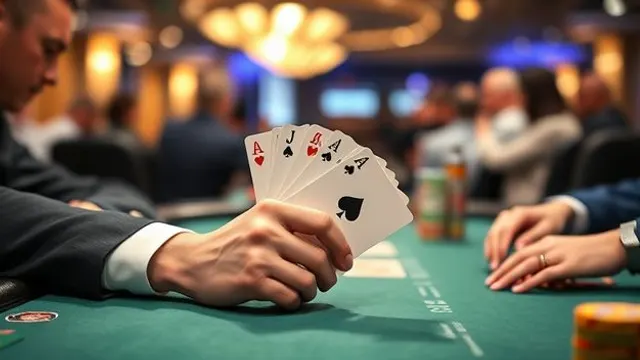
UTG Under the Gun is the most disadvantageous position preflop. Constructing a reasonable opening range is key to avoiding big mistakes. This article starts with definitions and principles, provides typical range examples, analyzes common misconceptions, and helps you master the correct strategy for the tight position.
Definition: UTG Position and Opening Range
UTG (Under the Gun) refers to the first player to act preflop, sitting to the left of the dealer (second left in a 9-handed game, first left in a 6-handed game). Since many players still have yet to act, the UTG player faces the risk of being re-raised (3-bet) or facing multiway calls, putting them at a major positional disadvantage. Therefore, the UTG opening range (the set of hands used to raise and enter the pot) is typically the tightest, generally recommended to play only about 10%-14% of starting hands.
Rationale: Why UTG Needs to Be Tight
- Positional Disadvantage: Postflop, UTG acts after all opponents, having the least information and being easily exploited. Strong hands can compensate for poor position, while marginal hands are difficult to profit from in multiway pots.
- Risk Control: After UTG raises, later players can call or 3-bet with a wider range. If the range is too wide, the fold rate to 3-bets becomes too high, leading to significant chip loss.
- Balancing Value and Bluffs: To avoid being easily exploited, the UTG range should include value hands (big pairs, high broadways) and an appropriate number of bluffs (e.g., AXs, suited connectors), but with a low bluff ratio since later positions can easily counter.
- Stack Depth: With shallow stacks (<40BB), the UTG range should be narrower, favoring high pairs and strong broadways; with deep stacks (>100BB), small to medium pairs and suited connectors can be added to leverage implied odds.
Practical Example: Typical UTG Opening Range (9-handed, 100BB)
A reasonable UTG range covers about 12% of all starting hands:
- Value raises (~8%): AA, KK, QQ, JJ, TT, 99, 88 (big pairs), AKs, AKo, AQs, AQo (high broadways), AJs, ATs (some suited broadways).
- Bluffs/Semi-bluffs (~4%): KQs, KJs, QJs, JTs (suited connectors), A5s, A4s (small suited aces) – these hands have good development potential.
Example Hand: You are in the big blind with A♠K♦. UTG raises to 3BB, you choose to 3-bet to 9BB. With a reasonable range, UTG will fold hands below AJs, and continue with JJ+, AK, QQ+. If UTG calls with 99 and the flop comes T-8-2 rainbow, UTG will likely fold to a continuation bet when not hitting a 7.
Adjustment Factors: If later players are very aggressive (frequent 3-bets), tighten the range, folding hands like ATs, KJs; if they are passive (rarely 3-bet), you can add small pairs (e.g., 77, 66) and more suited connectors.
Common Misconceptions
- Misconception 1: Playing too many small pairs and suited connectors from UTG. The idea is that they are deceptive, but it's hard to hit postflop, and when you do hit a set, the value is limited, leading to long-term negative EV.
- Misconception 2: Playing only super-strong hands (AA/KK/AK). The range becomes too transparent; good opponents will 3-bet light to steal blinds, forcing you to fold and lose the blinds.
- Misconception 3: Not considering stack depth. Calling a 3-bet with 99 on a shallow stack, then being passive when overcards hit the flop.
- Misconception 4: Not adjusting to opponents. Using the same range against all players allows experienced opponents to exploit your positional disadvantage.
Summary
The essence of the UTG opening range is "tight but not rigid." The core is to select hands that retain sufficient equity despite positional disadvantage, typically the top ~12% of strong hands. Additionally, adjust dynamically based on opponent style and stack depth. Remember: UTG's primary goal is not to win big pots, but to avoid losing big pots. Continuously review range charts in practice to refine your choices.
FAQ
- Yes, but the proportion should be very low no more than 5% of your range. For example, use hands with nut potential like A5s or 65s, but you must avoid being difficult to play after being called. Frequent bluffing from UTG will lead to an unbalanced range and make you easy to counter.