WSOP Adds $250K Pro-Am Event at Paradise
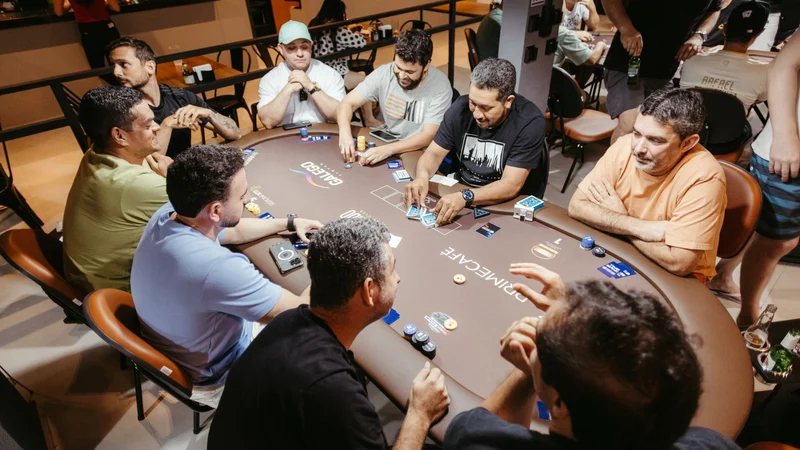
The World Series of Poker has announced a $250,000 buy-in pro-am tournament at WSOP Paradise, keeping amateur and professional fields separate until the money.
A New High-Stakes Format Arrives at WSOP Paradise
The World Series of Poker has announced a new $250,000 buy-in "pro-am" tournament for its WSOP Paradise series. The event is notable less for its price point than for its structure: amateur and professional players compete in separate fields until both reach the money, at which point the two brackets presumably merge into a single tournament.
That design is a departure from the standard poker model, where everyone at a given buy-in plays under identical conditions from the first hand. Here, the WSOP is effectively creating two parallel competitions inside one event, with the promise that neither group has to eliminate the other before the bubble.
How the Format Works
The core mechanic is straightforward in outline. Players are sorted into amateur and professional brackets. Each bracket plays down independently. Once both brackets are in the money, the surviving fields combine and play continues toward a single finish.
The appeal for amateurs is obvious. A recreational player with a $250,000 buy-in can reach the paid places without having to survive a table full of seasoned professionals in the early levels. For professionals, the format offers a path to the money that does not depend on feasting on weaker players before the bubble — though it also means the pro bracket is, by definition, a tougher road.
For tournament operators, the structure is a way to justify an unusually large buy-in. At $250,000, the event sits well above the standard high-roller range and into the territory of invitation-only or ultra-high-stakes events. Splitting the field gives recreational players a reason to enter a tournament they might otherwise skip.
The Question of Amateur Status
The announcement has already drawn scrutiny over a familiar problem: how exactly does a tournament decide who counts as an amateur?
Poker has no universal, enforceable definition of "amateur." A player who has never cashed in a live event may still play professionally online. A player with a long tournament record may consider poker a hobby. Sponsorship deals, staking arrangements, and backers further blur the line. Any classification system has to draw a boundary somewhere, and wherever it lands, some players will fall on the wrong side of it.
Common approaches in the industry include thresholds based on recorded tournament earnings, number of cashes, or a self-declaration reviewed by the operator. Each has weaknesses. Earnings-based rules can be gamed by players who keep results off the record. Self-declaration relies on honesty. And a strict threshold can exclude exactly the recreational players the format is meant to attract.
The WSOP has not, at the time of the announcement, detailed the specific criteria it will use. That gap is the main source of the early criticism: without published rules, players cannot know which bracket they belong in, and the integrity of the split depends entirely on how the operator applies its own standard.
Why It Matters
High-stakes pro-am formats are not new in principle. Golf and other individual sports have long used pro-am structures, and poker has experimented with recreational-only and professional-only events. What is new here is the combination: a very large buy-in, a single tournament, and a bracket system that only resolves at the money.
If it works, the format could become a template for other high-stakes events looking to widen their player pool. If it does not, the likely failure points are predictable — disputes over classification, uneven bracket sizes, and the awkwardness of merging two fields with different average skill levels at a late stage.
For now, the event is best understood as an experiment. The buy-in is confirmed at $250,000. The bracket structure is confirmed in outline. The classification rules, the prize pool details, and the exact merge point are the parts players will be watching for next.
What to Watch
- The published criteria for amateur versus professional status
- How the two brackets are balanced if one fills faster than the other
- The point at which the fields combine and how stacks carry over
- Whether the format is repeated at future WSOP Paradise stops
Until those details are released, the $250,000 pro-am remains a headline structure rather than a fully specified tournament. The concept is clear; the execution rules are not.
FAQ
- The buy-in is $250,000. The tournament keeps amateur and professional fields separate until both reach the money.