#Emotional Control
Poker content related to “Emotional Control” · 17 items
News
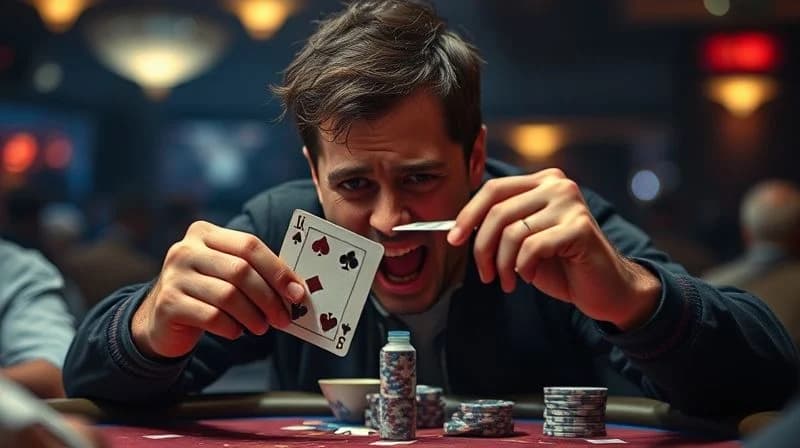
Jared Bleznick and the 2012 WSOP Card Ripping Incident
During the 2012 WSOP Main Event, poker player Jared Bleznick tore up a playing card in a fit of rage, drawing widespread attention. Though a minor incident, it became one of the iconic moments in WSOP history, still talked about by the poker community.

Which poker habit took you too long to unlearn? Reddit players discuss
On Reddit r/onlinepoker, players share their hardest poker habits to break. This article summarizes the most common ones, including overplaying flush draws, overvaluing small pairs, and being too passive post-flop, along with practical advice to fix these habits.

KK vs Trapping QQ: A Player's Deep Reflection on His Bad Play
A player holding KK in Betonline's $125k guarantee event clashed with opponent's QQ, building a big pot only to get rivered. He later analyzed his mistake: failing to fold when raised on the flop, as opponent's range was almost exclusively QQ or slow-played AA. The article thoroughly reviews the hand and offers self-criticism and improvement advice.

WSOP High Roller: Deep Stack Double-Up Celebration Turns Tragic
In the deep stack phase of a WSOP high roller event, a player doubles up with a strong hand, gets emotional, stands up to celebrate, not realizing the opponent is still thinking. The dealer rules it a violation, the chips are taken back, and the player loses the game due to this impulsive action.

Misclick Jam River, Player Exclaims: So Frustrating
A player shared on Reddit about accidentally jamming the river due to a misclick. He said he doesn't usually play on mobile, but used it because he was away from his computer for a week. In the previous hour, he had never overbet or big-bluffed, maintaining a tight image. After the misclick, he lost emotional control, sparking community discussion on the risks of mobile poker and emotional management.
Strategy
Poker Beginner's Guide: Try These 5 Things First
5 basic strategy suggestions for poker beginners to help you get started faster and avoid common mistakes. Covers hand selection, position awareness, pot control, observing opponents, and emotional management.
Mixed Game Mindset Preparation: From Single to Multi-dimensional Thinking Transformation
Mixed games test a player's mastery of multiple poker variants and ability to switch mindsets. This article explains how to establish a mindset framework adapted to mixed games, including variant awareness, emotional regulation, strategic flexibility, and energy management, to help players maintain stable performance in changing environments.
Mixed Game Mindset: Adapting from Texas Hold'em to Multi-Game Switching
Mixed games require players to quickly switch strategies and mindsets between different poker variants. This article helps players build a robust mindset adapted to multi-game environments, improving long-term performance, covering cognitive preparation, emotional control, and transition techniques between games.
Mixed Game Mindset Preparation: How to Stay Competitive Across Multiple Variants
Mixed games such as HORSE, 8-Game require players to quickly switch thought patterns. This article provides practical strategies from three perspectives: mental preparation, game transitions, and emotional management, to help you maintain consistent performance in multi-variant events.
Mixed Game Mindset Preparation: Thought Strategies for Switching from Single Format to Multiple Games
Mixed games H.O.R.S.E., 8-Game, etc. require players to quickly switch mindsets between different poker variants. This article provides a systematic psychological preparation process from the perspectives of cognitive restructuring, tempo control, and emotional management, helping players reduce switching costs and improve multi-game performance.
Mixed Game Mindset Preparation: Maintaining Stable Performance Amid Changing Rules
Mixed games require players to quickly switch between different rules, and mental stability is key. This article discusses from three aspects: strategy adjustment, emotional management, and decision-making framework, how to stay focused, avoid fatigue, and profit from information asymmetry in more than 8 games.
Mental Preparation for Mixed Games: A Psychological Adjustment Guide from HORSE to 8-Game
Mixed games combine multiple poker variants, placing higher demands on players' strategic flexibility and mental toughness. This article provides a practical mental preparation plan from three aspects: mindset adjustment, variant switching strategies, and emotion management, helping you maintain stable performance in mixed events such as HORSE and 8-Game.
Overcoming Emotional Loss of Control: Tilt Recognition and Session Management Strategy in Poker
Tilt is the state of impaired decision-making due to emotional loss of control in poker, and it is the biggest enemy of profitability. This article teaches you how to recognize tilt through physiological, behavioral, and cognitive signals, and manage sessions through three major phases: pre-session planning, in-session monitoring, and post-session review, to build disciplined habits and achieve sustained stable profits.
Mental Preparation for Mixed Games: Practical Guide to Staying Focused in Multi-Event Tournaments
Mixed game tournaments require players to switch quickly between different poker variants, and mental adjustment directly affects performance. This article provides specific mental preparation methods from three dimensions: cognitive switching cost, emotion management, and event strategy, helping players reduce errors and improve stability in multi-event tournaments.
Mixed Game Mindset Preparation: How to Maintain Focus and Adaptability Across Multiple Poker Variants
Mixed games test not only technical switching but also mental resilience. This article provides a systematic framework for mindset preparation from perspectives such as cognitive load, emotional control, and decision pace, helping players transition efficiently between different poker variants, reduce bias, and improve long-term win rates.
Mixed Games Mindset Preparation: How to Maintain Stable Performance When Switching Between Multiple Games
Mixed games require players to quickly switch between different poker variants, and mindset preparation is key. This article provides practical strategies from four aspects: cognitive flexibility, emotional management, game selection, and time allocation, to help you stay focused and minimize losses.
Mixed Game Mindset Preparation: How to Stay Focused and Flexible in Changing Poker Variants
Mixed games such as HORSE, 8-Game require players to switch between different poker variants, and mental adjustment is key to success. This article explains how to build a flexible mindset from three dimensions—cognition, emotion, and strategy—avoiding mental ruts and consistently making high-quality decisions in complex situations.