Position
Editor: dezhoupuke.orgRelated Glossary
In Position
In Position
In position means you act after your opponent on every betting street. The common mistake is thinking it only matters p…
Lojack
Lojack
Lojack is the position at a full-ring poker table that sits two seats to the right of the cutoff or three seats to the …
Position Advantage
Position Advantage
Position advantage refers to the benefit of acting later in a betting round, particularly on later streets, which allow…
Position Change
Position Change
The act of a poker player moving to a different seat at the table to alter their relative position to the dealer button…
Seat 9
Seat 9
In poker, Seat 9 refers to the ninth seat position at a table, whose strategic value depends on the dealer button's loc…
Middle Position Plus One
Middle Position Plus One
A poker table position that is one seat to the right of the first middle position MP, typically the fourth or fifth pla…
Position
Position
In poker, position refers to a player's seat relative to the dealer button, determining the order of action in each bet…
Limit Hold'em Starting Hands
Limit Hold'em Starting Hands
Starting hands in Limit Hold'em refer to the two hole cards dealt to each player, which are evaluated based on their st…
No Limit Hold'em Starting Hands
No Limit Hold'em Starting Hands
Starting hands in No Limit Hold'em are the two hole cards dealt to each player before any community cards are revealed,…
Related Strategy
MP Position Standard Opening Strategy: From Range Construction to Practical Application
This article explains in detail the standard opening strategy for the MP middle position, including pre-flop raising ranges, adjustment factors, post-flop play, and common mistakes, helping you build a solid profitable framework in 6-max or 9-max tables.
Table Selection and Seating Strategy: How to Maximize Your Advantage
Table selection and seating are key aspects of poker profitability. This article teaches you how to evaluate table quality, identify soft tables, and choose the best seat positions to exploit opponents' weaknesses, thereby building an advantage before the game even starts.
Starting Hand 86o Complete Strategy Guide: Pre-flop Range and Post-flop Play by Position
Comprehensive analysis of 86o offsuit 8-6 in Texas Hold'em, including whether to enter pots from each position pre-flop, how to leverage straight draw and two-pair potential post-flop, and action decisions on common flops, helping players correctly use this marginal hand.
Hijack Steal and Anti-Steal: Strategy and Practical Adjustments
Stealing blinds from the hijack is an important profit method in poker, but you need to pay attention to the risk of counter-steals. This article explains the appropriate range and frequency for hijack steals, and how to counter the blind's counter-steal strategies, including range balancing, bet size adjustments, and adjustments for different types of opponents.
Complete Guide to Button Steals: Position Advantage and Exploitation Strategy
This article systematically explains the core logic of button steals, hand selection, adjustment based on stack depth, strategies against blind defense, and post-flop execution. It helps you efficiently use positional advantage to steal blinds in low to mid-stakes cash games and tournaments, increasing your win rate.
Hijack Steal and Defense: The Art of Attack and Defense with Positional Advantage
The Hijack HJ is a highly valuable position for stealing blinds in Texas Hold'em. This article details the conditions, sizing, and frequency of hijack steals, as well as adjustment strategies when facing resistance. It also shares how the small blind, big blind, and later players can re-steal, defend, and punish over-stealers. Practical examples combined with GTO principles help you master this key battlefield.
Double Straddle Adjustments
Double Straddles change pot odds, positional value, and starting hand ranges, requiring players to re-adjust their preflop and postflop strategies. This article explains in detail how to tighten or widen ranges, leverage positional advantage, deal with aggressive opponents in this deep-stacked, multi-blind environment, and provides practical examples.
Triton High Roller Tournament Strategy: Deep Stacks and Elite Matchups
Triton High Roller Tournaments are known for deep stacks, high buy-ins, and top-tier player fields. This article analyzes core strategies: preflop range adjustment, postflop deep stack play, ICM pressure management, and exploitative thinking. Understanding these features helps you make better decisions in similar high-stakes events.
Preflop Open Raise Sizing: Position-Based Strategy
Preflop raise sizing is a fundamental yet critical decision in Texas Hold'em. This article explains how to adjust open raise amounts based on position from UTG to BTN and SB, balancing range construction and exploitative opportunities, and provides answers to common questions.
Cutoff CO Open-Range Guide: Positional Advantage and Practical Adjustments
The Cutoff CO is one of the most valuable positions in Texas Hold'em. This article provides a detailed analysis of the CO open-range, including the basic range, adjustments for different opponent types, and post-flop strategy tips to help you maximize profitability using positional advantage.
Hijack Steal and Re-steal: Positional Advantage and Practical Strategy
The hijack HJ is a strategically valuable position in Texas Hold'em. This article details how to effectively steal blinds from the HJ, as well as adjustment strategies when facing re-steals, including range construction, bet sizing, and responses to different opponents, helping players maximize positional advantage in the game.
News: Doug Polk Issues Heads-Up Challenge to Poker World
Doug Polk recently issued a heads-up challenge to the poker world, sparking heated discussion. Using this as an opportunity, this article introduces basic heads-up poker strategy, including range adjustments, positional advantage, betting sizes, and other core principles to help players improve their heads-up skills.
Related Players
' width='512' height='512'/%3E%3Ctext x='256' y='256' text-anchor='middle' dominant-baseline='central' font-family='system-ui,sans-serif' font-size='240' font-weight='bold' fill='hsl(65,30%25,85%25)'%3EAC%3C/text%3E%3C/svg%3E)
Arne Coulier
 Belgium
Arne Coulier is a professional poker player from Belgium, with career tournament earnings exceeding $717,000. While he has not won a WSOP bracelet, he has consistently cashed in high-profile events such as the World Series of Poker and the European Poker Tour.
' width='512' height='512'/%3E%3Ctext x='256' y='256' text-anchor='middle' dominant-baseline='central' font-family='system-ui,sans-serif' font-size='240' font-weight='bold' fill='hsl(110,30%25,85%25)'%3EGL%3C/text%3E%3C/svg%3E)
Gabriel Le Jossec
 Canada
Gabriel Le Jossec is a Canadian professional poker player ranked 3316th in the world with career live tournament earnings exceeding $955,000. He is best known for a deep run in the WSOP Main Event, finishing 15th, and for his aggressive, pressure-based style at the tables.
' width='512' height='512'/%3E%3Ctext x='256' y='256' text-anchor='middle' dominant-baseline='central' font-family='system-ui,sans-serif' font-size='240' font-weight='bold' fill='hsl(162,30%25,85%25)'%3EMH%3C/text%3E%3C/svg%3E)
Michal Hamáček
 Czechia
Michal Hamáček is a Czech professional poker player, known for his active presence in online and live tournaments. He has built a reputation in the poker world through aggressive play and sharp hand reading skills.
' width='512' height='512'/%3E%3Ctext x='256' y='256' text-anchor='middle' dominant-baseline='central' font-family='system-ui,sans-serif' font-size='240' font-weight='bold' fill='hsl(97,30%25,85%25)'%3EKL%3C/text%3E%3C/svg%3E)
Kai Lehto
 Finland
Kai Lehto is a Finnish professional poker player ranked around #2190 in the world, with live tournament earnings exceeding $1.38 million. He is known for his solid, balanced play and frequent deep runs in major European and international events, including WSOP and WPT series.
' width='512' height='512'/%3E%3Ctext x='256' y='256' text-anchor='middle' dominant-baseline='central' font-family='system-ui,sans-serif' font-size='240' font-weight='bold' fill='hsl(284,30%25,85%25)'%3EYL%3C/text%3E%3C/svg%3E)
Yohann Lambret
 France
Yohann Lambret is a French professional poker player known for his online high-stakes play on PokerStars under the alias 'Rastafari_fr'. He specializes in No-Limit Hold'em and has achieved notable results in live events.
' width='512' height='512'/%3E%3Ctext x='256' y='256' text-anchor='middle' dominant-baseline='central' font-family='system-ui,sans-serif' font-size='240' font-weight='bold' fill='hsl(118,30%25,85%25)'%3ESJ%3C/text%3E%3C/svg%3E)
Samuel Ju
 Germany
Samuel Ju is a German poker player best known for his solid, position-aware online game rather than for live tournament results. Public records show no major final-table appearances for him in events such as the Triton Jeju series, the WSOP Millionaire Maker, or the APPT Seoul Main Event. He keeps a low public profile and is regarded in German online poker circles as a disciplined specialist.
' width='512' height='512'/%3E%3Ctext x='256' y='256' text-anchor='middle' dominant-baseline='central' font-family='system-ui,sans-serif' font-size='240' font-weight='bold' fill='hsl(202,30%25,85%25)'%3ESS%3C/text%3E%3C/svg%3E)
Sverre Sundbo
 Norway
Sverre Sundbo, Norwegian professional poker player, world ranking 7056, total winnings over $470,000. Known for a solid style, has achieved good results in many major tournaments.
' width='512' height='512'/%3E%3Ctext x='256' y='256' text-anchor='middle' dominant-baseline='central' font-family='system-ui,sans-serif' font-size='240' font-weight='bold' fill='hsl(287,30%25,85%25)'%3EKT%3C/text%3E%3C/svg%3E)
Kevin Theodore
 United States
Kevin Theodore is an American professional poker player with over $772,000 in live tournament earnings and 182 recorded cashes. Known for a steady, disciplined approach, he has built a solid reputation across both online and live circuits, with his most recent cash coming in December 2025.
Related Events
WSOP Circuit - Turning Stone
The WSOP Circuit series at Turning Stone Resort Casino in Verona, New York, offering multiple Texas Hold'em tournaments with gold ring prizes.
5000 USD No-Limit Hold'em Championship
A high-stakes No-Limit Hold'em tournament serving as the opener of the series, attracting top players from around the world to compete for the championship title.
Event #2: $25,000 High Roller No-Limit Hold'em
A high buy-in no-limit Hold'em event in the WSOP series with a high roller format, attracting top professional players and high net worth individuals.
Event #4: $10,000 No-Limit Hold'em Heads-Up
This event is the fourth in the series, featuring a $10,000 buy-in No-Limit Hold'em heads-up knockout format. Heads-up play tests players' reading skills, adjustment techniques, and psychological battles, making it one of the most spectator-friendly forms of poker tournaments.
Event #6: $3,000 No-Limit Hold'em Six-Handed
Early event in WSOP series, with six-handed fast pace, buy-in $3,000, suitable for players who like short-handed strategy.
Event #7: $1,500 No-Limit 2-7 Single Draw
An event in the 2026 World Series of Poker (WSOP) with a $1,500 buy-in, featuring No-Limit 2-7 Single Draw poker rules. This is a lowball game where the goal is to make the lowest possible 5-card hand, with one draw allowed.
WSOP Event 8: $50,000 NLH High Roller
High buy-in no-limit hold'em event in the WSOP series, attracting top professionals and high-stakes players, competing for gold bracelet honors.
Related News

Coolbet Open Sets All-Time Record with 753 Entries and €357,675 Prize Pool
The Coolbet Open Main Event in Tallinn drew 753 entries, breaking the previous record and creating a €357,675 prize pool. Finland's John Blomberg leads the final 54 players.
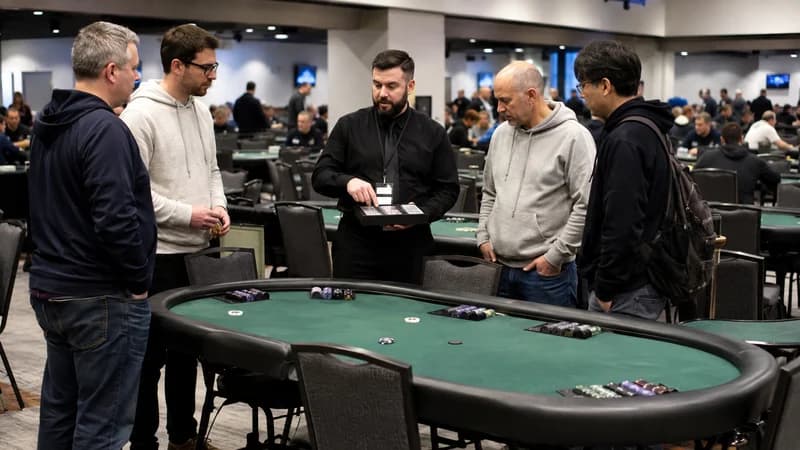
Poker Table Breaks Explained: Rules, Procedures, and Fair Play
Learn how poker tournament table breaks work, including random seat draws, balancing rules, and chip handling procedures.

CoinPoker Hosts $3K PokerStrategy Freeroll on September 3
CoinPoker and PokerStrategy offer a $3,000 freeroll on September 3, 2026. Open to all PokerStrategy-registered players. Last one without token requirements.
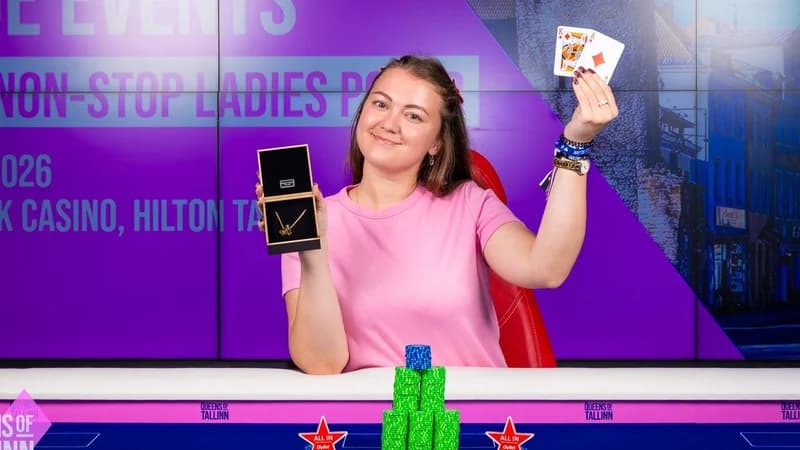
Agnese Barca Crowned Queen of Tallinn Just Over a Year Into Her Live Poker Career
Latvian Agnese Barca, playing live poker for just over a year, wins the record-setting Queens of Tallinn Main Event, defeating Annika Abmayr heads-up for €11,650.

Blinds Went Up, Then a Poker Player Went Down: What's the Ruling?
A ruling question arises when blinds increase and a player is eliminated shortly after. Explore the rules and common scenarios in tournament poker.

2026 EPT Barcelona Main Event: 28 Players Remain, John Juanda and Sebastian Malec Look for Second Wins
The 2026 EPT Barcelona Main Event is down to 28 players. Jose Criado leads, with former champions John Juanda and Sebastian Malec chasing a second title.

EPT Barcelona 2026 Main Event: Polish Chipleader Kozieja Leads as Prize Pool Tops €8.8 Million
EPT Barcelona 2026 Main Event reaches Day 3 with Grzegorz Kozieja as chipleader. Prize pool exceeds €8.8M, winner takes €1.37M. Benny Glaser leads 8-Game, Nikunlassi wins Hyper Turbo.
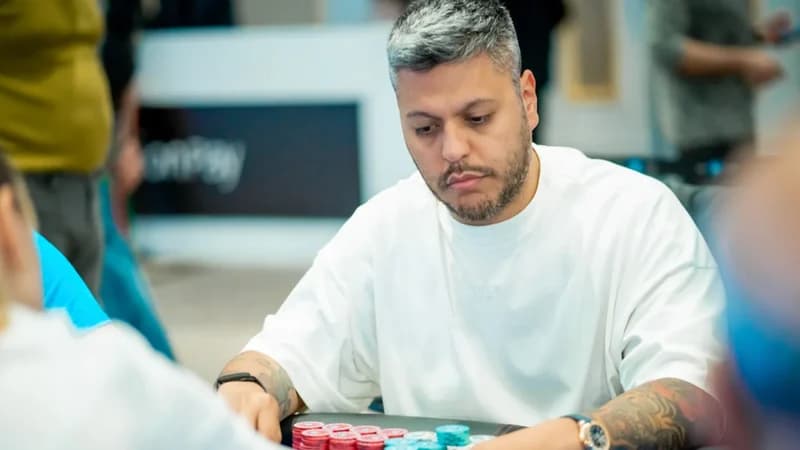
Italo Modena's Dream Run at Poker Live Cyprus: August 11, 2026 Recap
Italian poker player Italo Modena shines at Poker Live Cyprus on August 11, 2026, with a standout performance. Full recap inside.
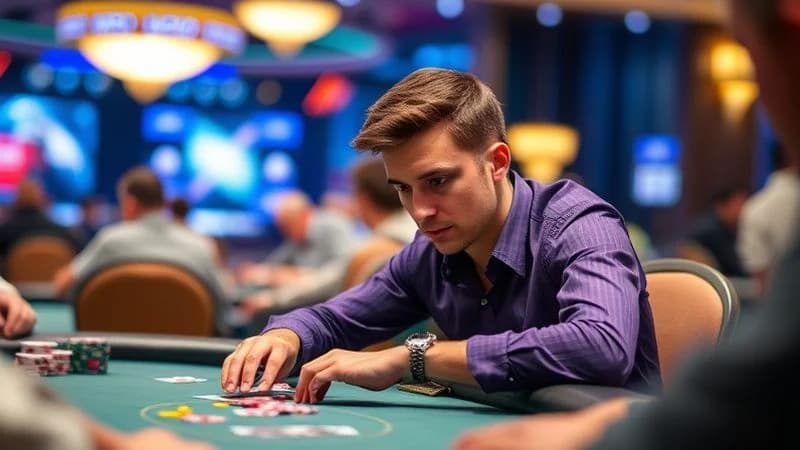
WSOP Online Circuit Event Continues into the Weekend
The WSOP Online Circuit Event is set to continue through the weekend, offering players more opportunities to compete for rings and prizes.

Q8 Suited: A Player's 'Lucky Hand' and the Reality of Poker Superstitions
A poker player calls Q8 suited their 'luckiest hand,' but is it really lucky? We explore the math, variance, and why players develop superstitions at the table.

Live PLO Player Seeks Course to Boost Hourly from $100 to $200
A Reddit user in a splashy 5/5/10 PLO game shares their goal of doubling a $100/hr win rate through training. The post highlights the demand for courses tailored to live mid-stakes PLO with multi-way flops.

BTN Opening: Widest Range & Blind Stealing Techniques
This article explains the mathematics behind blind stealing, practical techniques, common mistakes, and provides actionable advice.
Related
What is In Position in Poker?
In position means you act after your opponent on every betting street. The common mistake is thinking it only matters p…
GlossaryPosition Advantage
Position advantage refers to the benefit of acting later in a betting round, particularly on later streets, which allow…
GlossaryPosition
In poker, position refers to a player's seat relative to the dealer button, determining the order of action in each bet…
GlossaryMiddle Position Plus One
A poker table position that is one seat to the right of the first middle position MP, typically the fourth or fifth pla…
GlossaryPosition Change
The act of a poker player moving to a different seat at the table to alter their relative position to the dealer button…
GlossarySeat 9
In poker, Seat 9 refers to the ninth seat position at a table, whose strategic value depends on the dealer button's loc…
GlossaryLimit Hold'em Starting Hands
Starting hands in Limit Hold'em refer to the two hole cards dealt to each player, which are evaluated based on their st…
GlossaryLojack
Lojack is the position at a full-ring poker table that sits two seats to the right of the cutoff or three seats to the …