Break Time
Break Time — Term Explanation, Related Strategies and News
Related Glossary
Blind Level
Blind Level
g., 15 minutes. In practice, the blind level directly determines a player's chip pressure and strategy: at low levels, …
Color Up
Color Up
This operation is typically carried out when the blind level increases and low-denomination chips are no longer practic…
Dinner Break
Dinner Break
Term: Dinner Break A long break scheduled in poker tournaments, typically used for players to have a meal and recharge.
Break Time
Break Time
Break Time Refers to the scheduled pause period in a poker tournament for players to rest, have meals, or handle person…
Sit Out
Sit Out
Term: Sit Out A player temporarily leaves the poker table, not participating in the current and subsequent hands until …
Tournament Director
Tournament Director
A professional responsible for managing and overseeing the overall operation of a poker tournament, ensuring the event …
Add-On Early Stage
Add-On Early Stage
Early Stage Refers to the stage in a tournament where players are allowed to purchase additional chips early in the eve…
Add-On In the Money
Add-On In the Money
Term: Add-On In the Money Refers to the rule or operation in poker tournaments that allow add-ons, where a player can p…
In the Money Add-On Strategy
In the Money Add-On Strategy
In poker tournaments, refers to the strategy of using the add-on opportunity before or after reaching the money to adju…
Related Strategy
Mixed Game Mindset Preparation: Mental Transition from Texas Hold'em to Multiple Variants
Mixed game competitions require players to switch quickly between different poker variants, and mindset preparation is key. This article covers three dimensions—cognitive load, emotional management, and strategy adjustment—providing a systematic set of mental training methods to help you maintain consistent performance in mixed games.
Mental Preparation for Mixed Games: Staying Focused and Flexible in a Multi-Variant Format
Mixed games require players to quickly switch between different rules, making mental preparation more critical than for single games. This article provides practical methods to stabilize your mindset and improve multi-game performance from four dimensions: cognitive load, emotional management, strategy adaptation, and game selection.
Final Table Deal Making Strategy Guide
Final table deal making is a key tool for reducing variance and locking in returns. This article explains common deal methods such as chip chop, ICM chop, and even chop, and teaches negotiation strategies and precautions to help you make optimal decisions in tournaments.
Private Club Table Selection Secrets: How to Find the Most Profitable Tables
When playing in private clubs, table selection is key to profitability. This article teaches you to identify soft tables, avoid shark tables, and exploit information asymmetry to lock in an advantage before even sitting down, boosting your win rate.
Table Selection and Seating Principles: A Strategy Guide to Maximize Poker Profitability
Learn how to select favorable tables and seats by observing opponent types, stack depths, and positional advantages to improve long-term profitability in poker cash games and tournaments. This tutorial provides practical principles and adjustment strategies.
Asian Poker Tour APT Tournament Strategy Guide: From Registration to Final Table
A comprehensive guide to the Asian Poker Tour APT, covering schedule features, event selection tips, bankroll management, and live adaptation strategies to maximize profits. Includes a pre-tournament checklist and FAQ.
Mixed Game Mindset Preparation: The Key to Quickly Adapting to Different Poker Variants
In mixed game tournaments, players need to frequently switch between different poker variants, and mindset preparation is more important than technique. This article provides actionable mindset adjustment strategies from four dimensions: cognitive load, variance management, quick switching techniques, and physical state, helping players maintain focus and stable performance in complex environments.
Mindset Preparation for Mixed Games: Staying Stable Amidst Variability
Mixed games require players to quickly switch strategies between different poker variants, and mindset preparation is crucial. This article provides systematic training methods from four aspects: psychological challenges, thinking frameworks, emotional management, and practical skills, helping you perform consistently in a variable environment.
Mental Preparation for Mixed Games: Maintaining Focus and Adaptability in Multi-Event Poker Tournaments
Mixed game tournaments require players to quickly switch between different poker variants, making mental preparation crucial. This article discusses strategies such as pre-tournament planning, cognitive switching training, and emotional management to improve adaptability, avoid fatigue and decision bias, and perform consistently in multi-event competitions.
Mixed Game Mindset Preparation: How to Stay at Peak Performance Across Multiple Variants
Mixed games e.g., HORSE, 8-Game test a player's ability to quickly switch between multiple poker variants. This article starts with mindset adjustments, exploring how to handle game rotations, manage emotional swings, and build a universal strategy framework to help you maintain consistent performance in mixed events.
Satellite Qualification Strategy: How to Steadily Secure Your Ticket
The goal in a satellite is not to win, but to safely reach the prize zone. This article systematically explains core strategies for the early, middle, and late stages: conservative survival in the early stage, chip accumulation in the middle stage, and leveraging ICM advantages in the late stage to pressure opponents. Includes practical examples and common mistakes to help you efficiently earn your main event ticket.
Manila Top Poker Rooms Guide: Choose the Right Venue to Improve Your Win Rate
Manila is a major poker hub in Asia, with multiple top poker rooms. This article starts from a beginner's perspective, teaching you how to choose the right venue, understand common game types, avoid travel pitfalls, and share practical tips to help you make efficient use of Manila's poker resources.
Related Players
Chengce Jiang
 China
China
Chinese poker player, world ranking 7633, total earnings $439,942, active in international tournaments.
Hang Chi
 Taiwan
Taiwanese poker player, world ranking 24907, total earnings $129,286. Has achieved good results in Asian tournaments multiple times, known for a steady style.
Michael Jozoff
 United States
Michael Jozoff, American professional poker player, ranked 1007th in the world, with total earnings over $2.67 million. Known for his consistent live tournament performance and solid fundamentals.
George Long
United States
George Long, American professional poker player, world ranked 7119th, career total winnings over $470,000, has demonstrated steady skills in multiple tournaments.
Edo Gabrielyan
United States
Edo Gabrielyan, an American poker player, ranked 13568th in the world, with career earnings over $240,000. Known for his solid style and live experience, he has cashed in many major tournaments.
Demond Williams
United States
Demond Williams is an American professional poker player, ranked 15604th in the world, with career earnings over $210,000. Known for his solid play and extensive tournament experience.
Lance Dodd
United States
Lance Dodd, an American poker player ranked 31776th in the world with career earnings of $97,122, specializes in cash games and tournaments and is known for a solid playing style.
Ngoc Quoc Bao Pham
 Vietnam
Ngoc Quoc Bao Pham, Vietnamese poker player, ranked 5752nd in the world, career total winnings over $570,000, known for steady style and tournament performances.
Related News

First time at WSOP? Community veterans share practical tips
A poker player about to play their first WSOP $300 Gladiator event asks Reddit for advice. This article summarizes insights from experienced players, covering preparation, strategy adjustments, mental and physical management, and daily tips to help newbies survive the long tournament days.

EPT 2026: The Ultimate Player Guide – Pokerfuse
The 2026 season of the European Poker Tour EPT is about to begin. This guide provides players with key information on preparation, strategy adjustments, and tournament structures to help achieve success in high-level events.
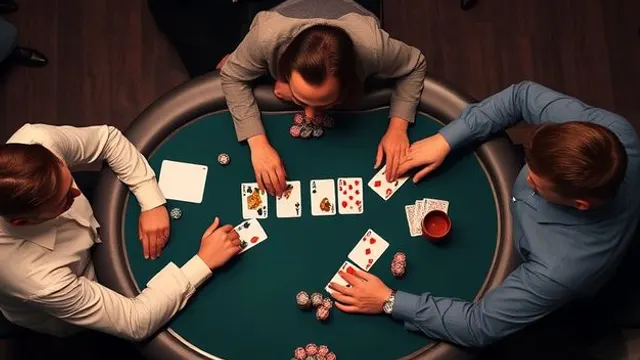
What to know for your first live poker tournament
From rules, etiquette, strategy to mental preparation, comprehensively analyze the key points of participating in a live poker tournament for the first time, helping beginners avoid common mistakes and smoothly get through the adaptation period.

2026 Summer Poker Calendar Dense, Bankroll Management Becomes Key
This article analyzes bankroll planning strategies under a packed schedule to help players make wise choices among numerous events.
Related
Break Time
Break Time
Break Time Refers to the scheduled pause period in a poker tournament for players to rest, have meals, or handle person…
GlossaryAdd-On Early Stage
Add-On Early Stage
Early Stage Refers to the stage in a tournament where players are allowed to purchase additional chips early in the eve…
NewsWhat to know for your first live poker tournament
From rules, etiquette, strategy to mental preparation, comprehensively analyze the key points of participating in a liv…
PlayersJianmin Xu
PlayersChue Yang
Chue Yang, American poker player, world ranking 35389, career total earnings $85,703, has won multiple awards in WSOP a…
PlayersJay Zeman
Jay Zeman, American poker player, world ranked 12717th, career total winnings over $260,000. Known for his solid style,…
PlayersConnor Manion
Connor Manion is a professional poker player from the United States, known for consistent performances in major tournam…
PlayersViet Tran
Viet Tran, American professional poker player, ranked 27223rd globally, with career total earnings of $116,503. Known f…