Home Game Poker Variants That Keep
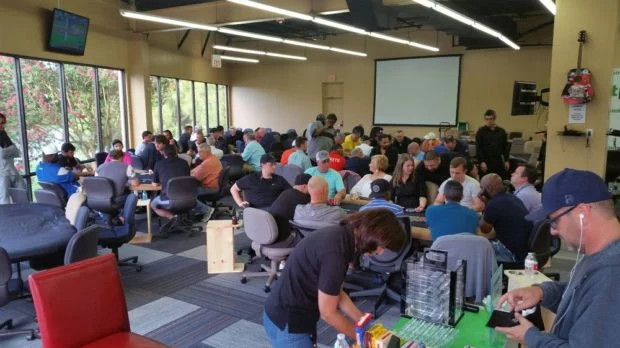
Four home game poker variants and twists, including Crazy Pineapple, Five-Card Draw with a Bug, PLO8, and the 2-7 bounty rule, to keep casual players engaged.
Why Home Games Go Stale
Every home game host eventually faces the same problem: the regular Friday night No-Limit Texas Hold'em game starts to feel repetitive. Hold'em remains the most widely played poker format, but hour after hour of disciplined folding and raise-sizing can drain the energy from a casual room. Home games are not meant to feel like a high-stakes grind. They work best when they are lively, unpredictable, and social.
The most practical fix is variety. Adding a few variants to a dealer's choice rotation gives recreational players new decisions to make without forcing them to relearn poker from scratch. Below are four variants and a few action-inducing twists that can revive a kitchen-table game.
1. Crazy Pineapple: The Gateway Variant
If your group does not want to move too far from Hold'em, Crazy Pineapple is a natural next step.
How it works: every player receives three hole cards instead of two. Betting proceeds exactly like Hold'em through the pre-flop round and the flop. The twist is that each player must discard one hole card before the turn is dealt.
Holding three cards through the flop keeps hand equities higher and tends to produce larger pots and more multi-way action. The core mechanics stay simple enough for novices to follow, while players who read board textures well gain an edge. It is a typical example of a variant that adds depth without adding much rules overhead.
2. Five-Card Draw with a Bug or Wilds
Many casual players grew up with draw poker, but basic Five-Card Draw can fall flat in modern home games because it offers limited betting rounds. Adding a Bug, meaning a Joker that can be played as an Ace or used to complete a straight or flush, turns a classic into an action generator.
A common live structure:
- Deal five cards face down to each player.
- Run a pre-draw betting round.
- Players may discard up to three cards, or four if holding an Ace or Joker, and draw replacements.
- A final betting round follows the draw.
Wild cards create hidden strength and lead to dramatic showdowns. Recreational players enjoy the agency of choosing which cards to throw away, and watching an opponent draw three cards builds immediate suspense.
3. Pot-Limit Omaha Hi-Lo (PLO8): Split-Pot Chaos
In PLO8, the pot is split between the best high hand and the best qualifying low hand. A qualifying low consists of five unpaired cards ranked 8 or lower. Players receive four hole cards, as in standard PLO, and must use exactly two of them with three board cards for both the high and the low.
Why it suits home games:
- Chop pots keep players alive. A player who misses a high draw often still holds a low draw that earns a share of the pot, extending their stack.
- Big draws are everywhere. Players chase wraps, flush draws, and nut-low possibilities at the same time.
PLO8 has a steeper learning curve when it comes to evaluating low hands, but once the group can read the board, it produces steady action and plenty of table talk.
4. Dealer's Choice Staples: The Stand-Up Game and Side Bets
Sometimes the structure itself does not need to change. Adding incentives alongside standard hands can be enough.
The 2-7 Bounty Rule
A favorite in home games worldwide. If a player wins a pot with 2-7 offsuit, whether at showdown or by bluffing, every other player at the table pays that player a pre-determined bounty, often in the range of 2 to 5 big blinds. Suddenly the worst starting hand in Hold'em becomes a fun bluffing vehicle, and the table talk gets lively when someone successfully represents a monster with garbage.
The Stand-Up Game
Usually played toward the end of the night. Every player stands up at the table. Whenever a player wins a pot, they sit down. The last player left standing pays a penalty bounty to every seated player. It pushes tight players out of their comfort zone and guarantees high-energy play to close the evening.
The Psychology Behind Novelty
These variants work because players naturally crave novelty and changing dynamics. The same appeal drives interest in platforms that offer many different game setups, themes, and mechanics: switching formats keeps the experience fresh. Bringing that spirit of variety to the felt helps ensure players never feel like they are just going through the motions.
Tips for Hosts Introducing New Variants
To avoid confusion when presenting these games:
- Keep a laminated rules card on the table. A printed card with the basic instructions for each game type makes teaching fast and reduces disputes.
- Limit the wild cards. Cap wild cards at a maximum of two per deck. Too many wild cards turns the game into pure luck and reduces hand strategy.
- Use easy stakes. For the tougher games, introduce friendly buy-ins so new players can have a better experience.
A Simple Rotation to Start
A practical approach is to keep Hold'em as the anchor and slot one variant into each orbit. For example, play a round of Crazy Pineapple, then a round of Five-Card Draw with a Bug, then return to Hold'em before trying PLO8. Add the 2-7 bounty or the Stand-Up Game as a late-night closer. This keeps the session familiar enough for casual players while giving regulars something new to think about each week.
The goal is not to turn a friendly game into a study group. It is to make the evening unpredictable enough that players look forward to the next invitation.
FAQ
- Crazy Pineapple gives each player three hole cards instead of two. Betting follows Hold'em through the flop, then each player discards one hole card before the turn is dealt. The extra card through the flop tends to create larger pots and more multi-way action.